
What Alex Prager Is Looking At: The Photographer Shows Us 7 Cultural Touchstones That Inspired Her Latest Uncanny Body of Work
Los Angeles-based artist Alex Prager always has a lot on her
mind.
As the photographer and filmmaker was working on her new film,
Play the Wind, which debuts today in a solo show of the
same name at Lehmann Maupin gallery in New York, a myriad of visual
and thematic influences were moving through her mind, from John
Steinbeck’s famed novel East of Eden to Balthus’s
provocative portrait of a young girl, Thérèse
Dreaming.
Prager draws inspiration from all corners: recommendations from
friends, works by favorite creators, and even from gallery mates at
Lehmann Maupin such as Edwin Wurm, who Prager learned about after
signing with the gallery.
Her surreal, imaginative work is dramatically staged, with each
photograph illustrating a narrative. Paying homage to old Hollywood
glamour and deeply steeped in the city of Los Angeles, her
genre-crossing images seamlessly blend together different cinematic
traditions, from film noir to suspensful thrillers.
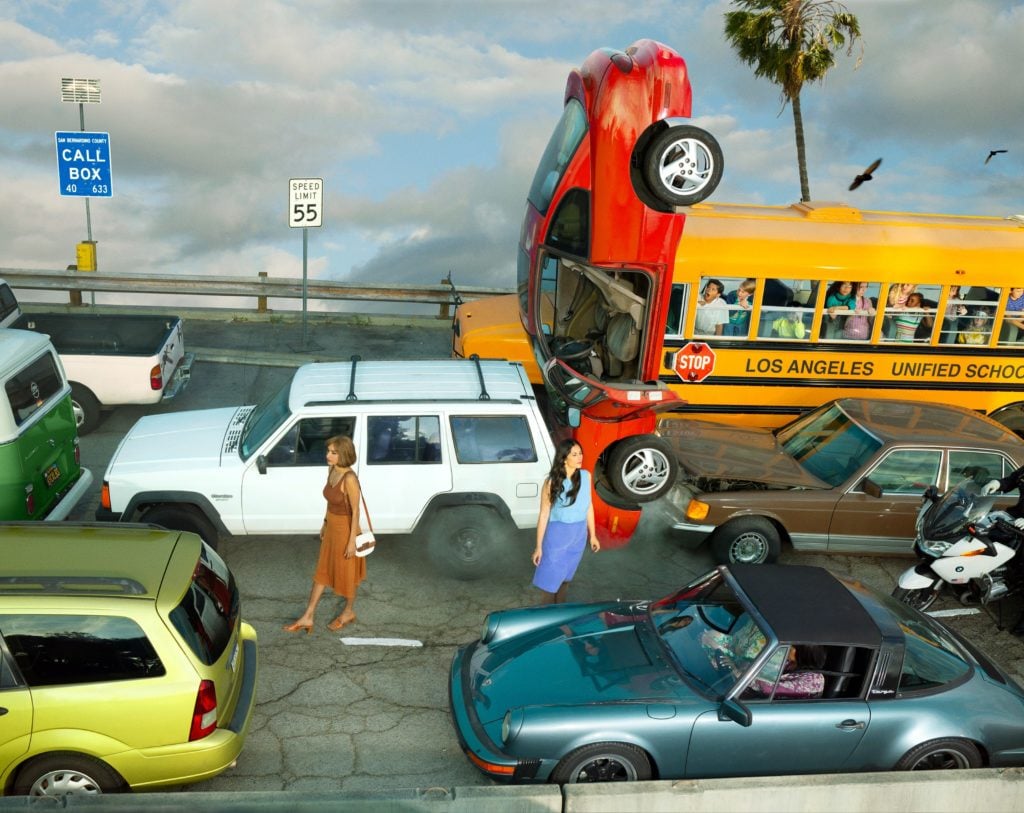
Alex Prager, Speed Limit
(2019). Photo courtesy of Lehmann Maupin.
“I see a darkness running just beneath the surface of all the
beauty and comedy,” she says. “It’s a harmony I have worked hard at
finding in the worlds that I build, so I appreciate when I see
other artists do this as well. To me, all of these works have that
perfect balance.”
In Play the Wind, Prager shot on location, hiring
as many as 300 extras to populate the streets of Los Angeles.
“I’m interested in how artifice combines with documentary and
how those two worlds can be woven together in a seamless way,”
Prager says. “In the past, my impulse has always been toward the
staged tableau, and the more I work in film and photography, the
more I am finding the balance I always imagined. It will be a
lifelong urge.”
Ahead of today’s opening, Prager spoke with artnet News about
the seemingly disparate cultural touchstones that fueled her latest
work, and what ties them together.
Pieter Bruegel the Elder,
The Fight Between Carnival and Lent (1559)
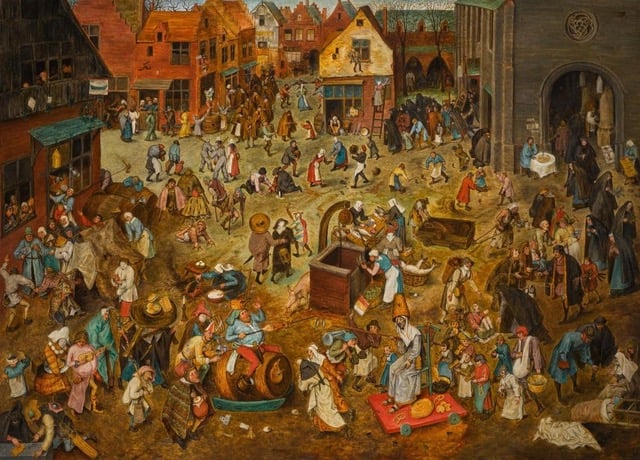
Pieter Bruegel the Elder, The Fight
Between Carnival and Lent (1559). Courtesy of the
Kunsthistorisches Museum, Vienna.
The Fight Between Carnival and Lent made a deep
impression on me. I saw this painting right when I [started taking]
photograps, and I was enamored by the way he captured the time he
was living in. It’s allegory of the way he saw people, and it’s
incredible how he was able to execute it with humor. The colors are
beautiful and I love the way he illustrates a serious and important
element of his time with such playfulness.
Paris,
Texas (1984) directed by Wim Wenders
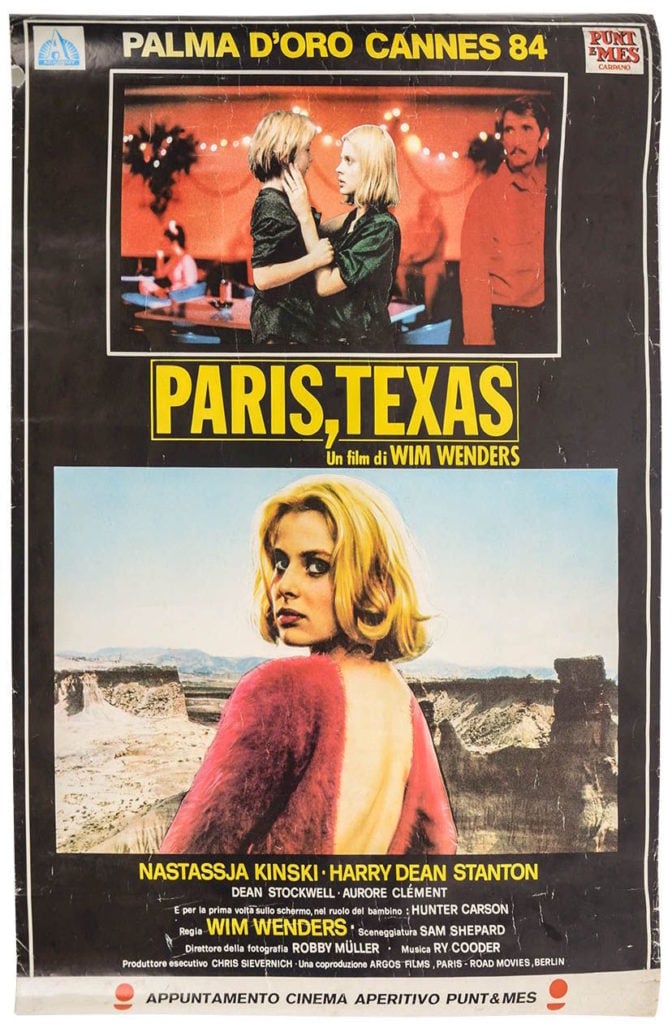
A poster for Paris, Texas.
Paris, Texas is one of my all-time favorite movies.
There’s a lot of driving throughout, the colors are perfect, and
overall, it’s great storytelling. It also has the best
cinematographer, Robby Müller.
East of
Eden (1952) by John Steinbeck
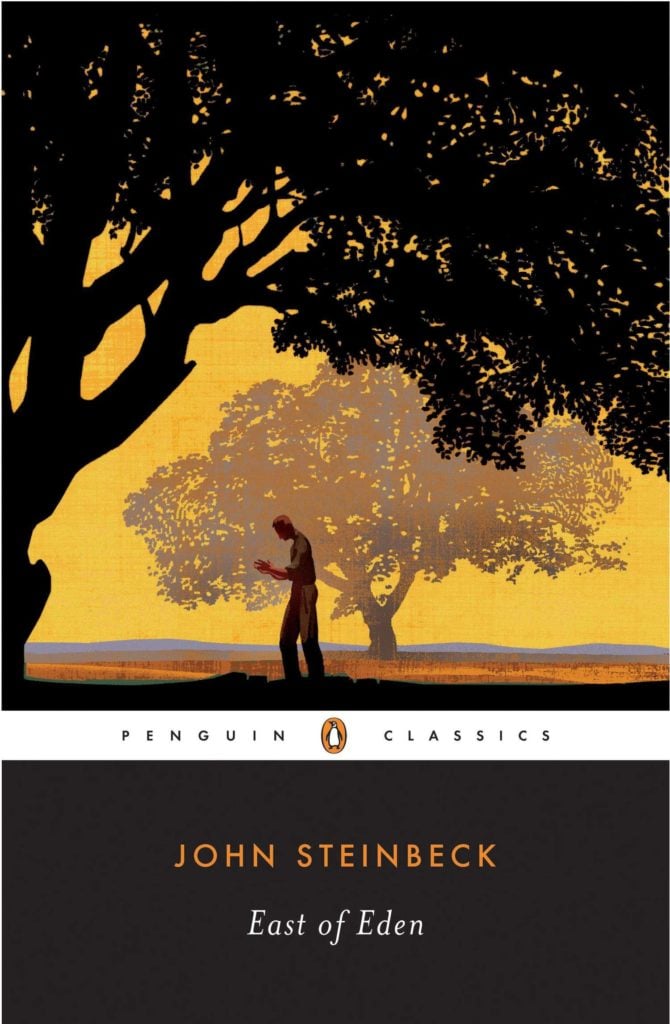
The Penguin Classic edition of
East of Eden by John Steinbeck.
I was swept away with how Steinbeck described California and the
characters. He is one of my all-time favorite writers, and I admire
his ability to tell stories.
“Big Tex” and a Texas State
Fair postcard
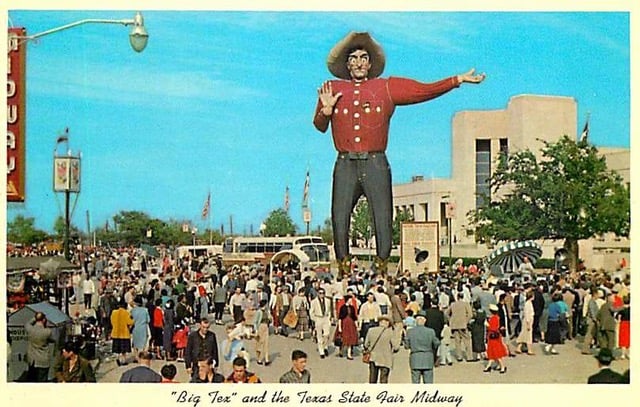
“Big Tex” on a postcard for the Texas
State Fair.
I saw this “Big Tex” image and it made me nostalgic for a time
when we had big roadside attractions all across America. They seem
comical, and with their disappearance, it makes me feel that we are
losing our sense of humor as a culture. Especially in Los Angeles,
we used to have a lot of novelty architecture, where entire
restaurants and businesses were designed to depict whatever they
were selling inside. I think there is a spirit of play that’s been
lost in the time we’re living in now, or maybe it’s just too
difficult and pricey to get permits for these kinds of things
anymore.
Short
Cuts (1993) by Robert Altman
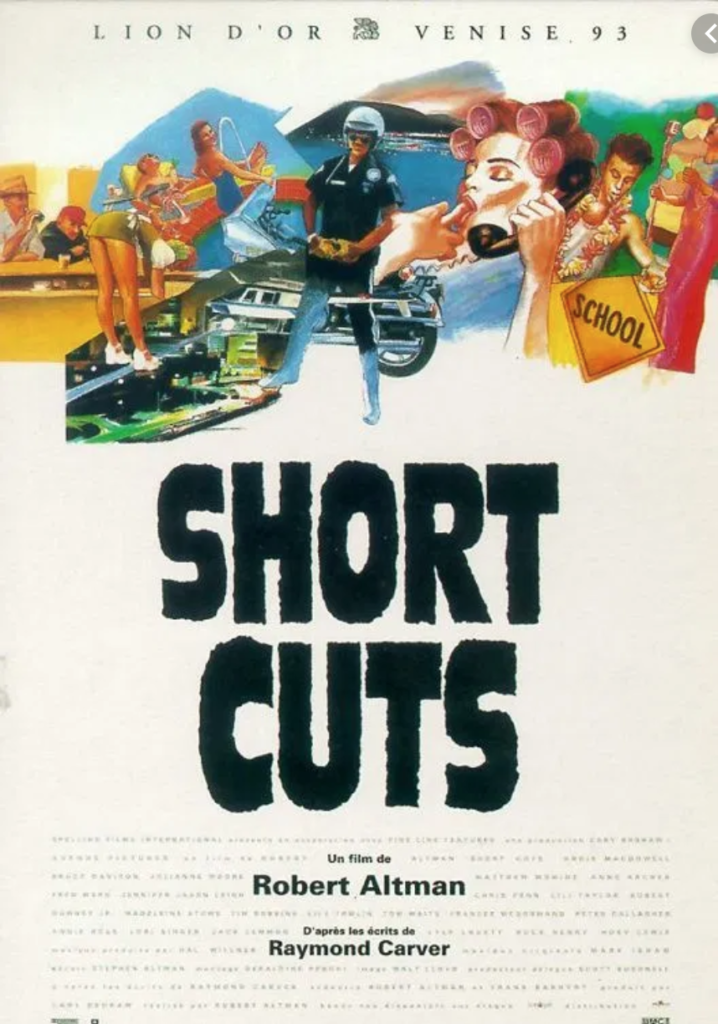
A poster for Short Cuts.
Anything Robert Altman made is perfect in my eyes,
but Short Cuts is one of my favorites. It’s an
ensemble cast, which only Altman and Paul Thomas Anderson are
really capable of doing well, as far as I’m concerned. It’s really
one of the best movies ever made about Los Angeles.
Balthus, Thérèse
Dreaming (1938)
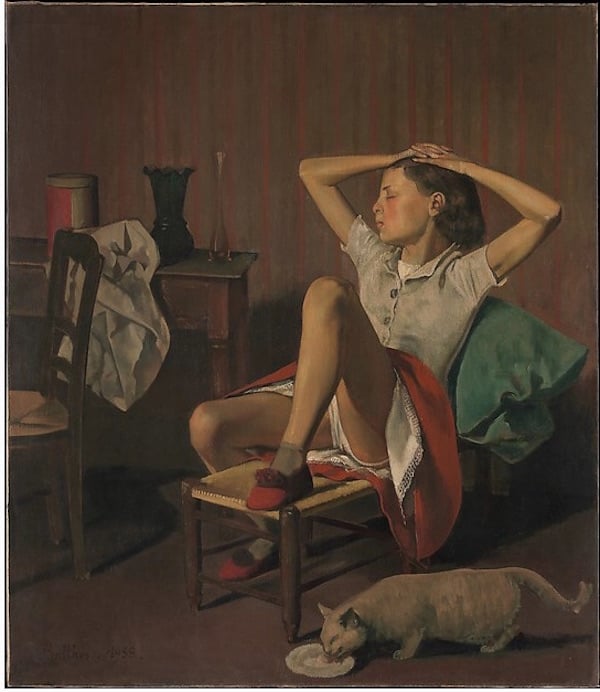
Balthus, Thérèse Dreaming (1938).
Courtesy of the Metropolitan Museum of Art.
I think the girl’s pose in this painting is very striking. It’s
feminine as well as masculine; it’s young but confident. It’s
complicated and I’ve always been drawn to it.
Erwin Wurm,
Kiss (2013)
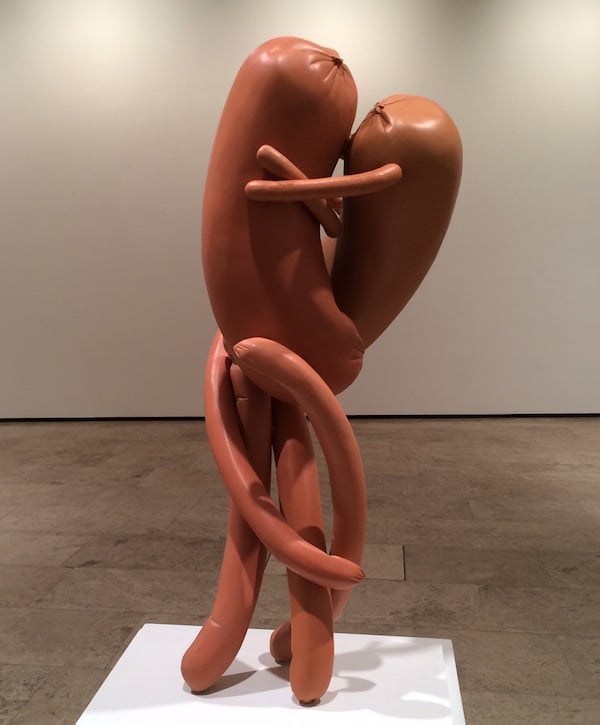
Erwin Wurm, Kiss (Abstract
Sculptures) (2013). Photo by Ben Sutton.
I always loved this Erwin Wurm piece. Kiss makes my
happy whenever I see it. It sums up love and infatuation for
me.
“Alex Prager: Play the Wind” is on view at Lehmann
Maupin, New York, West 22nd Street, September 5–October
26, 2019.
The post What Alex Prager Is Looking At: The Photographer
Shows Us 7 Cultural Touchstones That Inspired Her Latest Uncanny
Body of Work appeared first on artnet News.
Read more https://news.artnet.com/art-world/alex-prager-lehmann-maupin-1643110
Further reading


Leave a comment