
We Will Need New Ways to Interact With Art After Lockdown. I Believe Virtual Reality Is the Answer
What will the art world look
like when the lockdown is lifted?
As Manuel Borja-Villel, the
director of Madrid’s Reina Sofía Museum, recently pointed
out, there will be a
before and an after this crisis. And now is the moment to imagine the new worlds
that could greet us on the other side.
Many have felt that change was
needed long before the present crisis began. Months before cities
began shutting down and mass gatherings were cancelled, the Tate
had announced a climate
emergency. And now, it has become a common theme that today’s
lockdown represents a kind of dress rehearsal preparing us for an
environmental crisis that has long threatened life on this
planet.
How will we adjust? Will we
down-scale? Nothing could seem more obsolete today than the
corporate mega-museum built on mass tourism and blockbuster
exhibitions shipped around the world. That kind of elephantiasis is
not what our planet needs, and not what artists tend to ask for,
either. When will we even again be comfortable gathering with
thousands of others at an exhibition or art-fair
opening?
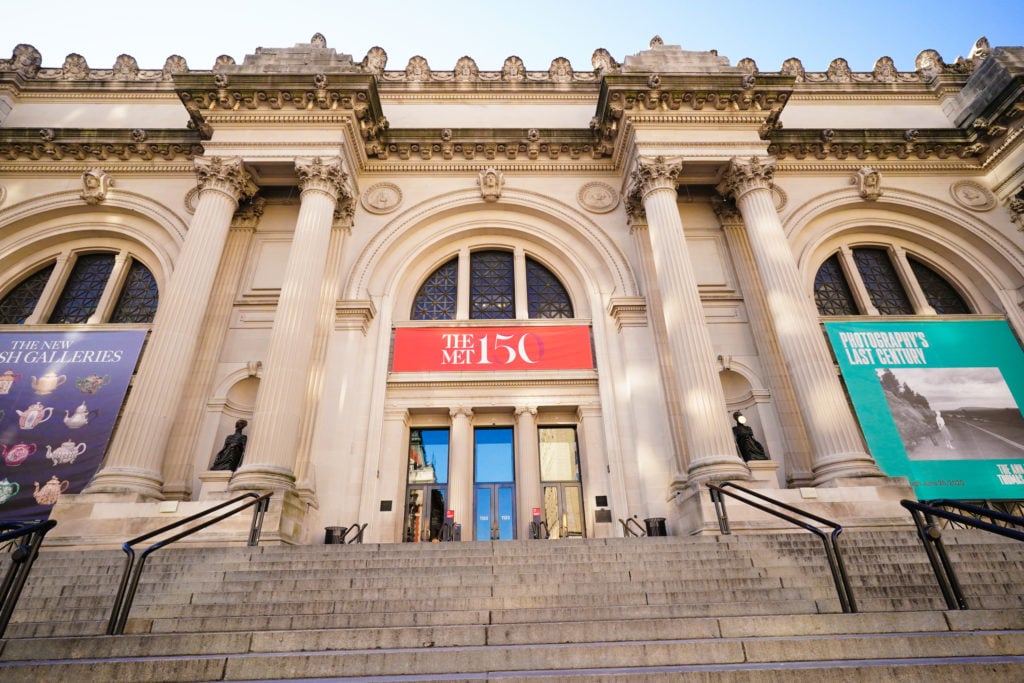
A view of an empty The Metropolitan
Museum of Art on March 20, 2020 in New York City. (Photo by John
Nacion/NurPhoto via Getty Images.)
With all this in mind, it’s
likely the fair and biennale models that have dominated the
international art world for decades will also seem unacceptable to
ecologically engaged (not to mention public health-concerned)
audiences after activity revs up again. Thousands of people flying
to another continent for a weekend to look at art that has also
been transported there by air will no longer seem like the ideal
mode of exchange.
Politically engaged artists and
curators traveling to distant biennials to participate in
discussions about urgent issues such as global warming seems even
more bizarre. I should know—I have been one of
them.
That form of globalism will end.
But what will take its place?
An emphasis on grassroots
initiatives? Yes, no doubt. But if some of us want to maintain
global conversations, we need to find new methods to do so. And I
believe the answer lies in new technologies. Today, Instagram
exhibitions, Zoom operas, and FaceTime concerts show that even
visually meager platforms can be used to share art.
But isn’t the time ripe for more
ambitious institutional experiments? Innumerable biennials and fairs are likely to
disappear and it is necessary to find new structures to replace
them.
For that, we must look to
virtual reality (VR) and augmented reality (AR). These tools will
be essential to changing the way we experience art in this new
paradigm of international visual culture and
exchange.
What an VR Art World Would Look Like
As John Cage once said, art is
an early warning system that can prepare us for the world of
tomorrow. I have never believed this more than since I
joined Acute
Art, a London-based
initiative exploring new immersive media in collaboration with
artists. Over the past year, I have seen that these new forms can
offer a window into a future in which audiences and institutions
alike engage with art very differently than they do
now.
Some virtual works, for example,
seem to thrive outside of institutions. With AR, new forms of
public art will emerge, available to anyone with a smartphone.
Geo-located virtual sculptures can interact seamlessly with the
world around them. In a surprising way, they can appear embedded in
the urban landscape. New forms of viewer participation will turn
spectators into active co-producers. Social distancing will not be an
issue.
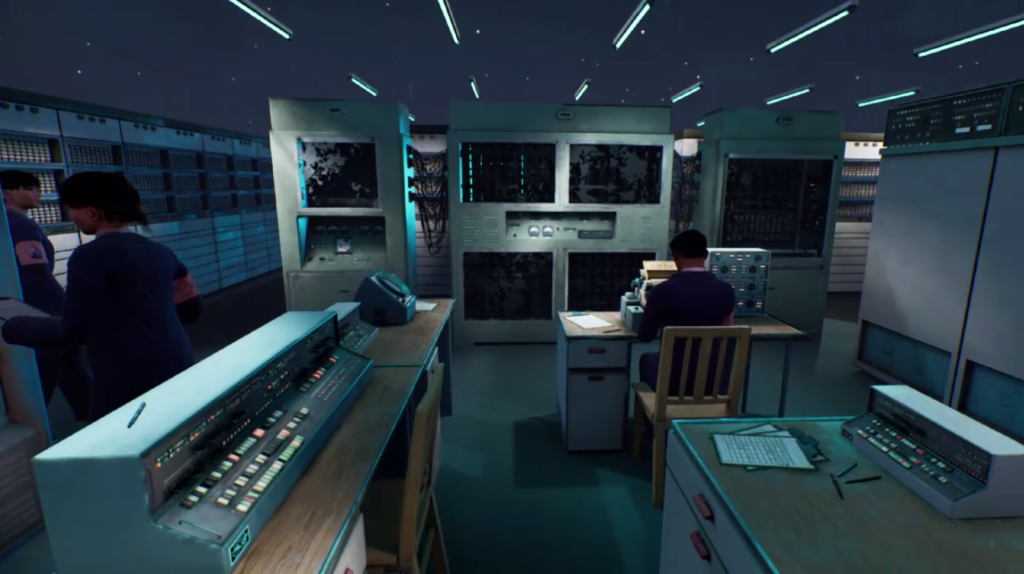
Cao Fei’s The Eternal Wave
(2020). Still courtesy of the artist and Acute Art.
For years, VR works have been
included in exhibitions—but largely in a way that obeys old
institutional structures. Could a virtual exhibition instead happen
on several continents simultaneously, with artists and audiences
gathering in a multiplicity of locations to collaborate on
experiences that respect local contributions? In other words, could
these technologies change the structure of the art world and make
possible new forms of global exchange for a future in which we will
be less keen to jump on a plane? A case in point: Chinese artist
Cao Fei’s VR work The
Eternal Wave, which
recently premiered as part
of a retro-futuristic exhibition at London’s Serpentine Galleries.
Implicit in this sci-fi-like narrative about early computing, time
travel, and romance involving a Russian and a Chinese scientist
lies an entirely new understanding of local and global
presence.
Through the work, the gallery
was transformed into an experiential terminal that transported
viewers across time and space. The VR experience started in a
physical replica of a modest Beijing kitchen, transported you on a
dreamlike voyage to other spheres, and then dropped you back in the
kitchen with memories from your virtual journey.
With a few modifications, the
show in Hyde Park could have been connected virtually to parallel
exhibitions in distant places, forming an imaginary maze
reminiscent of Jorge Luis Borges’s speculative
creations.
Why It Could Work
Such participatory networks
might seem experimental now, but I expect they will become a more
regular part of the art world of the future.
Of course, there are major
challenges to address along the way, and digital technologies are
by no means harmless from an ecological perspective. On the
contrary: today, the server farms that make all internet-based
activity possible consume gigantic amounts of power and the green
energy revolution has a long way to go to reach carbon
neutrality.
Perhaps one can find
inspirational elements in designs by visionaries such as American
inventor Buckminster Fuller, who always insisted that we should be
designers of the future, not its victims. Or in British avant-garde
theatre director Joan Littlewood’s grandiose collaboration
with architect Cedric Price
on the Fun Palace, designed to
awaken the passive subjects of mass culture to a new consciousness.
Their interactive machine for entertainment and education,
conceived half a century ago, involved virtual reality experiences
avant la lettre: Captain Nemo’s underwater restaurant, a
journey to the moon in a space-capsule simulator, a grotto of
kaleidoscopes. Although never realized, it remains a key influence on radical
architectural imagination and curatorial experiments to this
day.
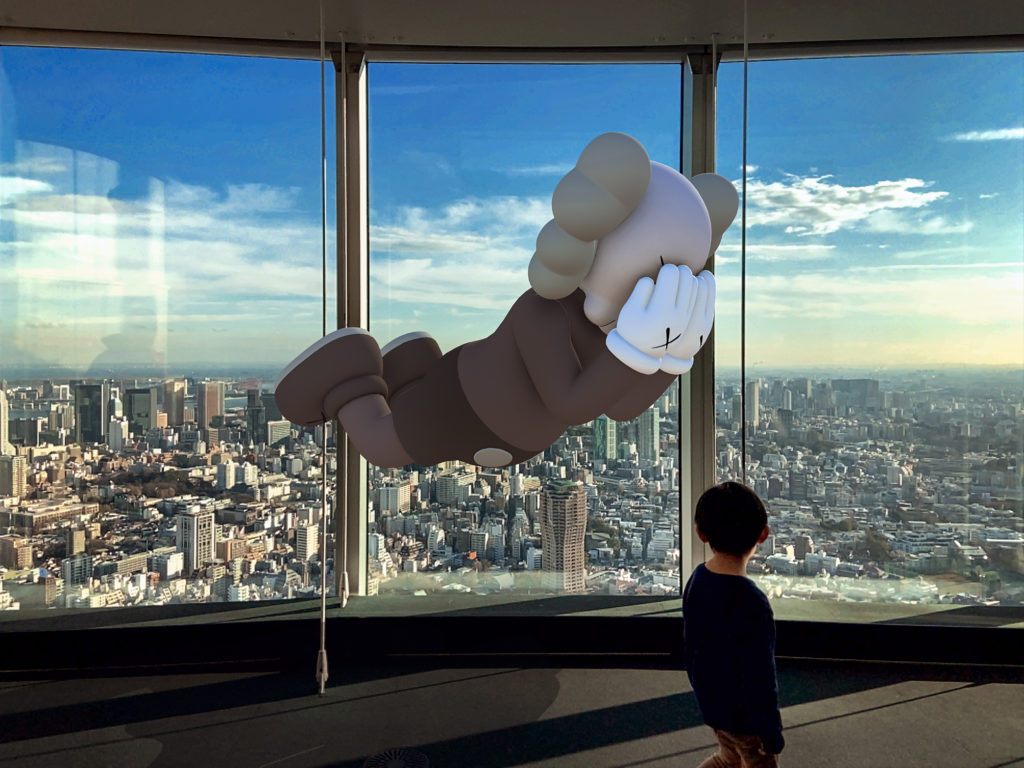
KAWS, COMPANION (EXPANDED), 2020,
augmented reality. Courtesy: KAWS and Acute Art.
No doubt artists will continue
to explore the perceptual and poetic possibilities of immersive
spaces. Will these technologies even change art itself, just like
photographic techniques and mass distribution once altered our
understanding of what an artwork can be? Walter Benjamin’s
influential 1935 essay on mechanical reproduction opens with a
quote from French poet Paul Valéry: “We must expect great
innovations to transform entire techniques of the arts, thereby
affecting artistic innovation itself and perhaps even bringing
about amazing change in our very notion of art.”
Valéry was right then. And he
will be right again. Art will change, as will its
institutions.
When the lockdown is lifted, the
cultural organizations that survived will have to find ways to
function. If our present prophylactic break really is a dress
rehearsal for necessary future transformations, we should explore
new possibilities. Grassroots localism and downscaling may not be
the only alternatives.
For art institutions, the
ongoing climate emergency and a changed public health landscape
should not only mean doing less. It should also mean developing
entirely new forms of art. Maybe in the future, VR will not be
shown in museums. It might very well be the other way around. What
we call museums will be shown in VR.
Daniel Birnbaum is artistic
director of Acute Art and lives in London. He previously served as
director of the Moderna Museet in Stockholm and director of the
Städelschule in Frankfurt. He was also artistic director of the
2009 Venice Biennale.
The post We Will Need New Ways to Interact With Art After
Lockdown. I Believe Virtual Reality Is the Answer appeared
first on artnet News.
Further reading


Leave a comment