
On the 350th Anniversary of Rembrandt’s Death, the Artist’s Hometown Is Staging the First Show Dedicated to His Early Work
This year marks the 350th
anniversary of the death of artist Rembrandt Harmensz van Rijn, and
the Netherlands is commemorating the historic occasion with a
series of exhibitions around the country. One of the more
interesting events is taking place in Rembrandt’s hometown of
Leiden, a show at the Museum De Lakenhal that goes all the way back
to the artist’s roots.
“Young Rembrandt—Rising Star,” which has been 10
years in the making, is the first comprehensive overview of the
artist’s earliest work. One particularly important painting,
Spectacles Seller (Allegory of
Sight), made in 1624,
when the artist was just 18 years old, is on view, as is Self-Portrait from 1635, the year Rembrandt officially moved
to Amsterdam. The Leiden museum houses Rembrandt’s archives and is
the place where many of these paintings originated.
It is believed that the artist
had a working studio in Leiden until 1634 and traveled back and
forth between the two cities, perhaps in the same way an artist
today would travel between New Jersey and Manhattan.
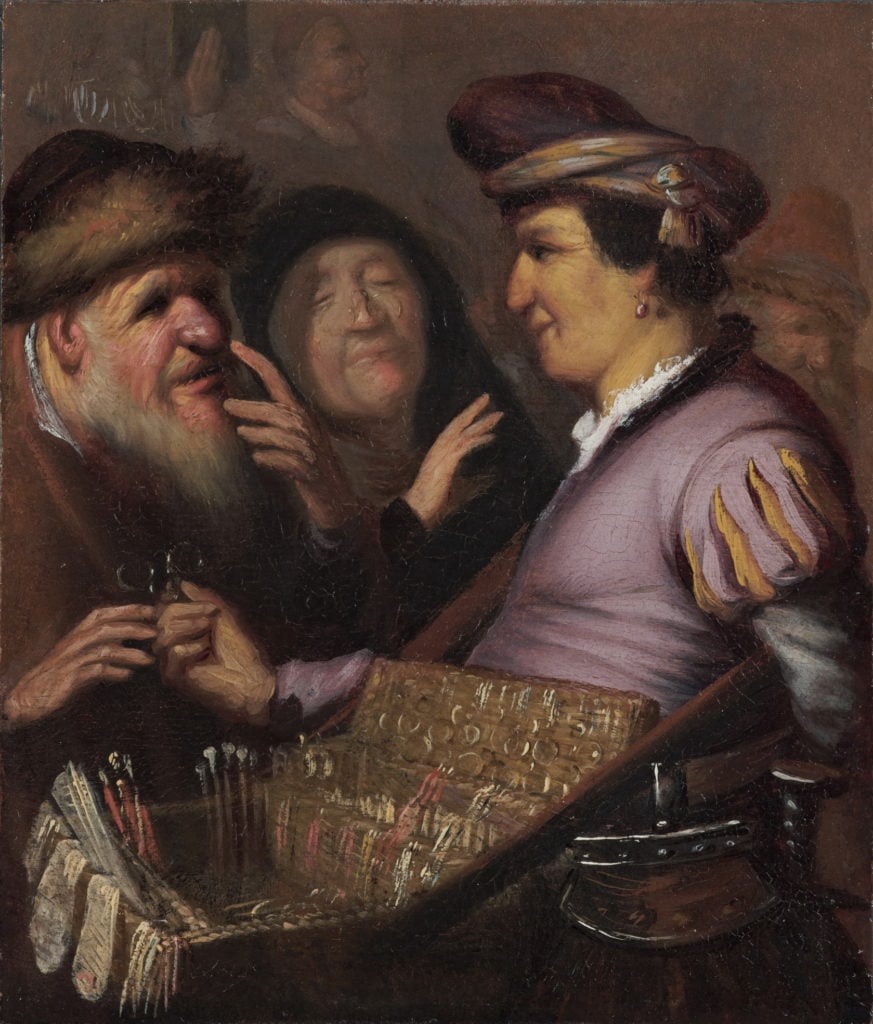
Rembrandt van Rijn, A Peddler Selling
Spectacles (ca. 1624). Courtesy of Museum De Lakenhal,
Leiden.
“It was a coincidence that he
was born in Leiden, but a fortune,” said Rembrandt biographer Onno
Blom. “If there is a ‘golden future,’ Rembrandt must have realized
that by being a great painter, he could be famous if he left Leiden
and went somewhere else. Upon leaving and going to Amsterdam, he
achieved this goal.”
While not quite a village, the
municipality of Leiden currently has a population of 124,000,
compared to Amsterdam’s 867,000. For Rembrandt, the bigger city
afforded him the opportunity to receive portrait commissions from
wealthy patrons. Even during the Golden Age, pockets of poverty
existed in Leiden, along with radical religious discrimination
between Catholics, Calvinists, and Protestants. Rembrandt, a
Protestant, faced less discrimination in the more liberal
Amsterdam.
“Many good, young artists went
from Leiden to Amsterdam at the time. There was an exodus of
talent, which we’ve seen in other places as well, such as in the
1930s in Germany,” said Christiaan Vogelaar, one of the
exhibition’s curators. Hanging in the exhibition is a map of
Leiden, pinpointing where Rembrandt lived, worked, and studied. The
route has been laid out so that visitors can retrace the artist’s
steps, all within a short walking distance of the museum. “The
atmosphere and scale of this city are feasible,” Vogelaar
said.
Another highlight of the
exhibition, on view for the first time, is the canvas
Let the Little Children Come to
me (circa 1627), which
was acquired in a 2014 auction in Cologne. After a rigorous
restoration process, top layers of paint were removed, and more of
the hand of the artist has been revealed. A figure in the upper
right side of the painting has also been identified as one of the
many self-portraits Rembrandt made throughout his lifetime.
“Rembrandt made a cameo in this painting, like Hitchcock, he makes
an appearance and then disappears,” Blom said.
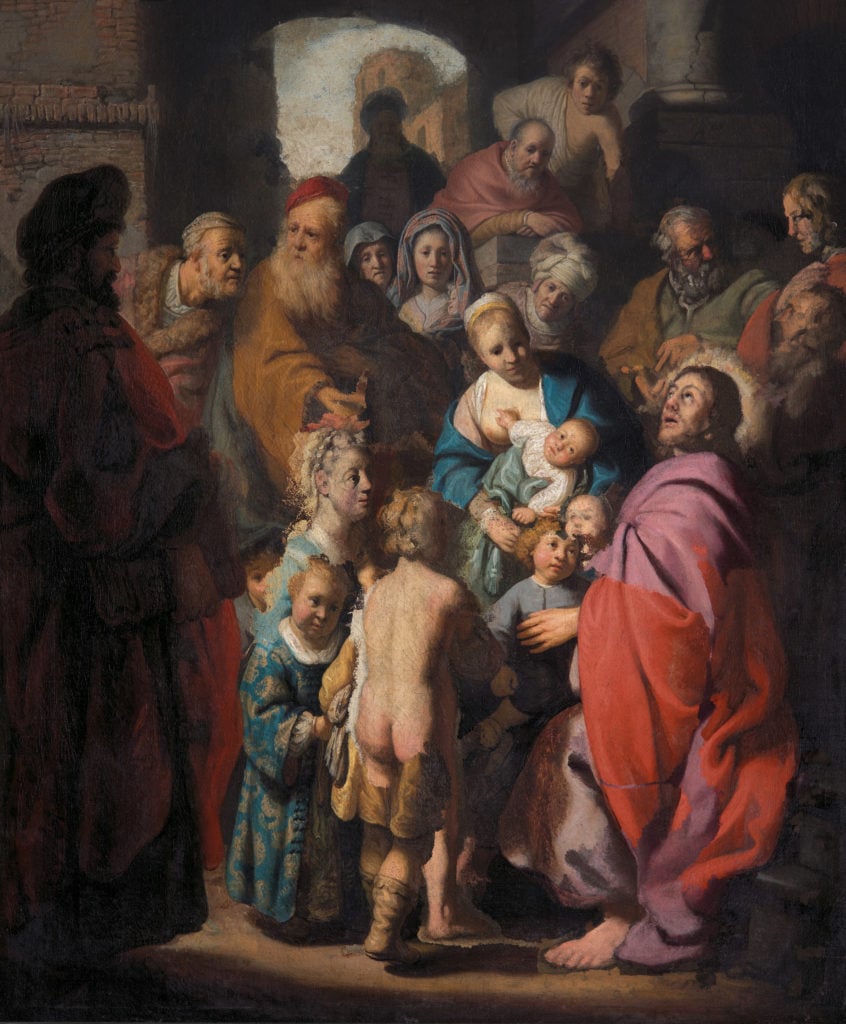
Rembrandt van Rijn, Let the Little
Children Come to Me (ca. 1627–28). Courtesy of Jan Six Fine
Art, Amsterdam.
This too could be a metaphor for
the cultural residue, imprint, and legacy that the artist left in
Leiden. A historically rich city in many ways, but still lesser
known than Amsterdam, sculptural tributes to the artist can be
found on several of the narrow brick streets. “I walked the city
day after day, hoping for the ghost of Rembrandt,” Blom said of the
process of writing his newly published book, also titled
Young Rembrandt.
“You can sense him, but can’t
really get a complete grasp in the same way it’s difficult to
understand how he made his first etchings.”
“Young Rembrandt” brings the
phantasm to life.
“Young Rembrandt, Rising Star” is on view at the
Museum De Lakenhal, Leiden, Netherlands, through February 9,
2020; see highlights from the exhibition below.
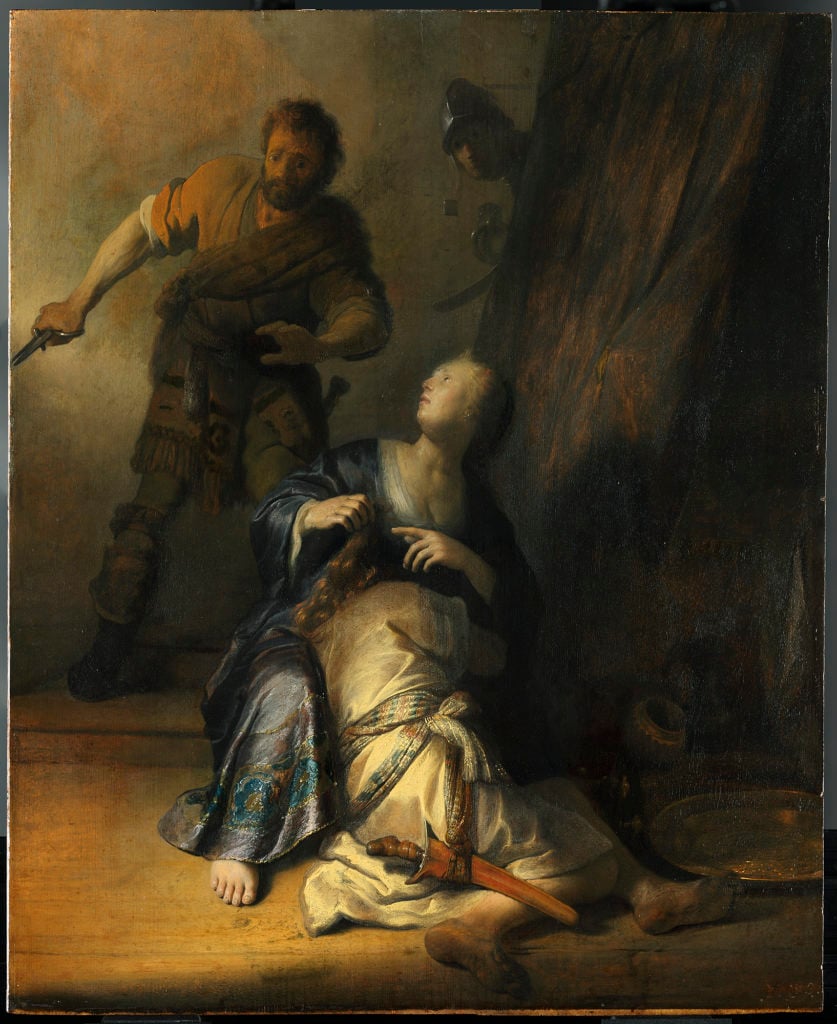
Rembrandt van Rijn, Samson and
Delilah (1628). Courtesy of Gemäldegalerie Staatliche Museen
Berlin – Preußischer Kulturbesitz.
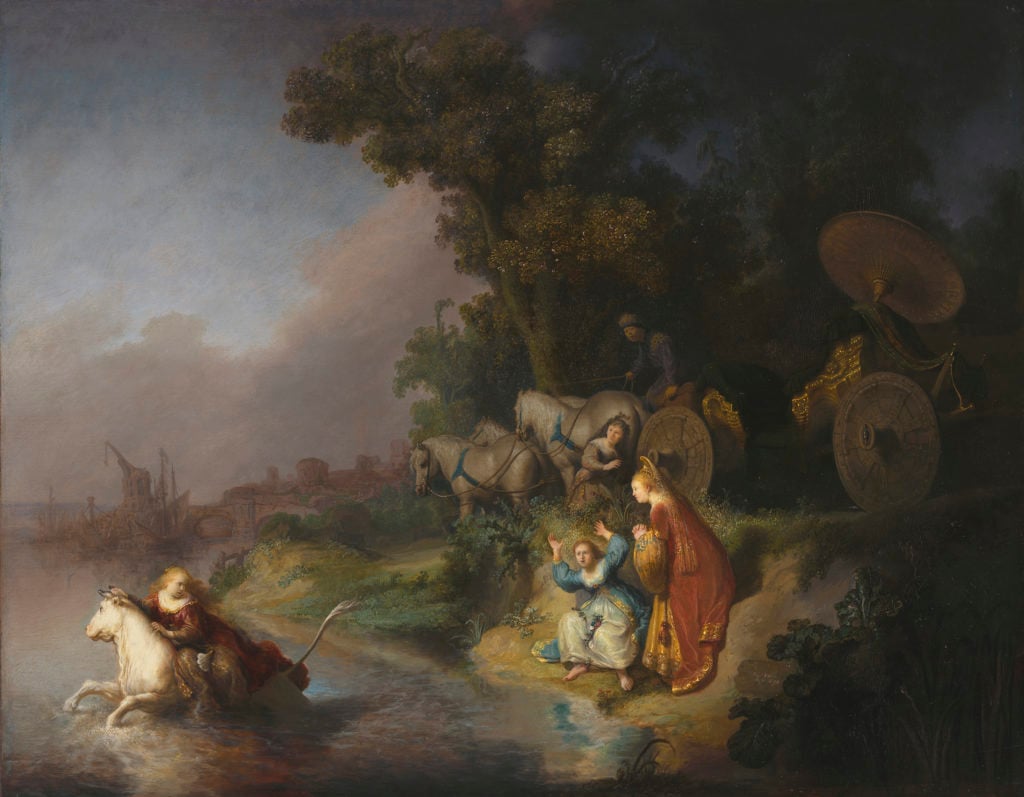
Rembrandt van Rijn, The Abduction of
Europa (1632). Courtesy of the J. Paul Getty Museum, Los
Angeles.
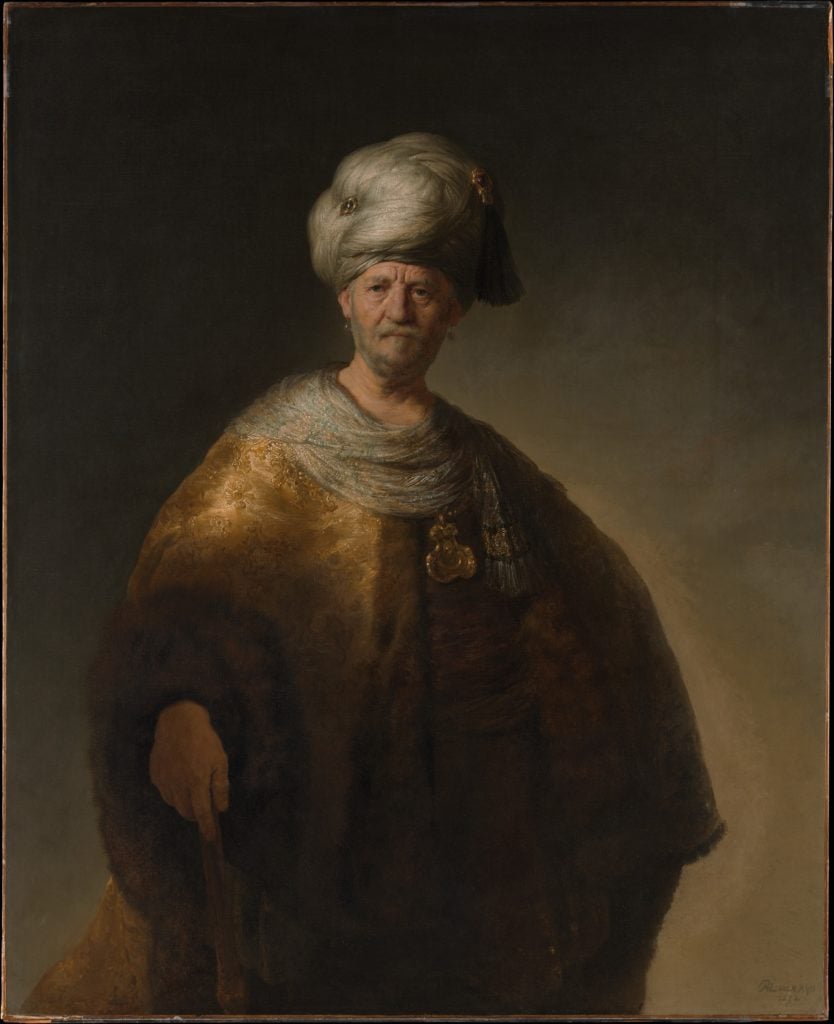
Rembrandt van Rijn, Man in Oriental
Costume (The Noble Savage) (1632). Courtesy of The Metropolitan
Museum of Art.
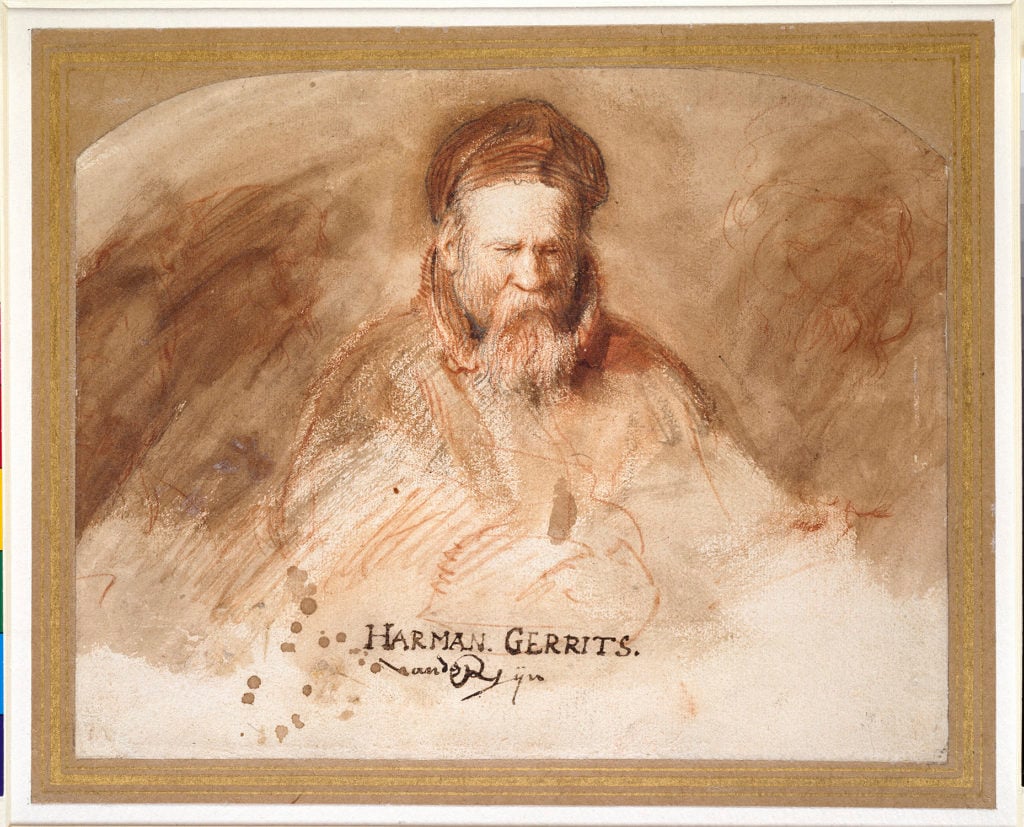
Rembrandt van Rijn, Portrait of an
Old Man (Rembrandt’s Father) (1625–30). Courtesy of Ashmolean
Museum, University of Oxford.
The post On the 350th Anniversary of Rembrandt’s Death, the
Artist’s Hometown Is Staging the First Show Dedicated to His Early
Work appeared first on artnet News.
Read more https://news.artnet.com/art-world/350th-anniversary-rembrandts-death-1695384
Further reading


Leave a comment