
Mail Art, a Charming Trend That Hasn’t Been Big Since the ’60s, Is Having a Big Renaissance Amid the Worldwide Lockdown
With studios and galleries
shuttered around the world, artists these days are being forced to
find new ways to make and share their work—and many are turning to
the US Postal service for help.
Mail art, a form that goes back
more than six decades, is enjoying a mini-renaissance, with a
number of postal projects popping up in recent weeks as people seek
a form of connection not mediated by screens.
Many campaigns—such as
the one organized by
Nashville-based artist Jason Brown, who is collecting works of art by anyone
willing to submit them—are meant to document this unprecedented
moment. (The works collected by Brown will be donated to the
Vanderbilt University Library.)
Others are more absurdist in
nature, channeling the roots of the art form. For instance,
Civilization, a print publication made up of conversations
overheard in New York, will send you a customized artwork
through the mail for $3.
"background:#FFF; border:0; border-radius:3px; box-shadow:0 0 1px 0 rgba(0,0,0,0.5),0 1px 10px 0 rgba(0,0,0,0.15); margin: 1px; max-width:500px; min-width:326px; padding:0; width:99.375%; width:-webkit-calc(100% - 2px); width:calc(100% - 2px);">
View this post on Instagram
“Mail art is perfect for right
now,” says Jason Pickleman, an artist and designer who runs the
small Chicago-based gallery Lawrence & Clark.
He is currently soliciting
envelope-sized works for what will hopefully become an in-person
exhibition. “It’s compact.
It’s social and also socially distanced from its audience. That
makes it exceptionally relevant today.”
Ever since Pickleman issued
an open call for mail-based artworks in 2018 (he received 100
submission that year), mail
art exhibitions have become annual traditions at the gallery. (In
2019, he got 150 works.) Each year, the gallery’s mailman chooses the “best in
show,” and winners get a book of Forever Stamps.
Whether the show will take place
this year is still up in the air, as is the future of Lawrence &
Clark altogether. The gallery, which doesn’t sell art, but instead
is used to display Pickleman’s collection and the work of artists
in his community, is supported by his design practice. In the last
two months, he’s lost 90 percent of his
clients.
“The gallery is an additional
expense that we may no longer be able to afford,” he says. “It’s
collateral damage.”
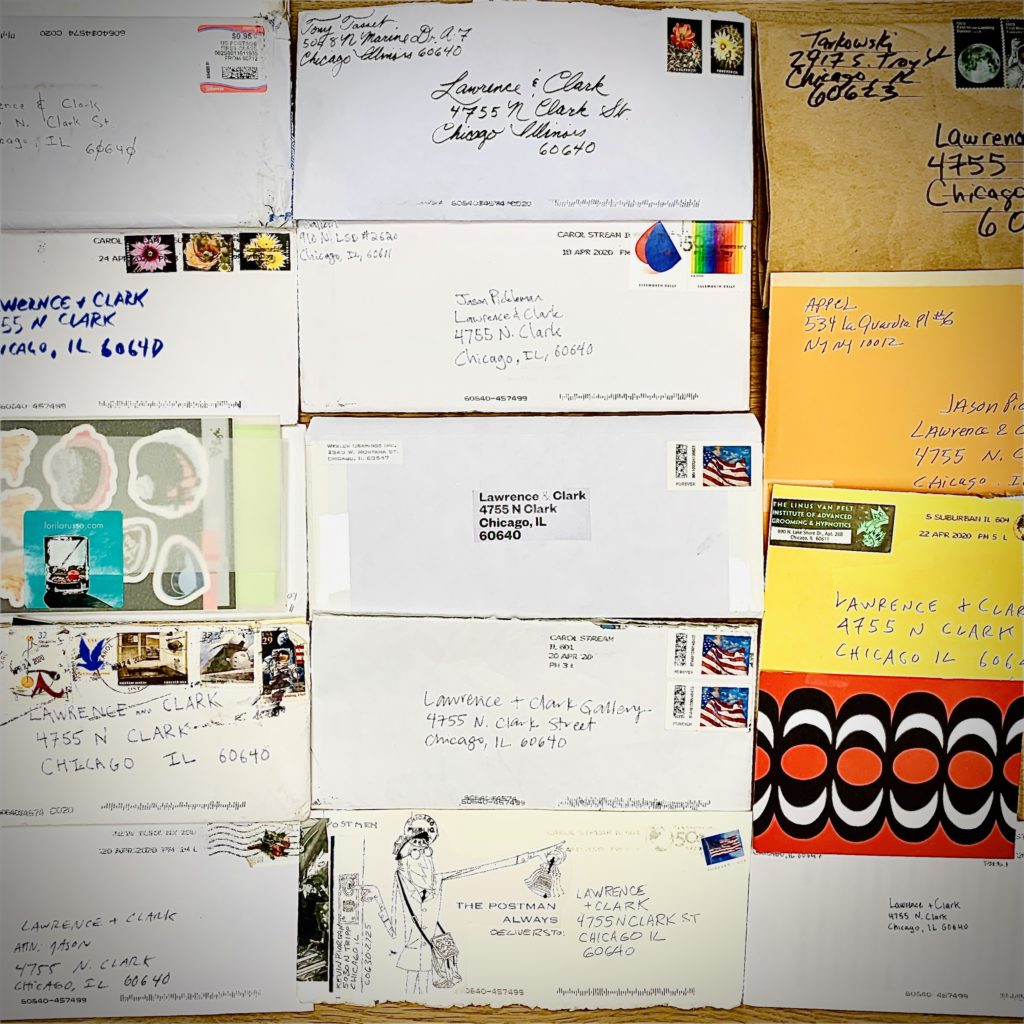
Mail art submissions. Courtesy of Jason
Pickleman and Lawrence & Clark.
So far, Pickleman has received
roughly 100 artworks for this year’s show, and he expects 200 more.
If the show can’t take place in person—the gallery’s lease is up
this summer—then he will put something together over Instagram and
Facebook.
Though the roots of the art form
were born in various Modernist and early Postmodernist movements,
particularly Dadaism and Fluxus, mail art as we know it has become
synonymous with Ray Johnson, who is thought to have pioneered the
model in the late 1950s.
Johnson, once dubbed “New York’s
most famous unknown artist,” began mailing art to friends that he
made from images culled from magazines and other sources, which he
called “moticos.” Often, they came with instructions that invited
the recipient to add to the artwork, exquisite corpse-style, and
send it along to someone else.
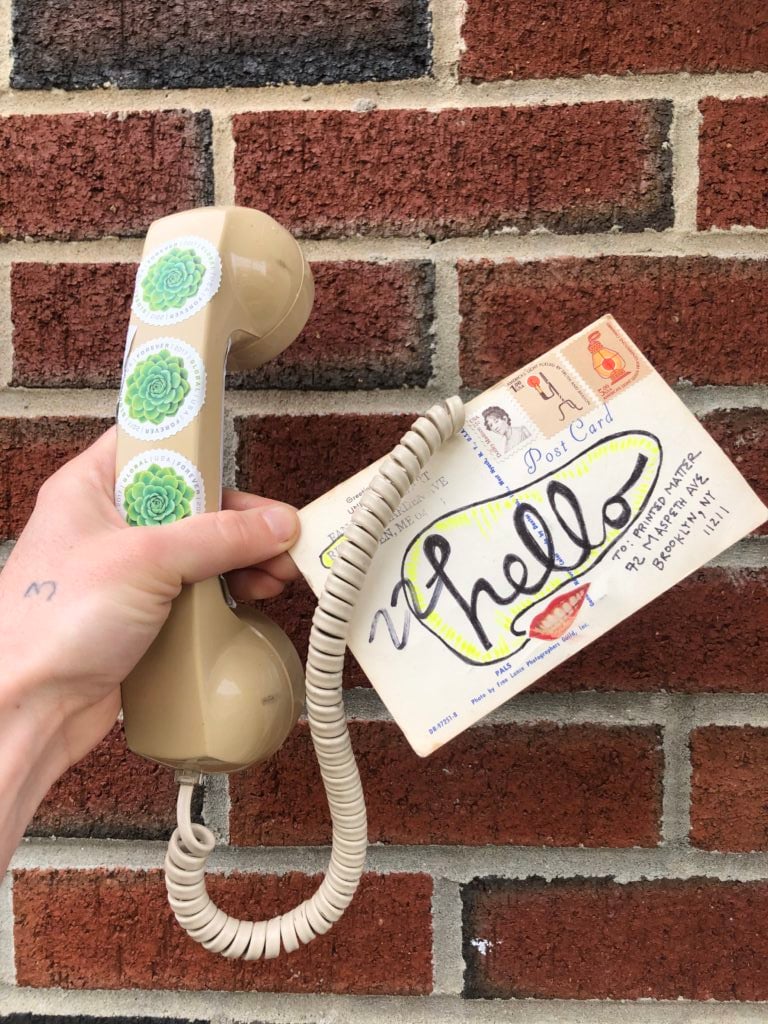
Mail art by Margaret Rizzio. Courtesy of
Printed Matter.
The idea was to create a form of
artistic production that bypassed the institutionalized channels of
the contemporary art world and democratized the process of
dissemination.
And even today, the model is
democratic, which is a big part of the appeal, says Johanna
Rietveld, a manager of the New York-based bookstore Printed
Matter.
“Anybody can be a mail artist and become part of that network.
Even if you don’t feel like a mail artist, you are a mail
artist.”
Through Printed Matter, Rietveld launched an open call for mail
art submissions in early April with a simple prompt: “We live in
real time.”
“It’s about experiencing the
moment, moving through life in real time, while also looking ahead
to the moment when we’ll be thinking back on it,” she says,
explaining the impetus for the project. “So much changed within a
few days. You couldn’t plan ahead. It’s about living a very
day-to-day life.”
"background:#FFF; border:0; border-radius:3px; box-shadow:0 0 1px 0 rgba(0,0,0,0.5),0 1px 10px 0 rgba(0,0,0,0.15); margin: 1px; max-width:500px; min-width:326px; padding:0; width:99.375%; width:-webkit-calc(100% - 2px); width:calc(100% - 2px);">
View this post on Instagram
The store is collecting
submissions from all over the world (emails are also accepted), and
will compile a selection into a small book when non-essential
businesses can resume. (All submissions will live on in Printed
Matter’s archives as well.)
So far, Printed Matter has
received nearly 400 works of art, from collages and textiles, to
stickers, and even an old telephone. And the artists behind them
are similarly diverse. Rietveld notes that they’ve received pieces
from a 5-year-old child and a 101-year-old woman; from 30 students
in a university program, where a professor turned the open call
into an assignment; and from at least one inmate in a correctional
facility.
“Mail art creates this sense of connectivity in a time when
everybody is isolated,” Rietveld says. “It’s connectivity
in this analogue, old-school way.”
The post Mail Art, a Charming Trend That Hasn’t Been Big
Since the ’60s, Is Having a Big Renaissance Amid the Worldwide
Lockdown appeared first on artnet News.
Read more https://news.artnet.com/art-world/mail-art-renaissane-1850670
Further reading


Leave a comment