
Looters Are Taking Advantage of the Worldwide Lockdown to Rob Cultural Heritage Sites—and Selling Their Stolen Wares on Facebook
As archaeological sites become increasingly vulnerable to
looting amid global lockdowns, Facebook has emerged as an
increasingly popular hub of the illicit trade.
The Antiquities Trafficking and Heritage
Anthropology Research Project, which monitors efforts to
traffic stolen artifacts in the digital underworld, has seen a
recent surge of activity on the social-media platform, particularly
concerning looted objects from the Middle East and North
Africa.
Last week, a historic mosque in Morocco was looted and the
images were shared over illicit groups on the social-media
platform, the Art
Newspaper reported. Such photos help the seller
demonstrate the authenticity of their wares, and can yield tips
from other group members about how to proceed with excavations.
These Facebook groups “are often private and designed
specifically for the purpose of trafficking or engaging in illegal
digging,” said the project’s co-director, Katie Paul, in an email
to Artnet News.
“The individuals operating in these groups are not end-market
buyers and are well aware of the fact that what is traded in these
groups is illegal,” Paul said. “In many cases where people post
looting photos they will blur or block out their face with an emoji
so as to not be identified in association with the crime.”
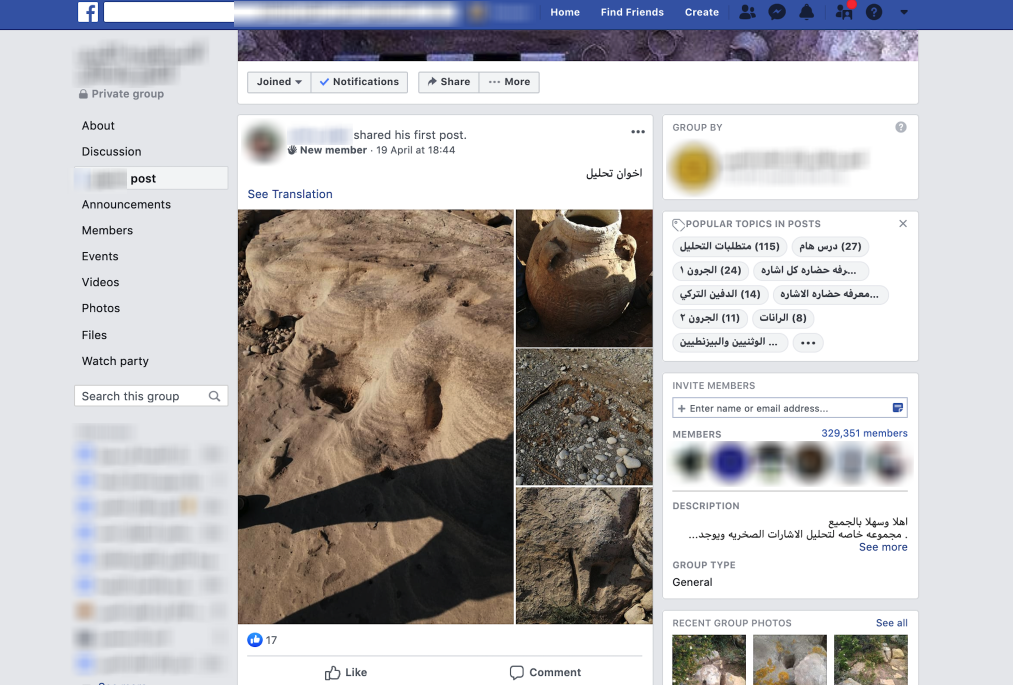
Active looting and pottery in situ
posted by a user listed in Khanaqin, Iraq. Screenshot courtesy of
the ATHAR Project.
Some people offering stolen artifacts may have turned to looting
as other forms of income dried up amid the lockdown. Other factors
contributing to the rise in illegal excavations are the lengthening
of daylight hours and increasingly warm weather, which makes digs
easier to carry out.
“The looting of archaeological sites and museums thrives during
times of crisis—the Arab Spring spawned a new wave of looting
across the Middle East, the Greek museum in Olympia was looted as
the country faced widespread anti-austerity protests, the Kiev
History Museum was looted during a period where police and
protestors clashed,” said Paul. “The common thread between all of
these crises is that authorities were occupied with other issues,
and that’s what we’re facing today.”
The project is monitoring trade activity in the Middle East and
Africa, in places where “these transactions are absolutely
illicit,” Paul said. “The countries represented by these looters
are places where no legal trade exists.”
Much illegal excavation is tied to criminal organizations or
terrorist groups in conflict areas. And authorities often have a
hard time shutting down illegal trading. “Preventing the sale of
loot is difficult because the transactions occur quickly since they
do not involve due diligence or purchase agreements,” art and
cultural heritage lawyer Leila Amineddoleh told Artnet News in an
email. “By the time law enforcement learns of the exchanges, the
objects have likely disappeared deeper on the black market.”
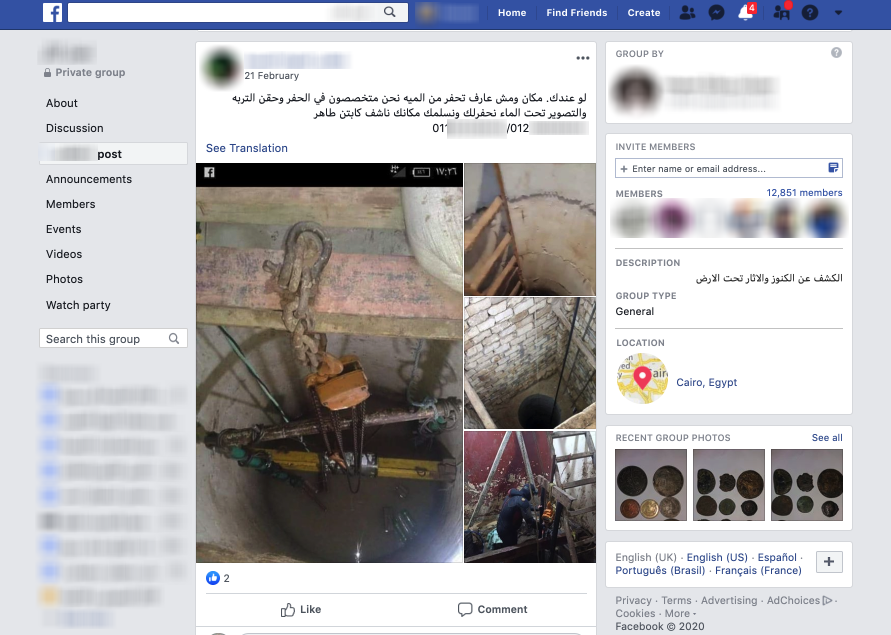
User in Cairo advertising his services
for scuba-diving to loot in a tomb that is filled with groundwater
on February 21. Screenshot courtesy of the ATHAR Project.
In response to a report from the antiquities research
project that identified groups trading artifacts on Facebook last
year, the platform tried cracking down on the activity. But while
the company removed 49 groups linked with trafficking, the
researchers contended that there were still 90 other groups where
the blackmarket trade continued.
“Facebook needs to include a ban on this activity in its
community standards and commerce policies and actually enforce that
ban,” said Paul. “But it also needs to ensure that it preserves and
archives this data. Not only do these photos and videos serve as
evidence of war crimes in the cases of Syria, Iraq, Yemen, and
Libya, but they also serve as a critical record of an object’s
existence, particularly in the cases of artifacts offered while in
situ.”
For at-risk archaeology sites, International Alliance for the Protection of
Heritage in Conflict Areas announced this week that it
would allocate emergency
funding to affected cultural heritage sites in conflict
regions. Other possible resources include the World Monuments Fund, which operates a
Crisis Response Fund that helps
cultural heritage sites that have been damaged during
disasters.
The post Looters Are Taking Advantage of the Worldwide
Lockdown to Rob Cultural Heritage Sites—and Selling Their Stolen
Wares on Facebook appeared first on artnet News.
Read more https://news.artnet.com/art-world/illicit-antiquities-trade-facebook-1848924
Further reading


Leave a comment