
‘It’s a Symbol in the Community That Can’t Be Ignored’: Why a Teacher Organized a George Floyd Tribute Wall in Harlem
On Tuesday, two weeks after Minneapolis police killed George
Floyd, he was buried in his hometown of Houston. Nearly 2,000 miles
away, in Harlem, the historically African American neighborhood in
New York, paid tribute to the Floyd with a memorial wall, covered
in artwork and protest signs.
The fence, just behind the New York Public Library’s Schomberg
Center for Research in Black Culture on 135th Street, had filled up
with artwork, flowers, and candles by Wednesday afternoon, with
passersby of all races pausing to pay their respects.
“It’s really powerful,” Stephanie Green, a travel nurse from
Kentucky who has been working across the street at Harlem Hospital
for the last two months, told Artnet News. She encountered the
memorial on her lunch break and lingered in front of it, reading
the signs calling for social justice and police reform.
Hoping to amplify the message, Westchester resident Ryan Barnes
posed in front of the fence in a shirt reading “I am black history
every day,” which he purchased from a black-owned business. He and
his mother had driven down from Westchester specifically to seek
out public art related to Floyd.
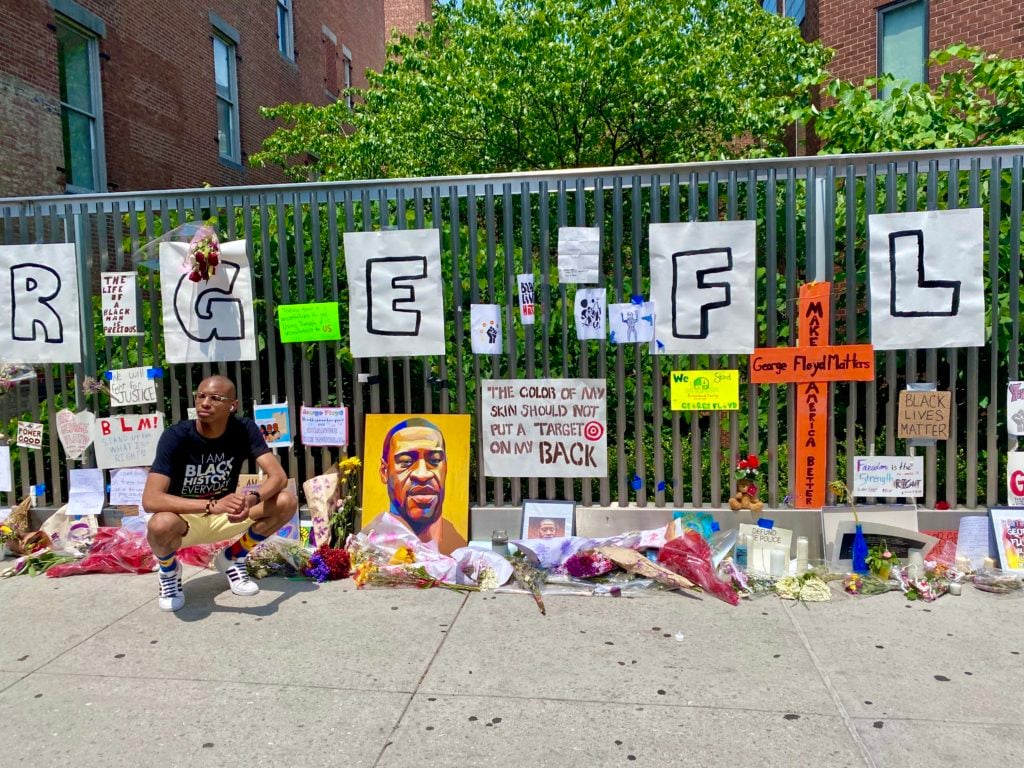
Ryan Barnes with Harlem’s George Floyd
tribute wall at the New York Public Library’s Schomberg Center for
Research in Black Culture. Photo by Sarah Cascone.
Jamela Finch, who has been attending demonstrations in protest
of Floyd’s death and police violence, also stopped and parked her
car to take a picture with the display. “People are really changing
the world,” she told Artnet News. “It’s sad that it took a
situation like this to make it happen, but it needs to end here—it
will end here.”
The memorial stands less than two avenues over from the city’s
32nd police precinct—an intentional choice on the part of organizer
Gerdine Behrmann, a teacher at nearby Success Academy Harlem
West.
Artnet News spoke with Behrmann via email about her vision for
the memorial and its cry for justice.
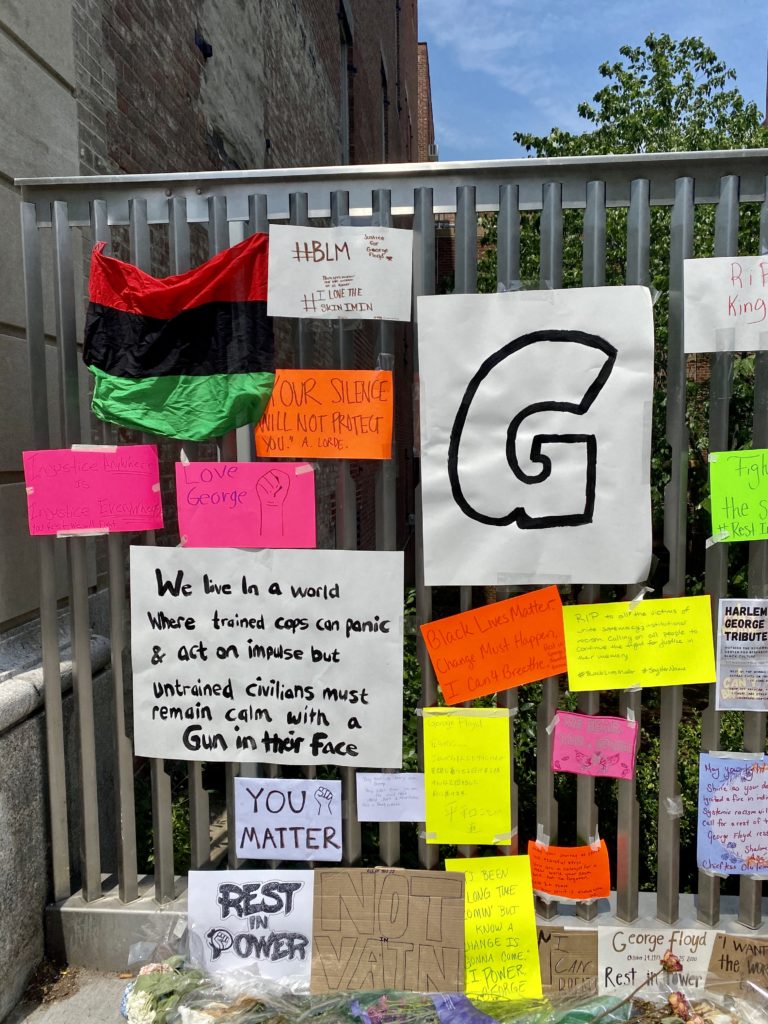
Harlem’s George Floyd tribute wall at
the New York Public Library’s Schomberg Center for Research in
Black Culture. Photo by Sarah Cascone.
How did you get the idea to stage this
memorial?
What inspired me to create the George Floyd tribute wall was the
idea of having this symbol in the community that simply couldn’t be
ignored. It would serve as a reminder for police, every time they
patrol the streets of Harlem, of what police brutality took from
the black community. At the same time it also serves as a place of
healing for those who are trying to cope with the brutal murder of
George Floyd and others who lost their lives to police brutality
and systemic racism.
Why was it important to you to give the community a
place to grieve and to express their support for George, his
family, and the Black Lives Matter movement?
There is such a large population of black people in Harlem. What
happened to George Floyd could have happened to any one of us, at
any time, anywhere. There are no actions he could have done to
prevent it, and no actions any of us have taken to deserve it. It’s
just the reality of the world we live in. It’s easy to feel
helpless and unheard. The purpose of this wall was to give a voice,
not only to myself, but to every single person of this community
who is fed up. The wall keeps George Floyd’s memory alive. My hope
is that it fuels the community to push for radical change to a
system that was built to shut us out.
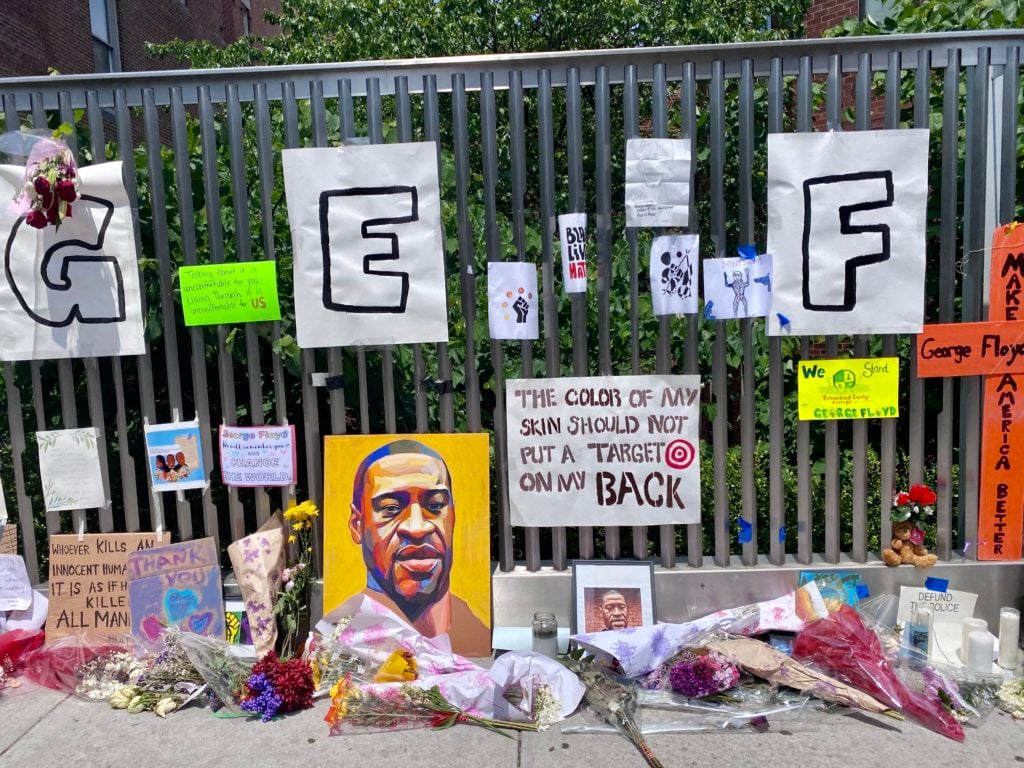
Harlem’s George Floyd tribute wall at
the New York Public Library’s Schomberg Center for Research in
Black Culture. Photo by Sarah Cascone.
Are you surprised there have been so many contributions
to the wall?
This outcome was completely unexpected. None of this was really
planned. The day before, my job gave us staff a day off work for
George Floyd’s memorial. I knew we shouldn’t let his memory be
buried with him. I planned everything the night before, got the
word out on social media, and began it the next morning.
What started off as a few big letters on poster paper turned
into a display of the entire community’s pain and frustration. The
pieces are one part of the display, but the other part is the
people. Watching people come and go, and their reactions. That’s
huge. We all are feeling the same way, and you can tell by the
looks on their faces.
What are some of the standout artworks that have been
added?
Some works are truly amazing, such as the chandelier with names
of black lives lost to police brutality and racism, but my favorite
piece was actually done by a child. It moved me so much to see. The
kids who are living through these events are not immune to the pain
we are feeling. They are aware of what’s happening and also need a
place to express themselves.
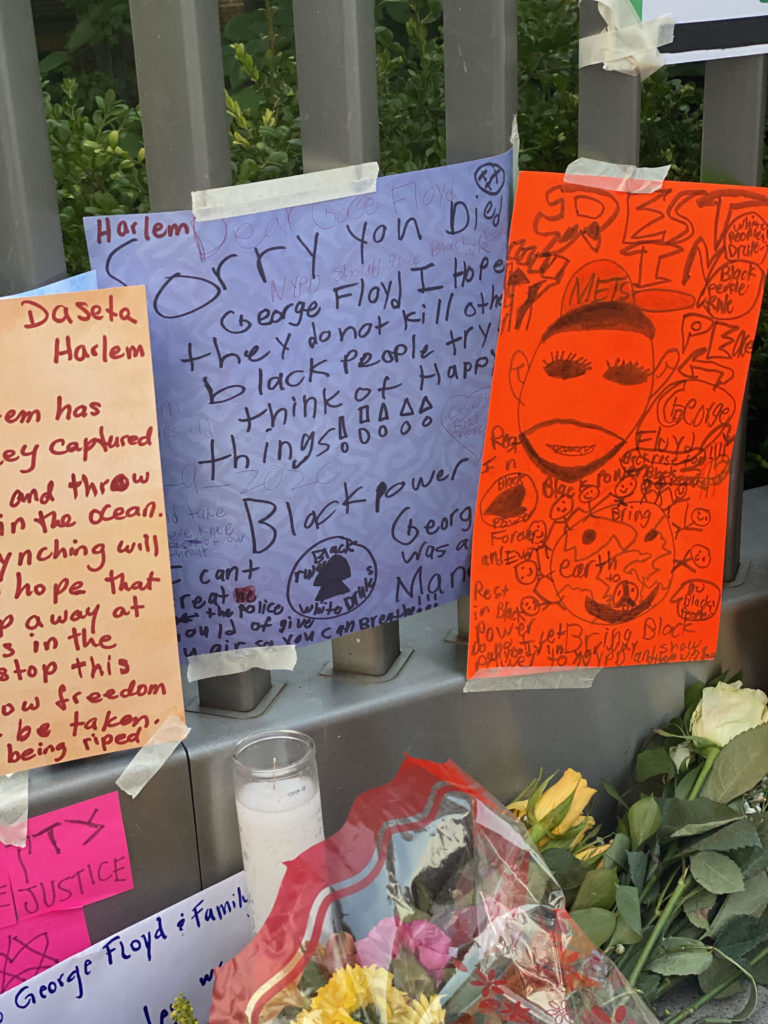
A child’s contribution to the George
Floyd Tribute Wall in Harlem. Photo by Gerdine Behrmann.
It reads, “Sorry you died George Floyd I hope they do not kill
other black people try to think of happy things” and “the police
should have given you air so you can breathe.” Systemic racism is
stripping kids of their ability to be innocent and to just be kids.
No child should have to worry about dying at the hands of men and
women who don’t understand or care for the communities they claim
to serve.
Two other pieces were done by two of my eighth-grade students,
Morgan Hodges and Jada-Ann Parker. They are two incredible graphic
designers. They came up with their pieces the same night I told
them about my idea of a wall and were two of the first pieces of
art to go up. It seems like they definitely inspired others to get
creative!
See more photos of the tribute wall below.
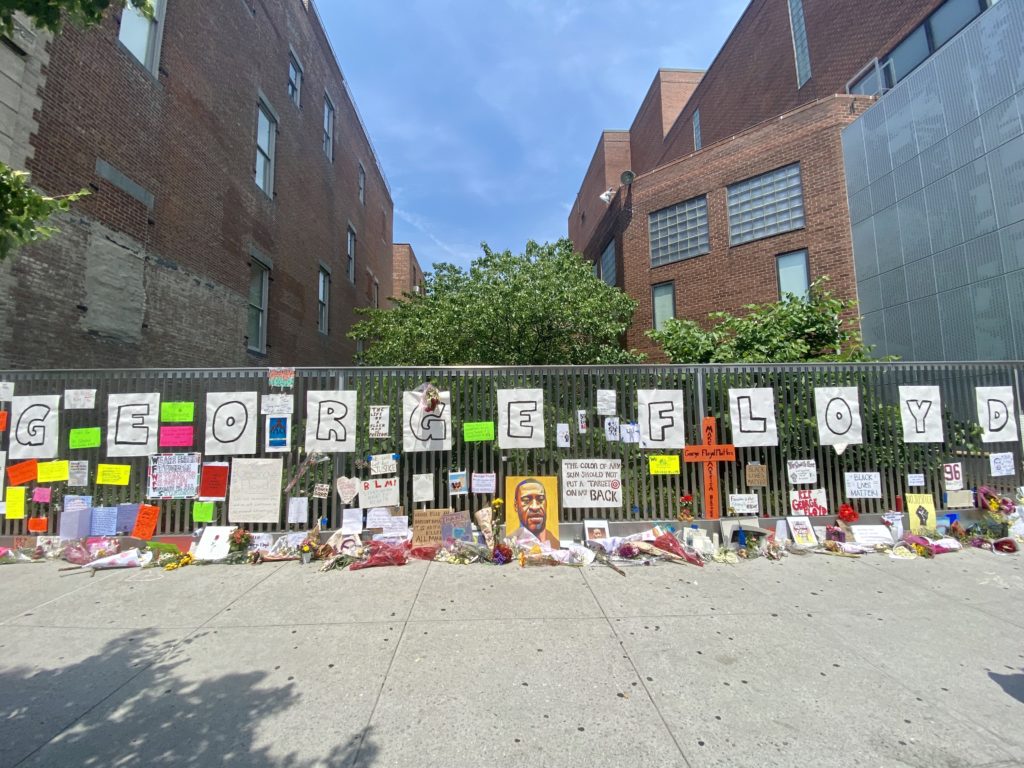
Harlem’s George Floyd tribute wall at
the New York Public Library’s Schomberg Center for Research in
Black Culture. Photo by Sarah Cascone.
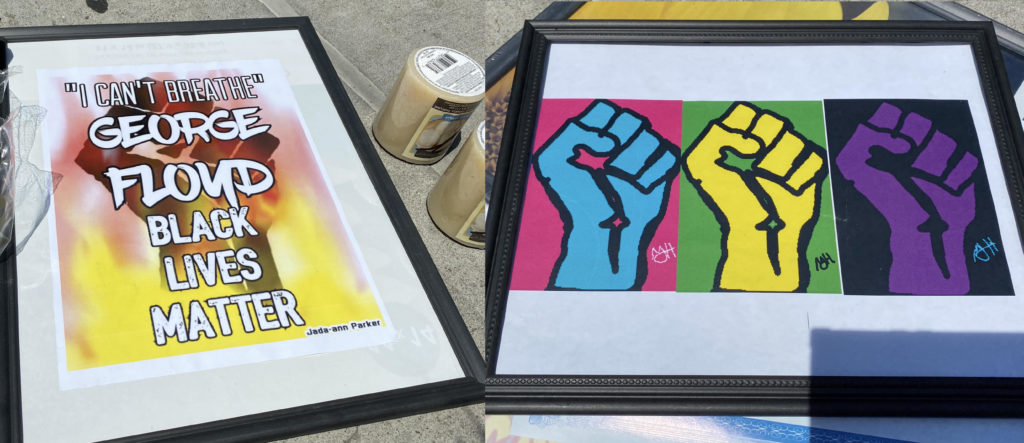
Jada-Ann Parker and Morgan Hodges’s
contributions to the George Floyd Tribute Wall in Harlem. Photo by
Gerdine Behrmann.
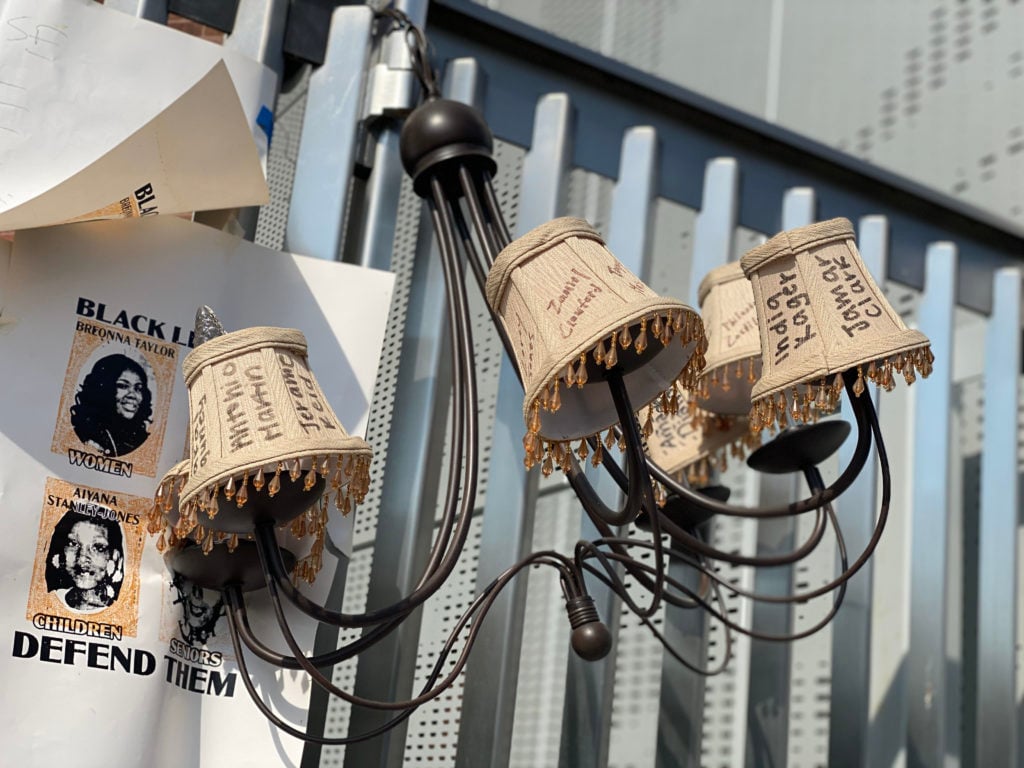
A contribution to the George Floyd
Tribute Wall in Harlem. Photo by Gerdine Behrmann.
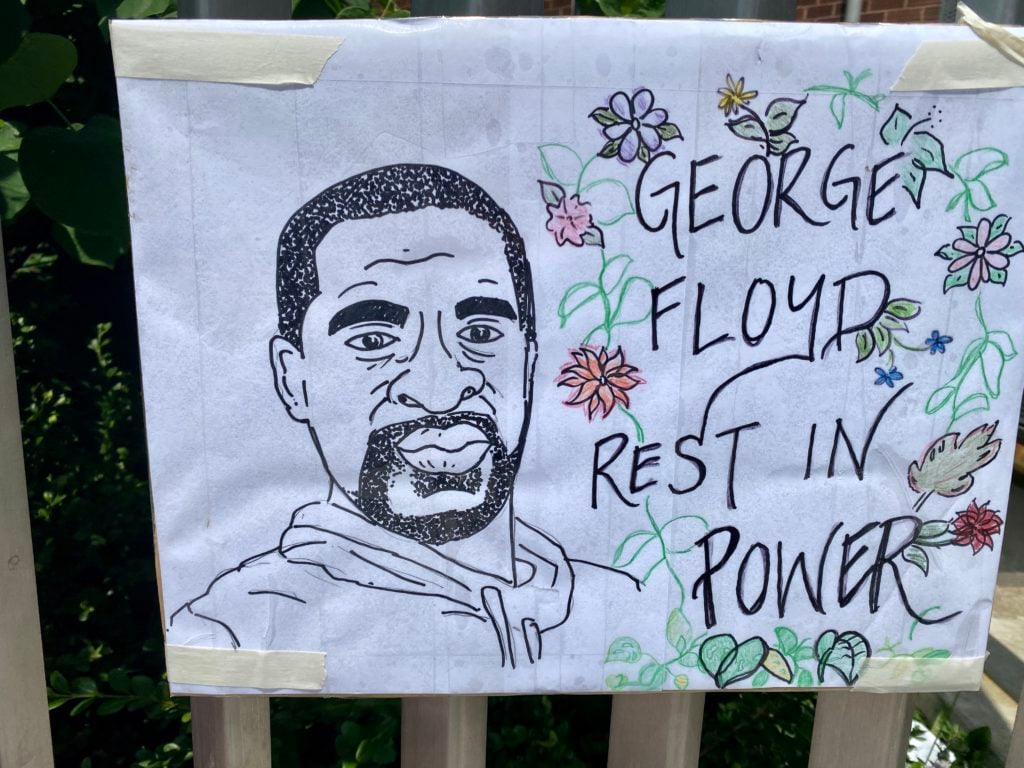
Harlem’s George Floyd tribute wall at
the New York Public Library’s Schomberg Center for Research in
Black Culture. Photo by Sarah Cascone.
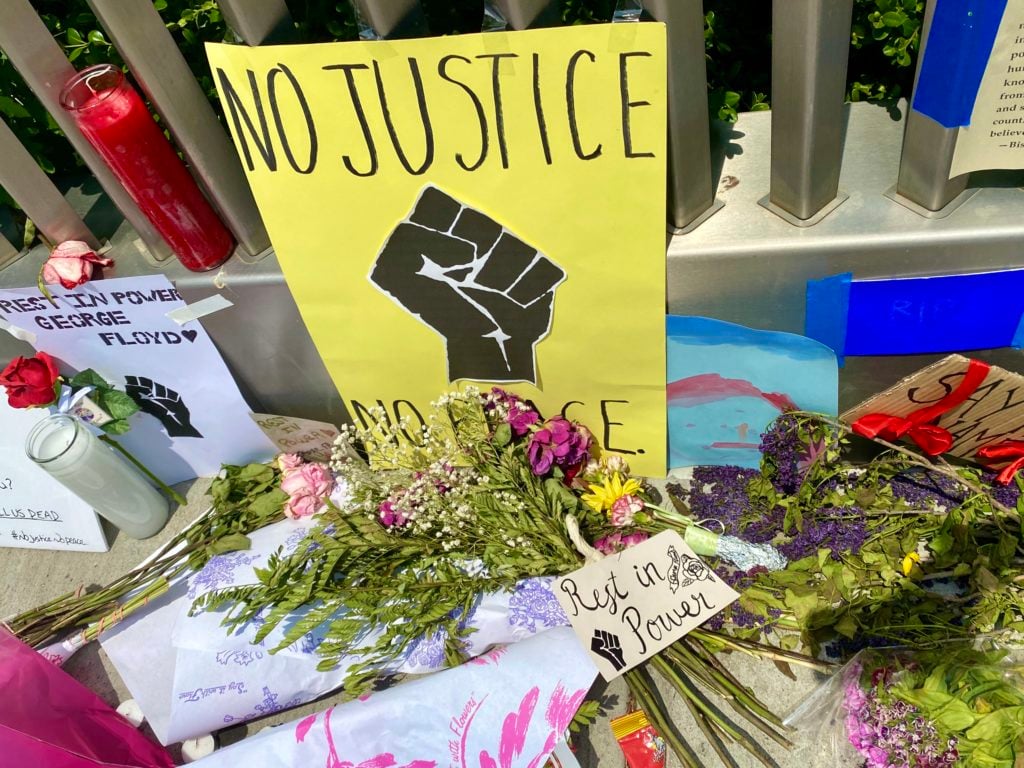
Harlem’s George Floyd tribute wall at
the New York Public Library’s Schomberg Center for Research in
Black Culture. Photo by Sarah Cascone.
The post ‘It’s a Symbol in the Community That Can’t Be
Ignored’: Why a Teacher Organized a George Floyd Tribute Wall in
Harlem appeared first on artnet News.
Read more https://news.artnet.com/art-world/harlem-george-floyd-tribute-wall-1884285
Further reading


Leave a comment