
American Pop Artist Idelle Weber, Known for Her Striking Depictions of Corporate Banality, Has Died at Age 88
Pop artist Idelle Weber, best known for her striking
compositions of black silhouettes set again flat, brightly colored
backgrounds, died on March 23 at the age of 88. Her gallery, Hollis
Taggart, announced the news.
Weber began producing her signature silhouette works in the
1960s. Her faceless figures ranged from domestic women to corporate
office workers in suits and ties. The publication Artinfo dubbed
her 1964 painting Munchkins I, II, &
III the “original Mad Men painting” for
its resemblance to the opening credits of the TV series.
Weber was born in Chicago in 1932 and grew up in Beverly Hills,
studying art at Scripps College and UCLA. In 1957, the artist moved
to New York and enrolled in the Arts Student League.
She soon began forging a place in the city’s male-dominated art
world. She found early success when one of her works was included
in the Museum of Modern Art exhibition “Recent
Drawings USA.” But there were significant obstacles: art
historian HW Janson told Weber that he respected her, but didn’t
include women in his textbooks, and Robert Motherwell refused to
let her audit his course at Hunter College because she had a child
and was sure to give up painting.

Idelle Weber at her Brooklyn Heights
studio, 1958. Photo courtesy of Hollis Taggart and the estate of
Idelle Weber.
It took some years to secure gallery representation, but Weber
eventually landed with Bertha Schaefer in 1962. Weber also went on
to have solo shows at Hundred Acres gallery and OK Harris and,
by the mid-1960s, was included in group shows at the Contemporary Arts Museum Houston, the
Guggenheim Museum in New York, and the
Milwaukee Art Museum.
Unusual for a Pop artist, Weber embraced the political
turbulence of the era in her work, addressing events such as the
Vietnam war and the Kennedy assassination, as well as broader
themes such as consumerism.
In the 1970s, Weber moved away from Pop art and became a leading
member of the Photorealist movement, painting close-up shots of
trash and litter that simultaneously captured the beauty and decay
of urban life.
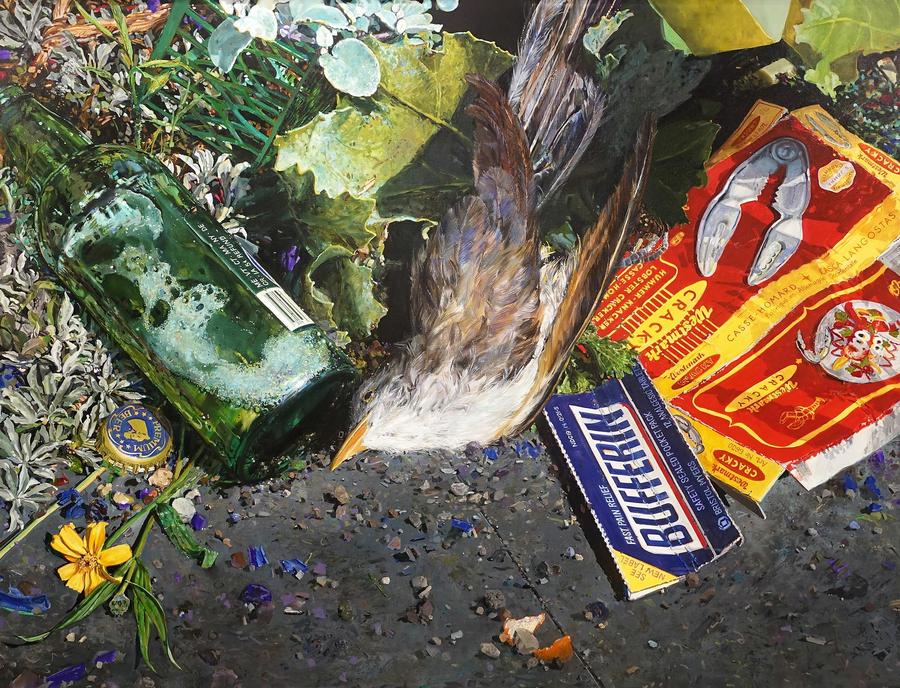
Idelle Weber, East End Bufferin
(1990). Courtesy of Hollis Taggart and the estate of Idelle
Weber.
Like many women artists of her era, Weber has received renewed
attention in recent years. The Los Angeles County Museum of
Art acquired Jump Rope
(1967–68), one of her plexiglass wall sculptures, in 2016. And when
MoMA unveiled its
expansion last fall, Weber was one of the artists it
reintroduced as part of its effort to expand the canon beyond
the white men who have traditionally dominated it.
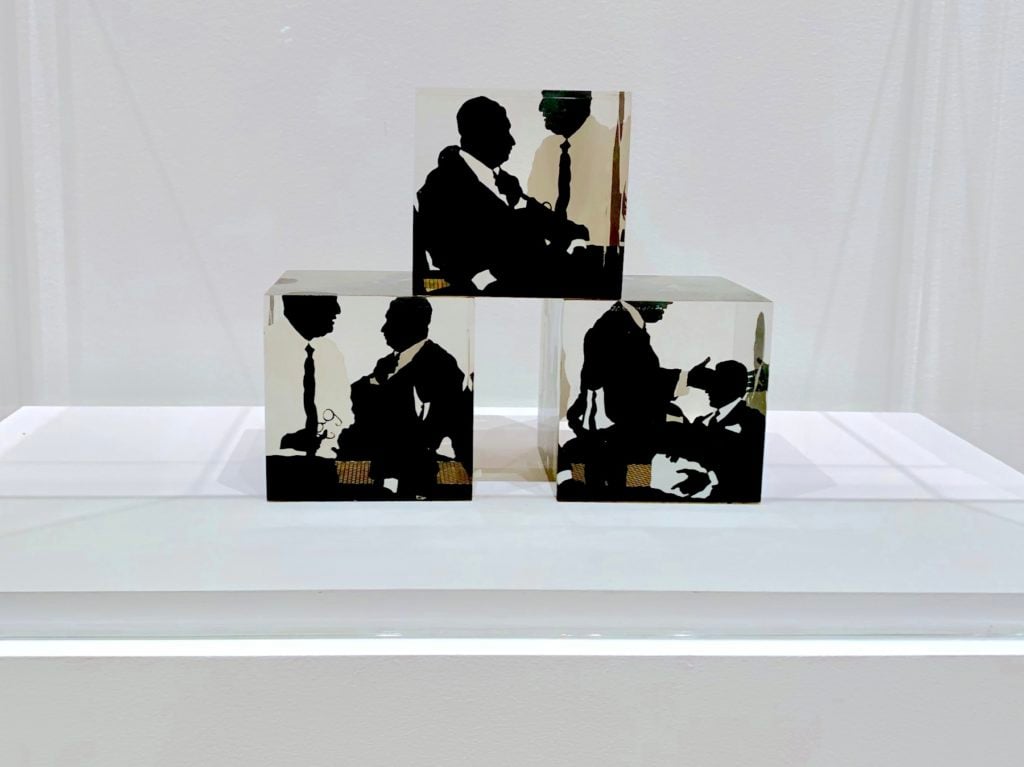
Idelle Weber, Untitled (circa
1968–70), which went on view during the unveiling of MoMA’s
expansion. Photo by Ben Davis.
Weber’s work can also be found in the collections of the
Art Institute of Chicago, the Brooklyn Museum, the Harvard Art Museums, the Metropolitan Museum of Art, and
the Yale University Art Gallery.
In 2018, Weber joined Hollis Taggart gallery, where she has
since had two solo shows.
“We look forward to organizing many exhibitions of her
significant body of work and to bringing to further light the
incredible depth and intricacy of her artistic output,” the gallery
said in a statement.
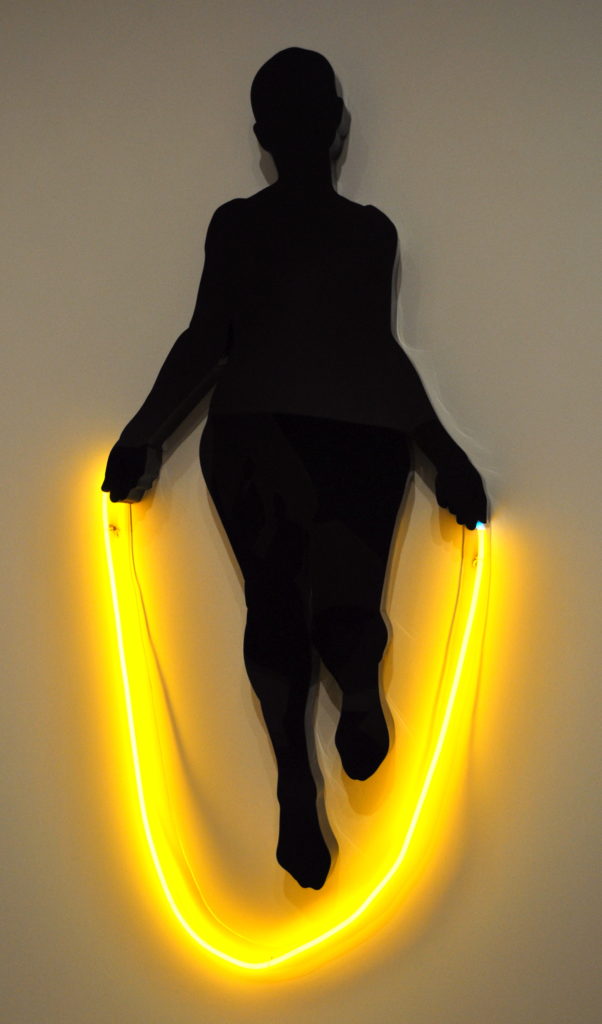
Idelle Weber, Jump Rope
(1967–68). Photo courtesy of the Los Angeles County Museum of
Art.
The post American Pop Artist Idelle Weber, Known for Her
Striking Depictions of Corporate Banality, Has Died at Age 88
appeared first on artnet News.
Read more https://news.artnet.com/art-world/pop-artist-idelle-weber-obituary-1821735
Further reading


Leave a comment