
A Wedding Photographer Took an Online Archaeology Class During Lockdown—and May Have Discovered a Lost Stonehenge-Like Structure
Excavations around the world have ceased activity as
archaeologists observe widespread stay-at-home orders. But that
didn’t stop a British wedding photographer from making an
intriguing archaeological discovery of his own—without ever leaving
his house.
Chris Sedden found himself out of work during the shutdown as
government restrictions put an end to weddings and other large
gatherings. But the break in his normal routine afforded Sedden the
opportunity to put on his amateur archaeology hat and spend hours
pouring over images of the terrain surrounding his home in southern
Derbyshire.
As he scanned along the River Trent, near the village of
Swarkestone, he noticed something strange. “I thought, ‘what’s
that? It looks a bit odd, and a bit round,’” Sedden told the
Guardian.
The strange shape was clearly visible in aerial photos, with
brown patches in the grass suggesting that there had once been a
stone structure there. (Summer droughts sometimes
reveal similar spotting at Stonehenge, indicating where the
missing stones would have once been.)
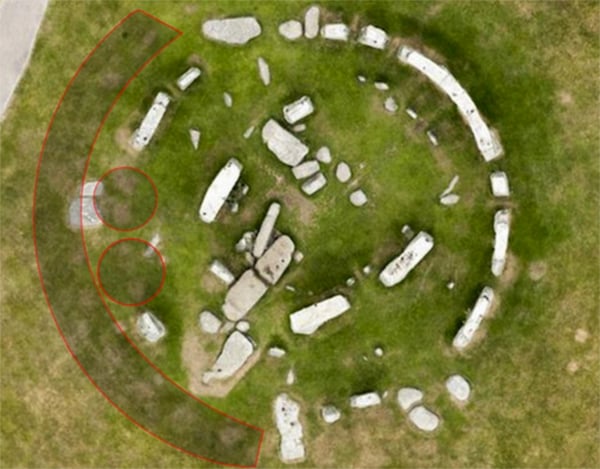
An aerial view of Stonehenge. Photo:
SWSN.com/English Heritage.
Even more compelling were the Light Detection and Ranging images
that Sedden found of the area online. LiDAR scans, as the process
is commonly known, involves taking topographical readings using
laser-equipped aircraft. The result is a three-dimensional map of
the earth’s surface that can reveal the long-lost remains of a
structure.
LiDAR is a revolutionary tool for archaeologists, helping them
spot large, low-lying formations that aren’t readily apparent on
the ground. It has particularly transformed our
understanding of Mayan archaeology, with LiDAR scans that have
revealed thousands of ancient
structures and fortifications that would have taken centuries
to map on foot.
For armchair archaeologist Sedden, the more he examined images
of the area, the more he began to suspect that the faint circular
formation was in fact the remains of an ancient structure, a
“losthenge” similar to Stonehenge. There are other known Neolithic
sites nearby, which helps support Sedden’s theory. And the historic
boundaries of the surrounding fields conform to the formation,
suggesting that farmers may have been organizing plantings around
an existing structure.
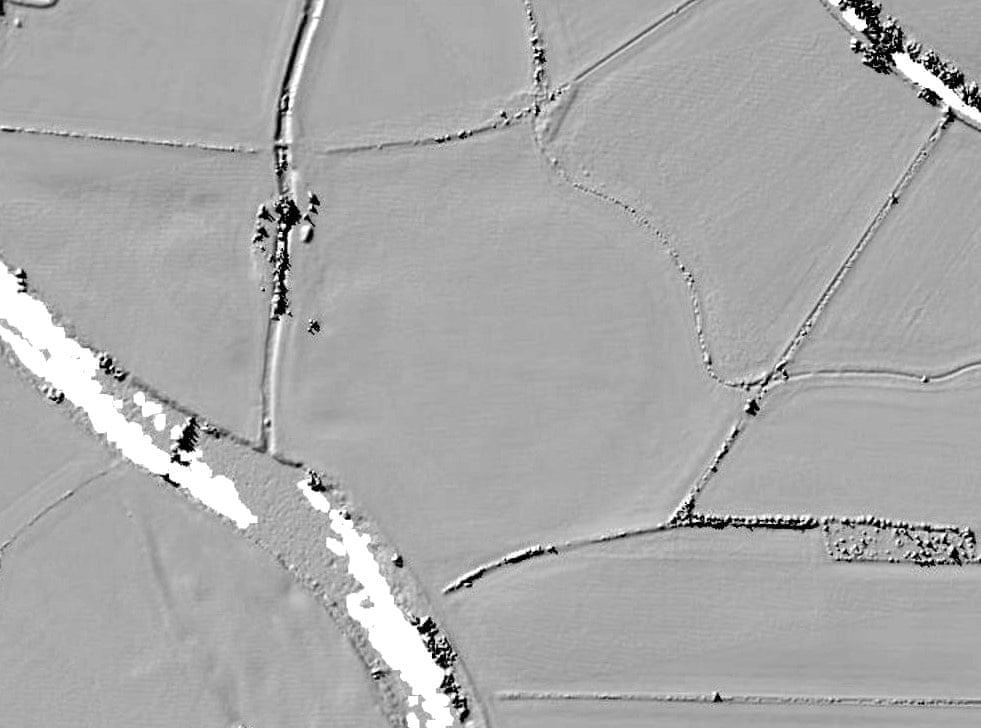
Wedding photographer Chris Sedden
spotted what could possibly be traces of a newly discovered henge
in the village of Swarkestone in south Derbyshire in an aerial
photograph, and a topographical LiDAR scan backed his
hypothesis.
So when Sedden enrolled in an online archaeology course with
DigVentures—joining some 4,000 archaeology
enthusiasts from 69 countries around the world in a new lockdown
passion—he quickly shared his theory with the class. His
instructors, professional archaeologists, were just as excited as
he was.
“Of course, we are all just itching to get out there and
investigate,” Lisa Westcott Wilkins, managing director of
DigVentures, told the Guardian. But even without
in-person confirmation of the find, “we are very happy to say that
this does indeed look like a ‘thing.’”
The post A Wedding Photographer Took an Online Archaeology
Class During Lockdown—and May Have Discovered a Lost
Stonehenge-Like Structure appeared first on artnet
News.
Read more https://news.artnet.com/art-world/wedding-photographer-discovers-losthenge-1855185
Further reading


Leave a comment