
The US Cultural Landscape Is Reeling From COVID-19. Further North, Canada’s Art Scene Has Few Complaints. Here’s Why
When news came that Canada’s art institutions were shutting down
to help stem the tide of coronavirus worldwide, Simon Brault was
worried. “Immediately, we were concerned that we would be ignored,”
says the director and CEO of the Canada Council for the Arts, the
nation’s largest funding body. “In previous crises, the cultural
sector has been the last to be taken care of.”
Fortunately, he has been proven wrong. As the public-health
crisis unfolds in Canada, many from both the commercial and
non-profit art worlds say the government has taken their needs
seriously in doling out billions of dollars in aid to various
corners of the economy, which is floundering in the unprecedented
lockdown.
The Canada Council, which distributes hundreds of millions of
dollars of public money to artists and art organizations each year,
was quick to get a seat at the table and enter into discussion with
the Canadian government. “Since the beginning of the crisis, we
tried to make sure we were not impairing any of our clients,” says
Brault. Advances on grants were made to help keep the arts sector
afloat, but Brault stayed firm that his budget not be reallocated
into bailouts. “Emergency relief needs to come from the government,
not from our annual budget,” he says.
Within weeks of the museums and galleries closing, in mid-March,
help arrived. Prime Minister Justin Trudeau has introduced an aid
package providing CA$2,000 (US$1,435) every four weeks for up to
four months to Canadians who have lost most or all of their income
as a result of the pandemic. Another program is helping businesses
and organizations by covering up to 75 percent of employee wages
for 12 weeks.
And while the programs have benefited many in the arts sector,
not everyone has been satisfied. The Canada Council issued a report
two weeks later showing that more was needed to sustain artists and
arts organizations. The survey from
mid-April of 7,565 of its funding beneficiaries showed that while
the majority seemed content with the programs, 39 percent of
respondents said that the funding did not meet their specific
needs. These were primarily self-employed artists and smaller arts
organizations, including some museums.
In response to the survey and public pressure, last week it was
announced that Heritage Canada, the ministry that oversees culture
and sports, would give out another CA$500 million (US$355 million).
While it has yet to be determined how the money will be divvied up
between the sectors, the move has been met with open arms at a time
when a return to normal feels far off on the horizon.
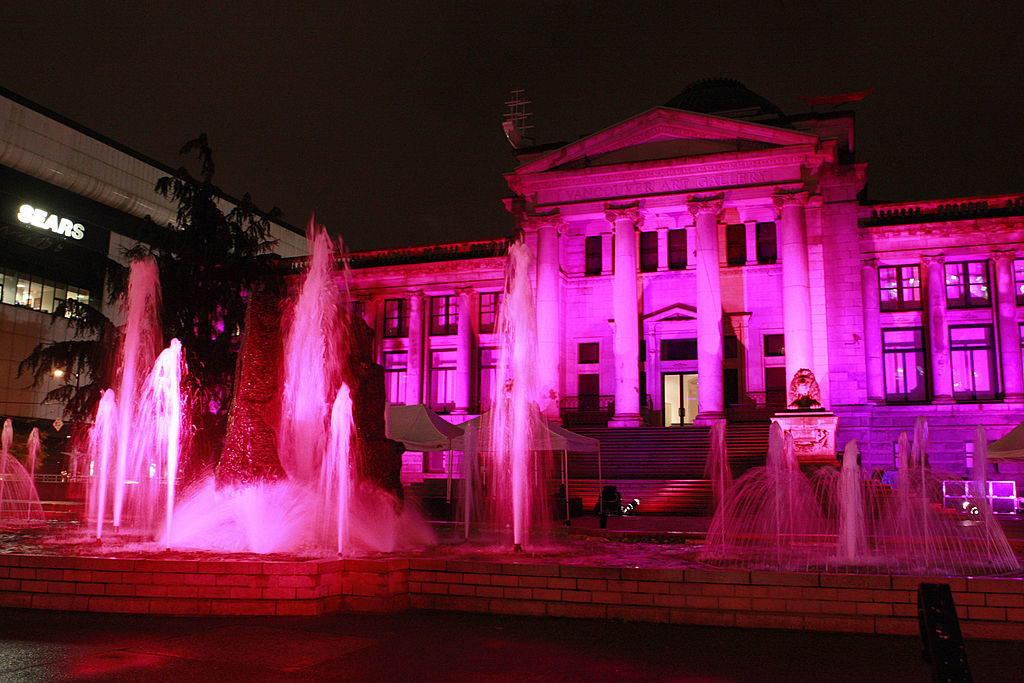
Vancouver Art Gallery. Photo: George
Pimentel/WireImage.
A Summer Slump
Tucked up in the Rocky Mountains, the typically bustling Banff
Center for the Arts is unnervingly quiet. The summer season is
typically its busiest period, with more than 120 events and courses
taking place between a usual May-to-August run. But the director of
communications for Banff, Erin Brandt-Filliter, says there is
“virtually no activity on campus” as all of its conferences, arts
and leadership programs, and exhibitions have all been called
off.
The remote city is a well known arts hub and residency, but it
had to temporarily lay off 400
staff members in late March. According to Brandt-Filliter, some 85
percent of the resort town is now unemployed.
“All this is happening when many were preparing for their busy
summer seasons. And for many smaller community museums, that is
their only revenue-generating period,” says the Canadian Museums
Association’s executive director, Vanda Vitali, who hopes that
details will soon emerge on how the additional CA$500 million aid
will be distributed. “We’ve recommended the government use its
survey data and apply a prorated formula to distribute funding, to
help reduce the impact of lost revenue.”
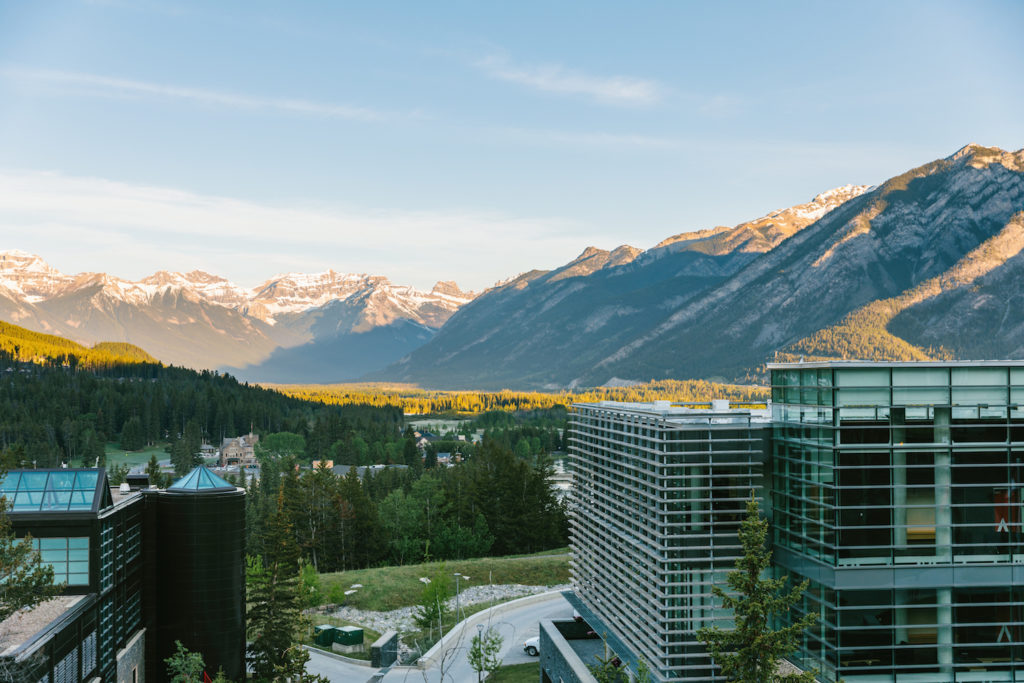
Photo: Chris Amat for Banff Centre for
Arts and Creativity.
The State-Funded Difference
Government funding has long been essential for the Canadian art
world, which has a relatively weak internal art market. Its main
art fair, Art Toronto, is set to go ahead this fall, though it
says on its website
that it is still watching the situation closely. “The market has
definitely shifted and slowed down,” says Daniel Faria, an art
dealer based in Toronto. “Some sales have been canceled,
others postponed indefinitely. It’s all precarious and
unknown.”
While loans are available to businesses and nonprofits, many
have financial-overhead requirements that disqualify many dealers
on the lower end of the market. Meanwhile, the loan program has
also been underused by the nonprofit arts sector, according to the
Canada Council’s survey. Only 16 percent of respondents said they
would use the aid, and those who did were predominantly larger
museums.
There is yet to be any assistance to the private arts sector
that includes small commercial galleries like Faria’s.
Artists, meanwhile, tend to report that they’re being
well-supported. Those who spoke with Artnet News noted that artists
are able to do some paid work on the side while still receiving the
CA$2,000 per month benefit. It has made everyday necessities, such
as “getting food and basic supplies and rent,” more accessible,
according to Vancouver-based artist Tiziana La Melia.
Toronto-based artist Patrick Cruz says that the benefit was
a significant help to him since most Canada Council funding he had
in the pipeline was canceled or put on hold. “It has been
tough to pay the bills and especially keeping a studio afloat,” he
says. “I believe that the grant system is still continuously taking
applications, which I am very grateful for.”
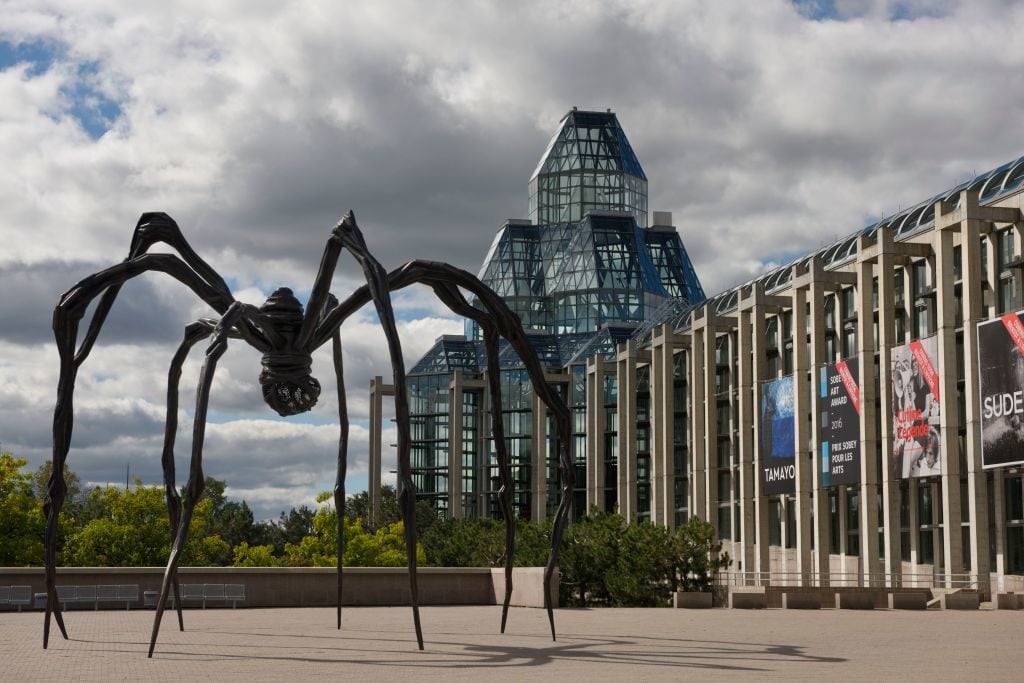
The National Gallery of Canada in
Ottawa. Photo: Education Images/Universal Images Group via Getty
Images.
‘A Deeper Dialogue’
Beyond federal assistance, museums, artists, and arts
organizations have also been eligible for emergency help at the
regional level. In Vancouver, the British Columbia Arts
Council helped the nonprofit Or Gallery with “an automatic CA$5,000
resiliency fund,” its director, Denise Ryner, tells Artnet News. It
has assured payment of extra artists fees and production fees for
the current artist and guest curator to
develop an online version of their project, which was shut down
before it could open at the end of March.
Yet several the locally initiated programs quickly became
overwhelmed. The prairie city of Calgary included CA$200,000
(US$142,000) for artists, who could apply for individual grants up
to CA$1,500 (US$1,060) until the end of April, but the applications
closed on April 8 due to demand.
In Toronto, the TOArtist COVID Response Fund released more than
CA$500,000 ($355,000) to create individual artist grants. It closed
its funding in within two weeks.
But, overall, many arts organizations say that when they raise
their problems to the government, it is generally responsive.
“We need to continue engaging
with the federal government to have a deeper dialogue about
funding, because the medium and longer-term effects are not known,”
says Brad Keast,
board chair of the Museum of Contemporary Art Toronto, who
initiated a letter with the foundation One Voice – Arts & Culture in
April that called on the
government to offer better support. “Funding needs to be
tailored to accommodate the unique situations of organizations in
this sector.”
Securing the
additional CA$500 million (US$351 million) was an example of
the result of this kind of “positive pressure,” Brault from the
Canada Council says in a nod to One Voice, adding that the
next big steps will be to determine what longer-term
stimulus packages will look like next year.
“I believe we are entering a period that will be quite long,” he
says. “But a lot of creation is happening right now, and I am
curious what will come out of that.”
The post The US Cultural Landscape Is Reeling From COVID-19.
Further North, Canada’s Art Scene Has Few Complaints. Here’s
Why appeared first on artnet News.
Read more https://news.artnet.com/art-world/canada-funding-arts-sector-1847670
Further reading


Leave a comment