
Want to Come Out of Quarantine With New Art-History Chops? Here Are 7 Insightful TV Series to Watch While You’re Bored at Home
If ever there was a time to hunker down with a good
old-fashioned TV series, surely that time is now. What’s more, you
can combine your love of binge-watching with your love of art
history with these absolutely delightful and informative
programs.
Here, we’ve compiled a list of some of our favorite art-related
series.
“Ways of Seeing” (1972)
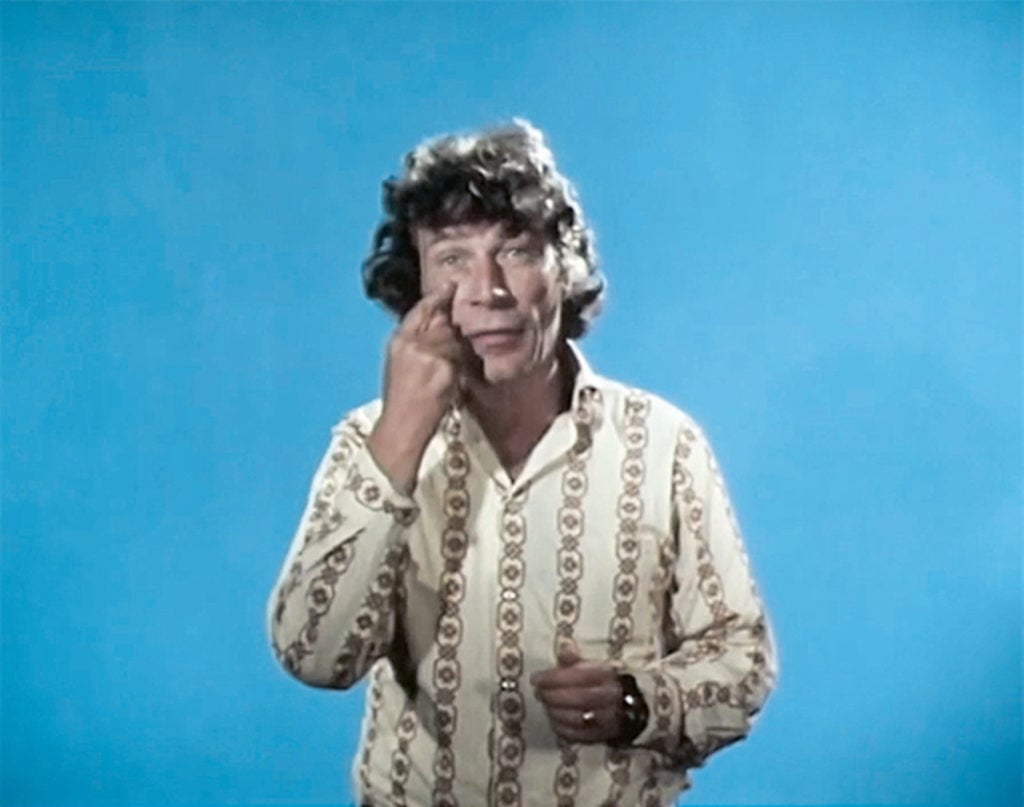
A still from John Berger’s “Ways of
Seeing” (1972).
Total Time to Watch: Two
hours
Where to Watch: YouTube
Why You Should Watch: Of
all the achievements of “Ways of Seeing,” the writer John Berger’s
hugely influential BBC series from 1972, perhaps what’s most
impressive is that it still feels remarkably relevant nearly five
decades later. The tropes upended in the late critic and novelist’s
essayistic trips through the canon are still being grappled with in
galleries, museums, and in publications like this one
today.
Berger’s four-part series is
literally required viewing in many art history classrooms, but it
doesn’t feel like homework; it’s genuinely enjoyable. It’s also a
particularly good watch in this screen-mediated moment,
considering, as it does, technology’s impact on the experience of
art.
—Taylor Dafoe
“Sister Wendy’s American
Collection” (2001)
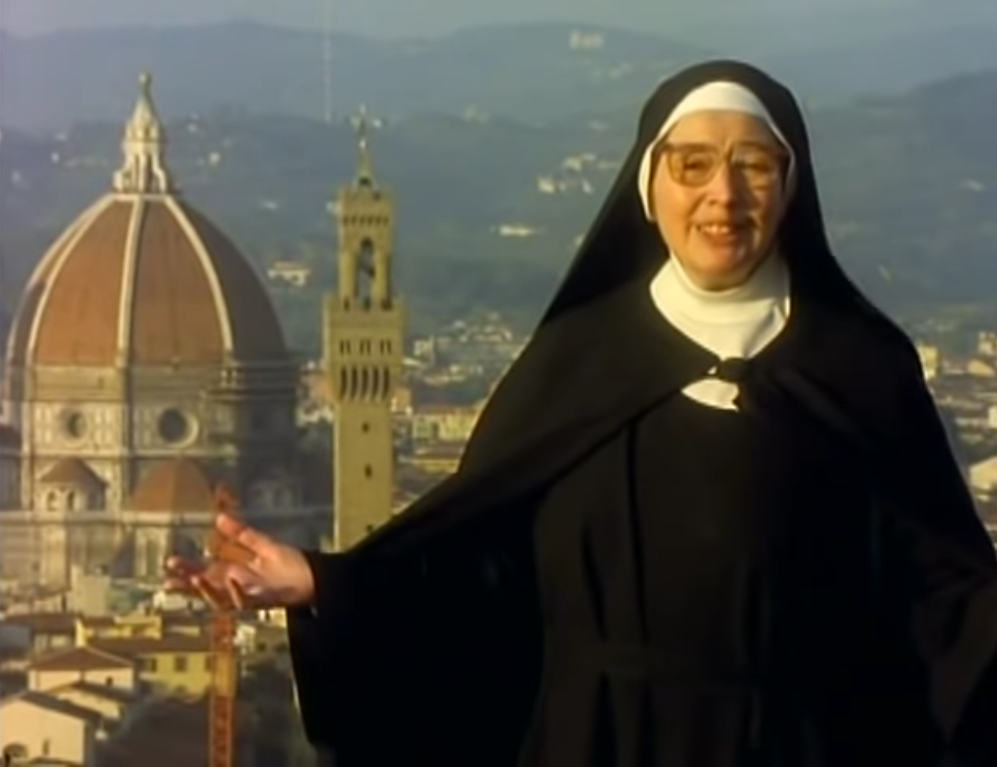
Still from Sister Wendy Beckett’s video
on YouTube.
Total Time to Watch: Six
hours
Where to Watch: PBS
or buy the
video
Why You Should Watch: In the 1990s, the South African nun Sister
Wendy became a breakout star on the BBC
for her awe-filled
visits to art museums around the world. The Roman Catholic nun mused with infectious
delight about everything from Michelangelo’s Pietà to David
Hockney’s portrait of his male lover by a pool (“art only works if
it comes from love,” she said of the painting).
In 2001, she toured the US for
the PBS series Sister
Wendy’s American Collection, where she accessibly expounded on Grant
Wood’s American
Gothic at the Art
Institute of Chicago, Polynesian wood carvings at the Met, and
beyond. No work of art is unworthy of contemplation or beneath
Wendy (who all the while maintained her vow of poverty), making
this show a refreshing reminder of the pleasures of experiencing
art without pretension or pricetags.
—Rachel
Corbett
“Fake Or Fortune”
(2011–19)
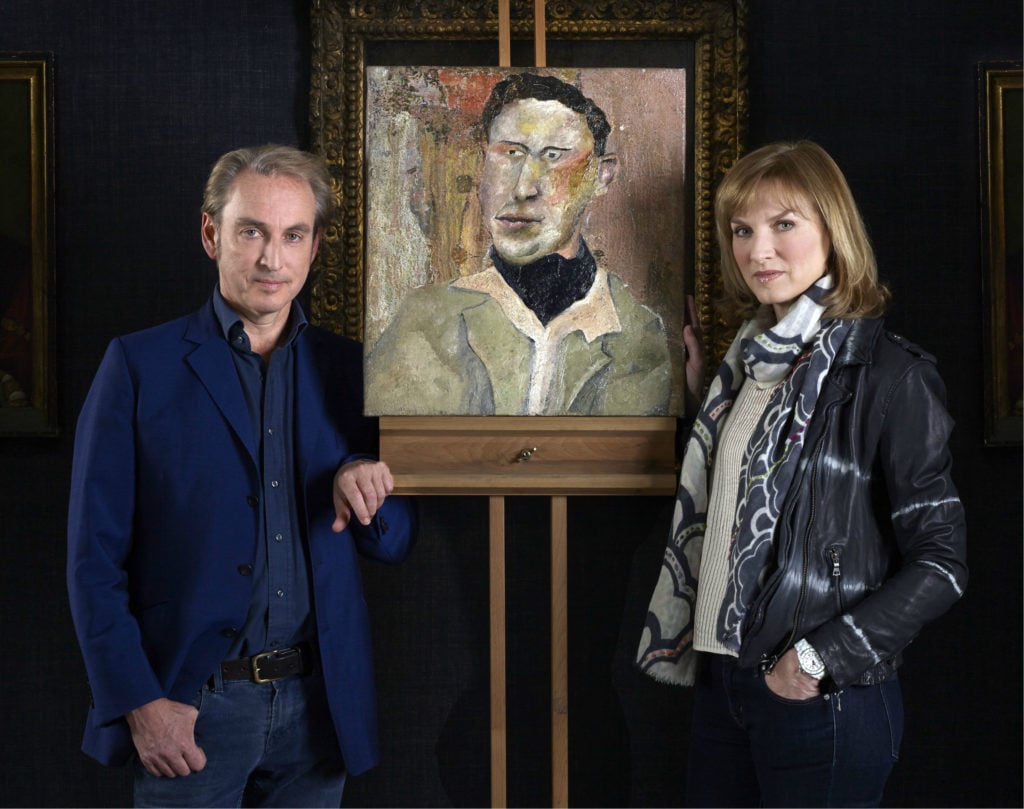
The presenters of Fake or
Fortune? with a genuine Lucian Freud. Courtesy of the BBC.
Total Time to Watch: 31
hours
Where to Watch: BBC One
or Amazon
Prime
Why You Should Watch: Each episode of this BBC series, copresented by
the journalist Fiona Bruce and the art historian Philip Mould,
investigates the authenticity of an artwork.
The show dives into the nitty
gritty of provenance, forensic and material analysis, and style to
determine the answer to the titular question: Is it a fake, or will
it be worth a fortune? From an inquiry into a Monet rejected by the
Wildenstein Institute, to the recovery of a long-lost Giacometti,
there are eight seasons of episodes to trawl through, and it makes
the difficult work of art authentication look easy enough to try
for yourself. Happy hunting—but beware, you’ll think you’re seeing
sleepers everywhere.
—Naomi Rea
“Civilisation” (1969)
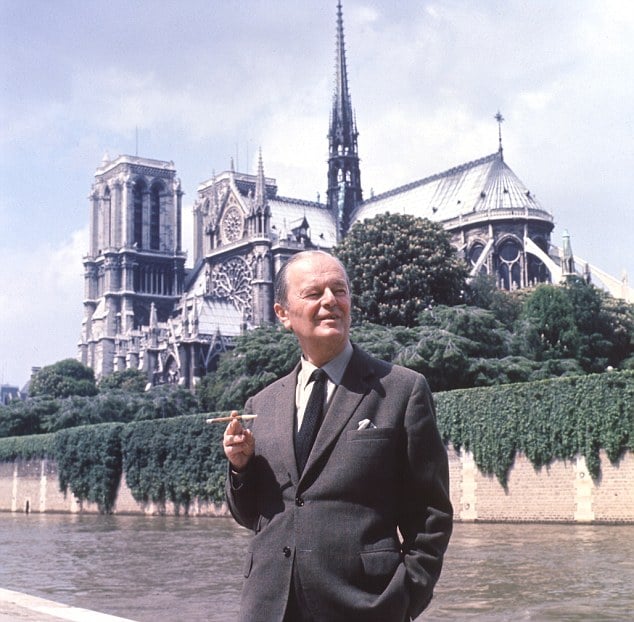
Kenneth Clark in a still from the
opening episode of Civilization.
Total Time to Watch: 11
hours
Where to Watch: Youtube
Why You Should Watch: Kenneth Clark’s distinguished career as a
scholar, museum director, and popularizer of complex ideas finds
its most distilled expression in this 13-part BBC series about what
he calls “civilization,” which is different from civilization per
se. In this case, it’s his feelings and observations that count,
and instead of an objective history, we get Clark’s “personal
view,” as the opening titles of the first episode admit.
There are problems with
Civilisation. It is too sure of itself and a little too
refined, sometimes othering of non-Western cultures, and can be
curiously narrow in its interests, despite the fact that it covers
about 1900 years of history. But there are enormous pleasures and
insights in Clark’s sweeping worldview and his gentleman’s,
19th-century sensibility. He ties together far-ranging ideas to
present a rigorous and largely convincing picture of the history of
the world. Can you imagine anyone even attempting that today? Sure,
Clark offers only one perspective. But it’s richer than most
others.
—Pac Pobric
“The Power of Art”
(2006)
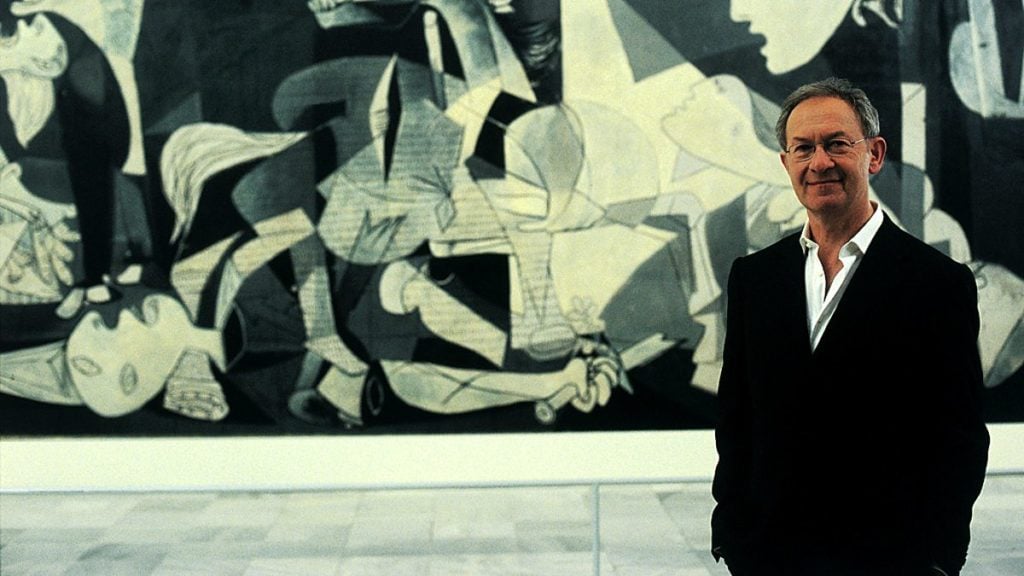
Simon Schama, host of “The Power of Art”
courtesy of BBC.
Total Time to Watch: 8
hours
Where to Watch: YouTube or buy the box
set
Why You Should Watch: This now-famous trek through art history with
eminent author and historian Simon Schama is equal parts
entertaining and enlightening. Schama takes viewers through eight
seminal artworks and the fascinating lives of the
artists—Caravaggio, Bernini,
Rembrandt, David, Turner, Van Gogh, Picasso, and Rothko—behind
them.
The series employs a mix of
dramatic reconstruction, fascinating photography, and Schama’s
inimitable blend of scholarly insight with compelling storytelling.
Viewers are transported from Baroque Rome to revolutionary France,
and from Civil War-era Spain to the 1950s in New York, among other
locales.
—Eileen
Kinsella
“Shock of the Nude”
(2020)
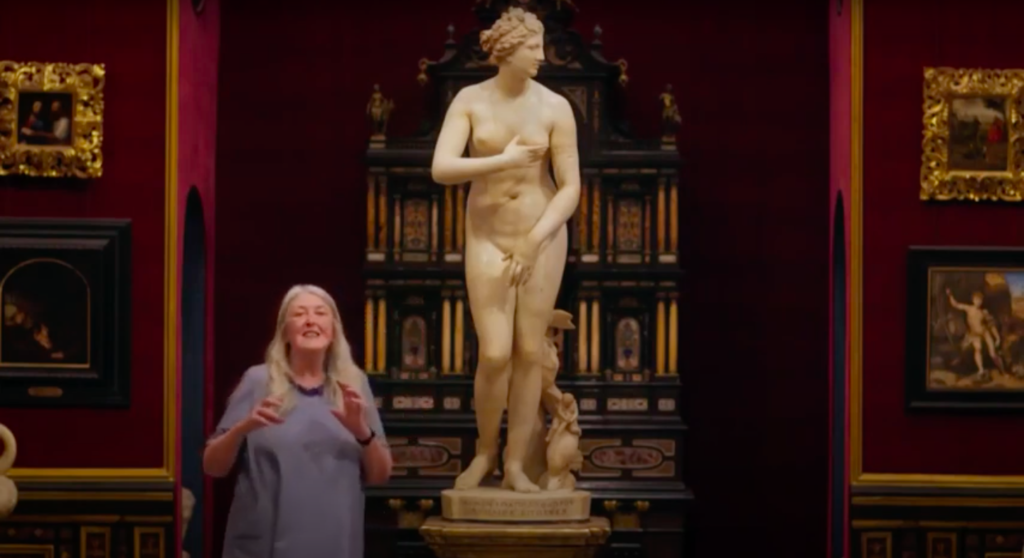
Still from episode one of Mary
Beard’s Shock of the Nude. Courtesy of YouTube.
Total Time to Watch: 2
hours
Where to Watch: Youtube or BBC Two
Why You Should Watch: Look, nothing will endear an art-history series
to me quicker than seeing a warning that it’s age-restricted based
on YouTube’s community guidelines. But a close second factor is the
opportunity to spend time with a deeply knowledgeable and endlessly
charming scholar as she walks through a fascinating subject in a
cheeky (no pun intended), down-to-earth way.
Mary Beard’s
Shock of the Nude
checks all these boxes. Beard, one
of the world’s foremost classicists, uses the show to interrogate
the primacy of the nude figure in Western art through the
centuries. No one else could so cogently tease out the form’s
aesthetic importance, while simultaneously asking a question I’ve
considered in many museums more times than I should admit: Despite
its merits, is this artwork here largely because we like to look at
hot naked people under the guise of higher
learning?
—Tim Schneider
“The Joy of Painting”
(1983–94)
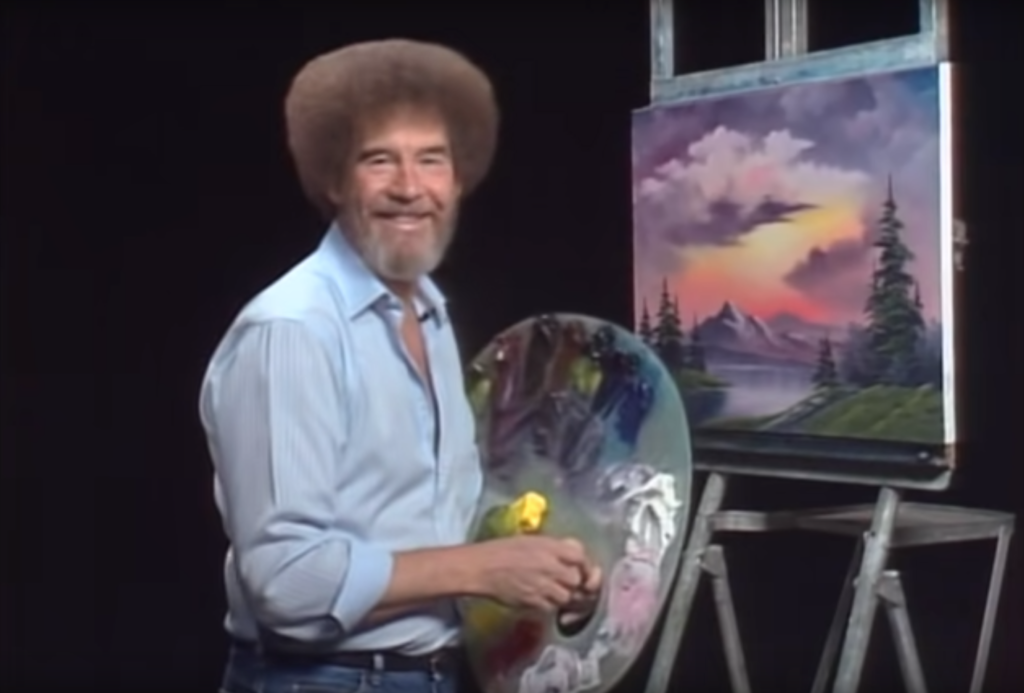
Bob Ross in The Joy of Painting.
Photo via YouTube.
Total Time to Watch: 201
and a half hours
Where to Watch: YouTube, with limited episodes on Netflix
Why You Should Watch: Okay, it’s not art
history, but it’s Bob
Ross! A treasure of public
television, Ross makes painting look effortless, scraping his
palette knife across canvases to create the “happy little trees”
that inhabit his kitschy masterpieces. He narrates the entire
process in dulcet tones, his glorious permed afro bobbing back and
forth as he deftly transforms indistinct blotches of color into
recognizable landscapes through the magic of wet-on-wet oil
painting. (The technique was developed by Ross’s predecessor,
German painter Bill Alexander, whose
show, The Magic of
Oil Painting,
aired on PBS from 1974 to
1982.)
Despite the fact that its last
episode was filmed more than 25 years ago, The Joy of Painting has retained a loyal fanbase. When the
Emmy-winning series was added to YouTube in
2015, it had a
viral moment, streaming live on Twitch for tens of thousands of viewers. Three years
later, meditation and sleep app Calm added the
instructional TV show to its
lineup, sans visuals, in the hopes that Ross’s soothing monologue
might help lull users to sleep.
—Sarah Cascone
The post Want to Come Out of Quarantine With New Art-History
Chops? Here Are 7 Insightful TV Series to Watch While You’re Bored
at Home appeared first on artnet News.
Read more https://news.artnet.com/art-world/art-history-tv-series-1843368
Further reading


Leave a comment