
To Survive After This Is Over, Cultural Institutions Need to Redefine The Value of Art. Here’s How to Do It
Maybe you have more willpower or
common sense than I do, but I, for one, have been spending too much
time on social media lately. And there’s a meme that keeps popping
up in my Facebook feed that goes something like
this:
Books, music, poetry, film,
etc. are getting you through this period of social isolation. Never
doubt the value of arts and culture again.
It’s a perfect meme for me. It
soothes my anxiety about being stuck in my home while my
organization’s budget evaporates and the regular work of
institutional planning becomes an exercise in imagining how this
virus and the turbulent global economy might affect the arts sector
over the next decade. And it clearly expresses my values! My whole
career is centered around making sure artists have
resources.
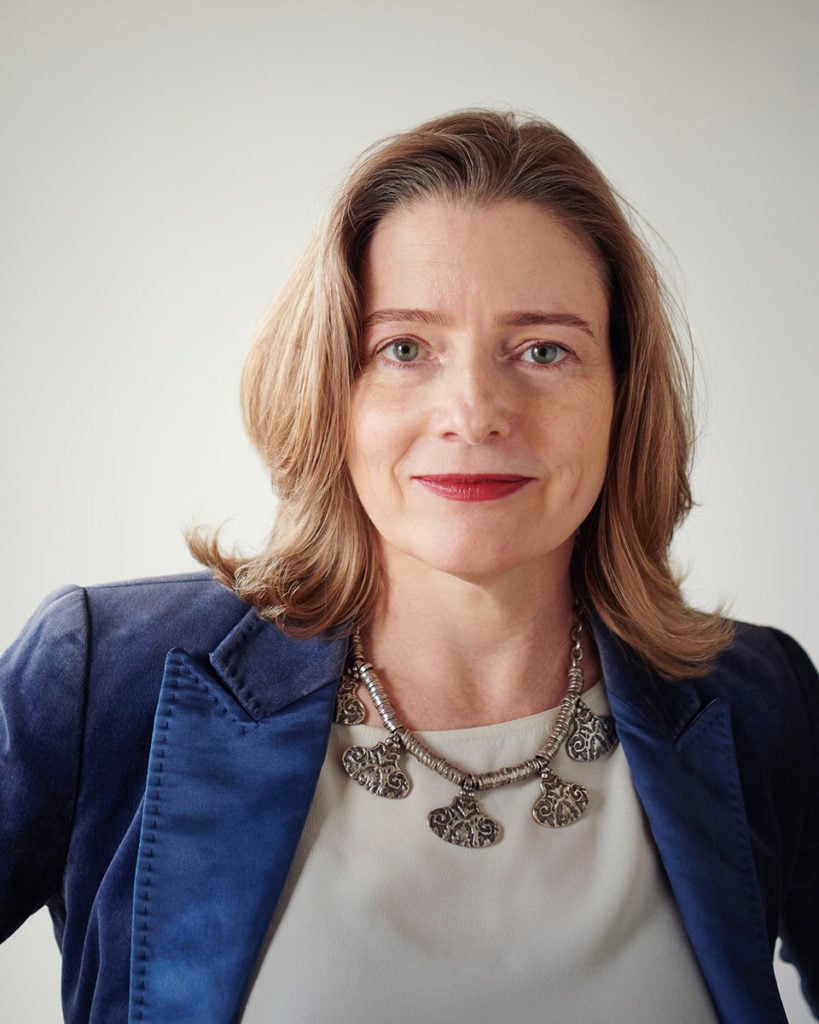
Deborah Fisher. Photo: Jason
Schmidt.
But every time I have scrolled
by this meme in these weird weeks, I’ve also worried that it could
be interpreted—or, more precisely, misinterpreted—as a plan for the
future. That would be a mistake, because the art we value and how
we value it needs to change with the world around
us.
A Question of Value
You could argue that we already
value some art, like blockbuster museum shows or whatever trophies
collectors are buying, too much. I believe this moment presents an
opportunity to recalibrate, rather than simply increase, our
cultural investments.
We can value whatever we want.
We don’t have to value a Jeff Koons sculpture and the broad market
forces it affirms so much more than we value the multi-year
commitment an artist like Miguel Luciano is making to his
neighborhood of East Harlem and its histories of mutual care and
resistance, using everything from photographic interventions and
walking tours to community meals and acupuncture workshops that
revive the history of the Young Lords.
We have the power to decide to
value art and culture in ways that support the kind of lives we
want to be living. But to do that, we need more skin in the game—a
greater shared commitment among a wider pool of stakeholders to
recognize, articulate, and collectively wield the power art and
culture already has, and to ensure it’s doing the civic, political,
and social work we value the most.
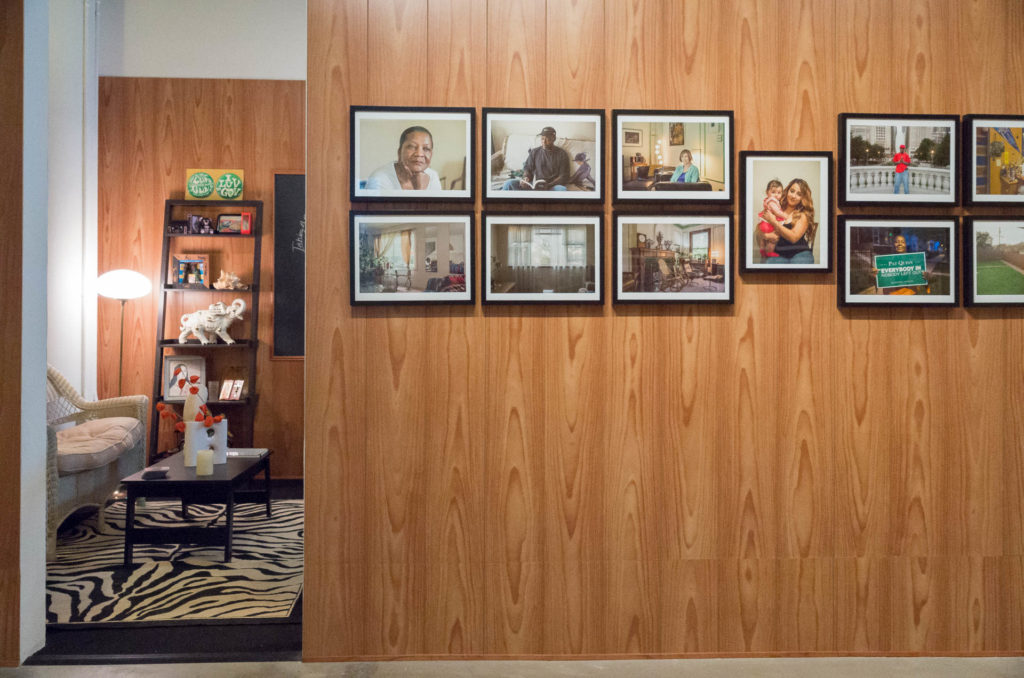
Laurie Jo Reynolds, installation for
Tamms Year Ten Family Room, A Proximity of Consciousness: Art
and Social Action, School of the Art Institute of Chicago,
2014. Photos by Soohyun Kim.
The good news is the world is
going to change in ways that help us do that. With limited government
support and continued reductions in philanthropic investments,
it’s safe to say that resources for art will shrink considerably
across the board for an extended period of time. But it doesn’t
necessarily follow that the art of the future will be small, even
if it’s made and seen at home instead of in a studio. A lack of
funding, and even of mobility, will encourage art to become more
integrated into the fabric of daily life.
The success of the work that
comes out of this moment will rely on our newfound ability to value
art that satisfies human needs within a community context, rather
than market relevance. We should take this opportunity, as viewers
and supporters of the arts, to detoxify. We could learn to embrace
nuance instead of crave spectacle. We could invest more in the
history that connects art practice to community organizing and
movement building. We could even make more art
ourselves.
What Will Change
In this new paradigm, art would
be less professional, maybe. But it would retain its sense of
ambition by becoming more relevant, permeable, and participatory—a
force we tap into when we want to soothe, share, reach out, scratch
an itch, or solve a problem.
This is what I mean by skin in
the game, and I think that the success of art institutions is
increasingly going to depend on supporting and amplifying the value
of that connected, participatory feeling we can get from
art.
For almost ten years, A Blade of Grass has been focused on the
work of artists that are making purposeful, deliberate choices to
integrate their work into life. We find the most ambitious examples
we can of what is possible when you collaborate with communities,
and we never stop being amazed that artists can co-create vast,
visionary things around tables with regular folks. These have
included Laurie Jo Reynolds’s movement to close a supermax prison;
the Los Angeles Poverty Department’s feasible plan to house 7,000
people on Los Angeles’s Skid Row; and Dread Scott’s Slave
Rebellion Reenactment, which enlisted thousands of participants
and other stakeholders in a collective imagining of the end of
slavery.
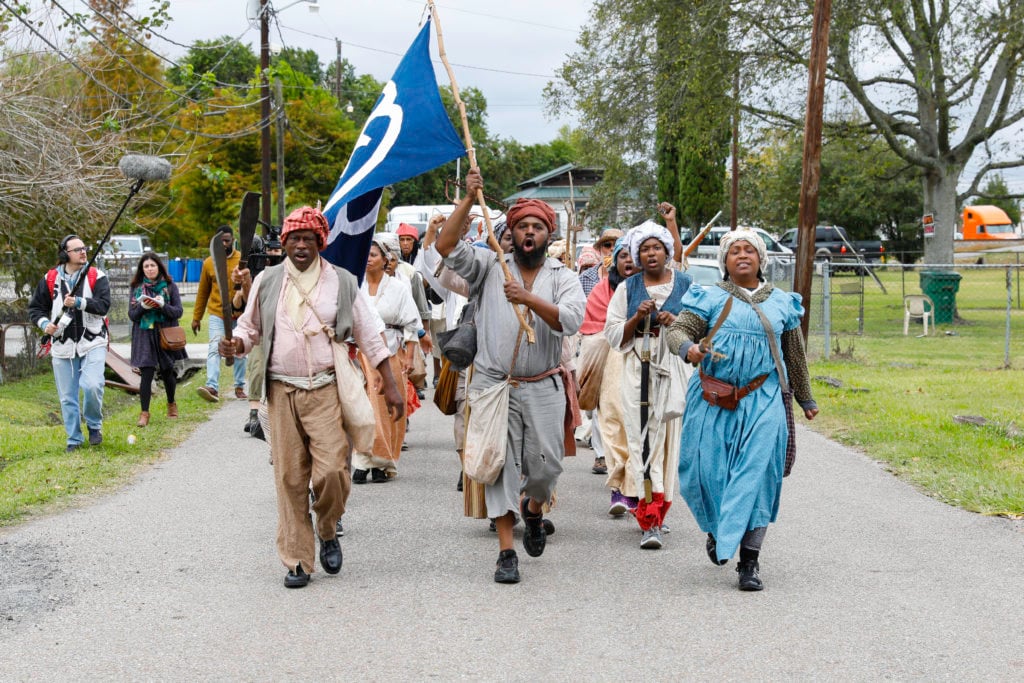
Participants in Dread
Scott’s Slave Rebellion
Reenactment marching across the 26-mile path
through Louisiana. Costumes designed by Alison Parker, Photo: Soul
Brother. Courtesy of SRR.
This art is powerful because it
invites participants and viewers to consider their own agency and
actions in the world. It teaches skills, helps us make better
decisions, and encourages us to take better care of one
another.
This kind of work will also help
us make truly radical gains on some of the more intractable
problems within the art world, like how art institutions fundraise
and are governed. If the value—even beauty—of the art we prize is
fundamentally social, the most powerful fundraising strategies are
going to come from articulating that social value clearly, rather
than foregrounding social capital or the potential to increase the
value of one’s own collection. How else do you raise money for art
that a collector can’t buy?
A New Business Model
Idealism and a relentless focus
on how and why art is good for people could very well emerge as the
foundation of the arts nonprofit business model moving forward.
Will we raise a $20 million budget or a $3 billion endowment
without turning art institutions into engines that directly benefit
wealthy art collectors and center their needs? No. This business
model is an efficient way to get very large donations from a small
group of individuals. But I think it’s easier—or, at least, easier
than conventional wisdom suggests—to get a broad and novel range of
financial support when art is positioned as a public
resource.
Direct beneficiaries of art
projects that have a concrete social value will have an increased
hand in paying for it. I know this because A Blade of Grass
Fellowship projects have already been supported by city agencies
like New York City’s Department of Probation, or institutions like
Denver’s Rose Medical Center. These are not philanthropic
relationships, and they’re not about art for art’s sake. In both
cases, the artist is simply making work that directly serves
probation officers and clients or nurses in a way that these
entities can and are willing to pay for. What’s more, such
broad participation might feel and work a lot better for a larger
audience. Over time, this can lead to increased support from a pool
of funders, including foundations and governments, who may not have
historically supported or seen value in the arts.
In the face of the current
crisis, we might all be ready to scale this approach. I’ve been
raising my own budget for community-driven art for almost a decade,
and I’ve been doing it by articulating the value and impact it has
for other people. Don’t get me wrong: This approach is way harder
than other types of fundraising and institution building in the
arts because it’s not a direct transaction. I’m asking for a
commitment to projects that are happening in prisons, or in a
border town in Texas. They cannot be owned and benefit people the
donors might never even meet.
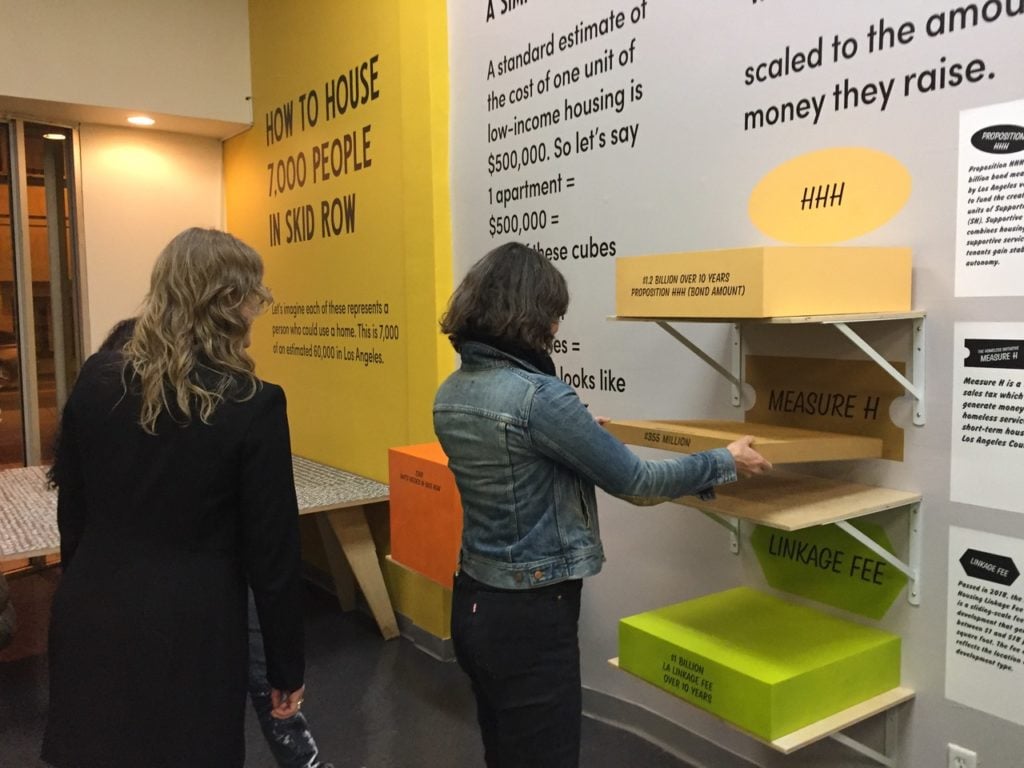
Los Angeles Poverty Department
installation images of “How to House 7,000 People in Skid Row,”
ongoing through September (though closed now due to Covid-19) at
Skid Row History Museum and Archive, Los Angeles, CA.
Within my organization, the best
donors and leaders truly want to understand the radical work
artists are enacting. They want to be challenged, and have their
lives and actions changed by the art. On a recent donor trip to
witness Dread Scott’s Slave Rebellion Reenactment, I was grateful
for the openness of the supporters who joined us, and how willing
they were to not just experience a cool spectacle, but also sit
with real discomfort and learn a pernicious history for which we
all need to take more responsibility. Asking for this level of
commitment is the most unlikely fundraising proposition I can think
of. But it has worked for us precisely because these people already
trust and value art and are legitimately hungry to enjoy it in ways
that feel challenging, deep, and consequential.
Am I worried about the future,
and do I believe that it will be economically devastating to the
arts as a sector? Hell yes. But I also feel that we’ve been
rehearsing for this future for quite some time, and that we have
the tools to find abundance in it.
Deborah Fisher is the
founding executive director of A Blade of Grass.
The post To Survive After This Is Over, Cultural
Institutions Need to Redefine The Value of Art. Here’s How to Do
It appeared first on artnet News.
Read more https://news.artnet.com/opinion/deborah-fisher-blade-of-grass-op-ed-1847463
Further reading


Leave a comment