
An Acclaimed Show at the Whitney Spotlights How Mexican Muralists Shaped US Modernism—See Images Here
While museums around the globe are
closed to the public, we are spotlighting each day an inspiring
exhibition that was previously on view. Even if you can’t see it in
person, allow us to give you a virtual look.
“Vida Americana: Mexican Muralists Remake American Art,
1925-1945”
Whitney Museum of American Art
What the museum says: “Mexico underwent a
radical cultural transformation at the end of its revolution in
1920. A new relationship between art and the public was
established, giving rise to art that spoke directly to the people
about social justice and national life. The model galvanized
artists in the United States who were seeking to break free of
European aesthetic domination to create publicly significant and
accessible native art. Numerous American artists traveled to
Mexico, and the leading Mexican muralists—José Clemente Orozco,
Diego Rivera, and David Alfaro Siqueiros—spent extended periods of
time in the United States, executing murals, paintings, and prints;
exhibiting their work; and interacting with local artists.”
Why it’s worth a look: This show, conceived a decade ago and finally brought to
fruition, is a testament to the existence of a
counter-narrative to the dominant history of the US and Europe as
the epicenter of artistic and cultural innovation. The 200 works on
display are by both Mexican and American artists, juxtaposing the
ways in which the former created a new artistic style replicated by
the ladder.
The story of this early form of street art is played out in the
massive murals ordained by Mexico’s government to encourage unity
in the wake of civil war, encouraging civic pride and a spirit of
collective industry. The colorful, eye-catching works inspired US
artists to make their own versions, drawing both on the narrative
of American exceptionalism, and the underbelly of social and
economic turmoil in the 20th century.
With contributions from artists who moved on stylistically from
the genre—such as Philip Guston and Jackson Pollock—the show
reveals just how popular and important the style was, and the
lasting impact it had on the practice of artists like Jacob
Lawrence, who chronicled America’s history in a similar manner.
What it looks like:
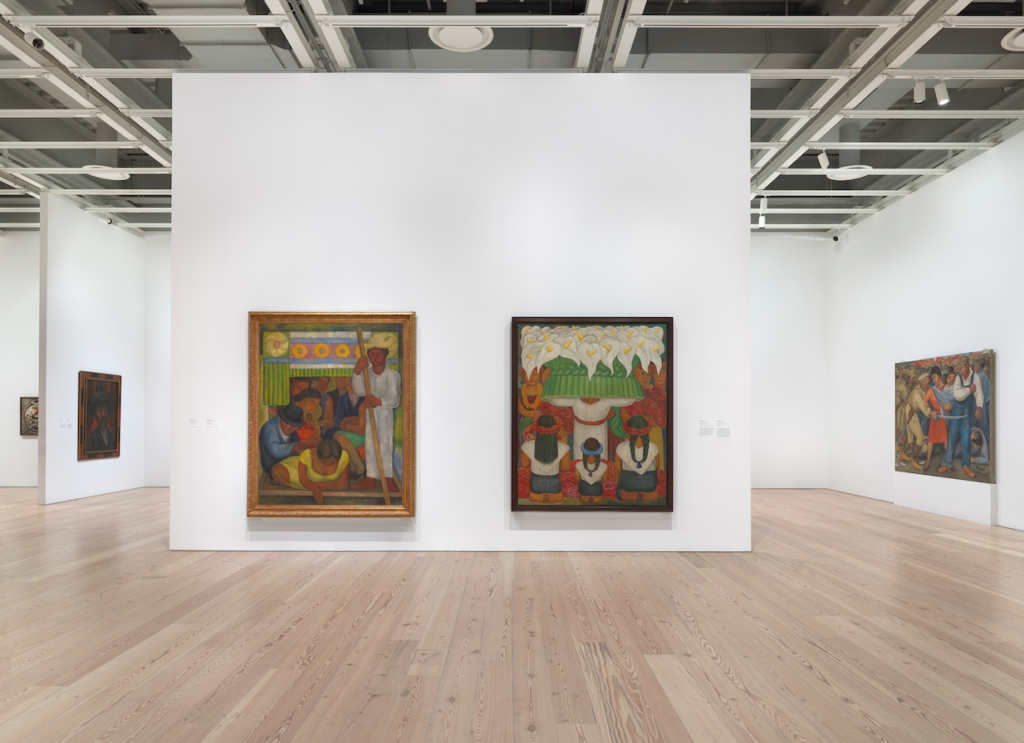
Installation view of “Vida Americana:
Mexican Muralists Remake American Art, 1925-1945” at the Whitney
Museum of American Art, New York. Photo: Ron Amstutz.
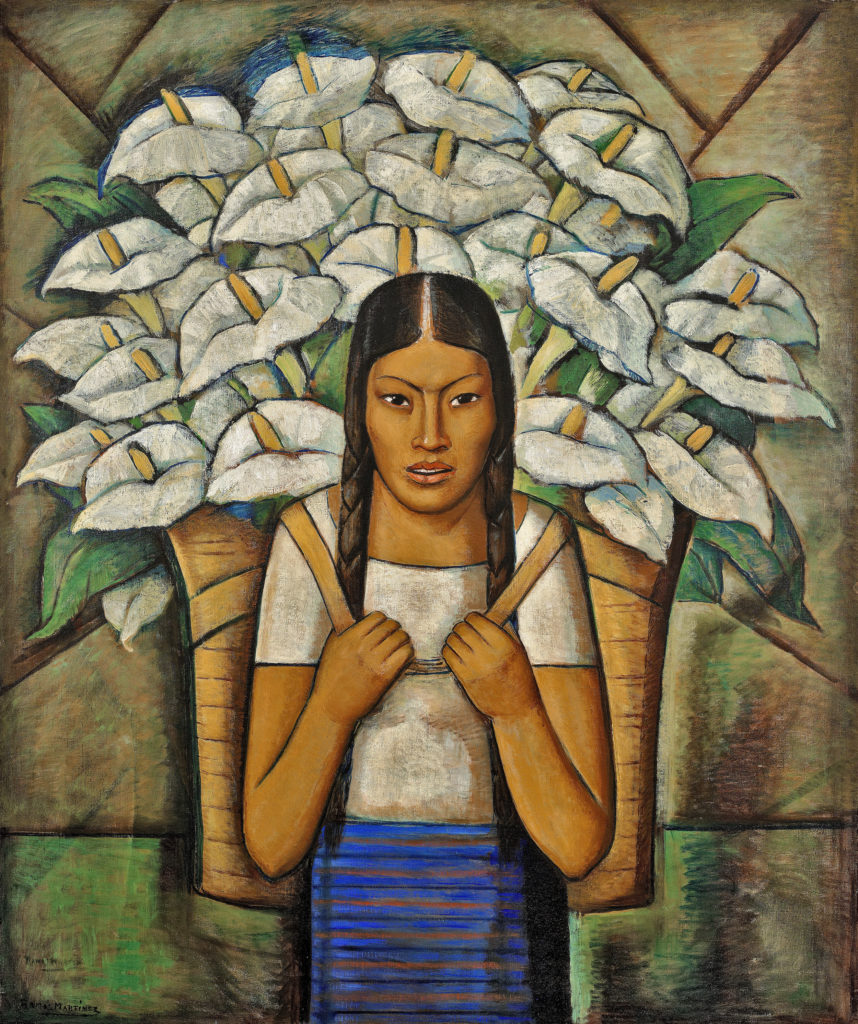
Alfredo Ramos Martínez, Calla Lily
Vendor (Vendedora de Alcatraces) (1929). © The Alfredo Ramos
Martínez Research Project, reproduced by permission.
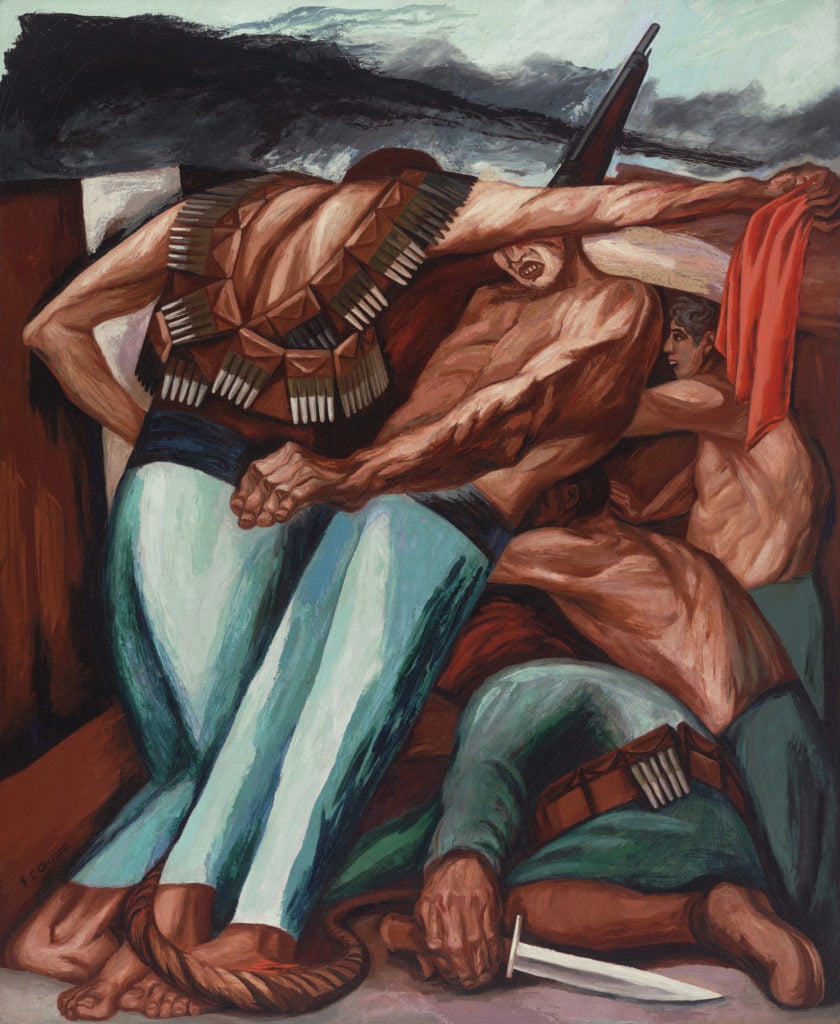
José Clemente Orozco, Barricade
(Barricada), (1931). © 2019 Artists Rights Society (ARS), New
York / SOMAAP, Mexico City. Image © The Museum of Modern Art /
Licensed by SCALA / Art Resource, NY.
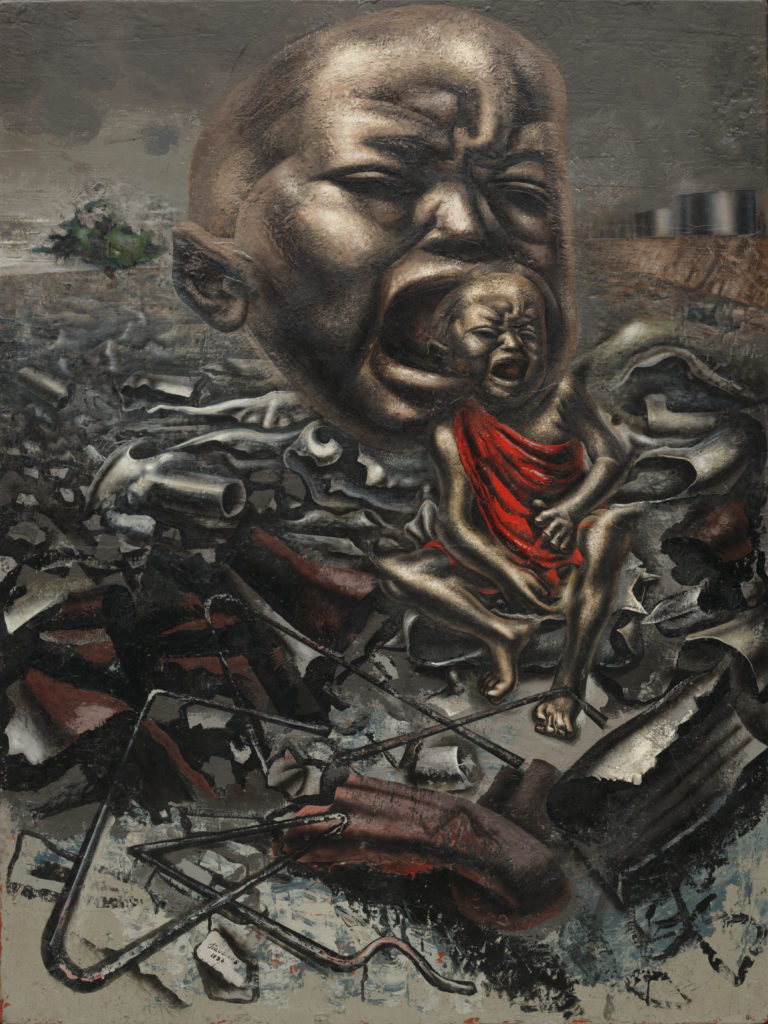
David Alfaro Siqueiros, Echo of a
Scream (1937). Courtesy of MoMA.
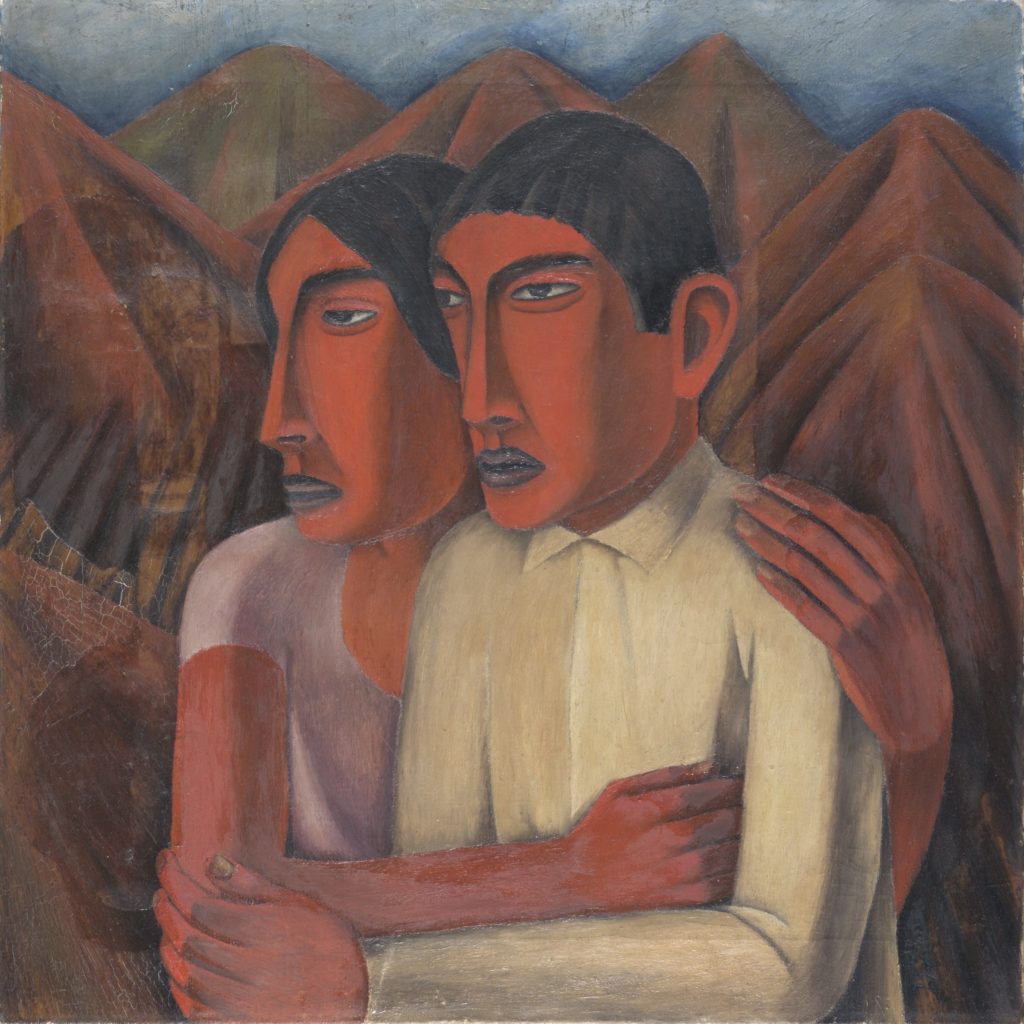
Rufino Tamayo, Man and
Woman (1926). Philadelphia Museum of Art. © 2020 Tamayo
Heirs / Mexico / Artists Rights Society (ARS), New York.
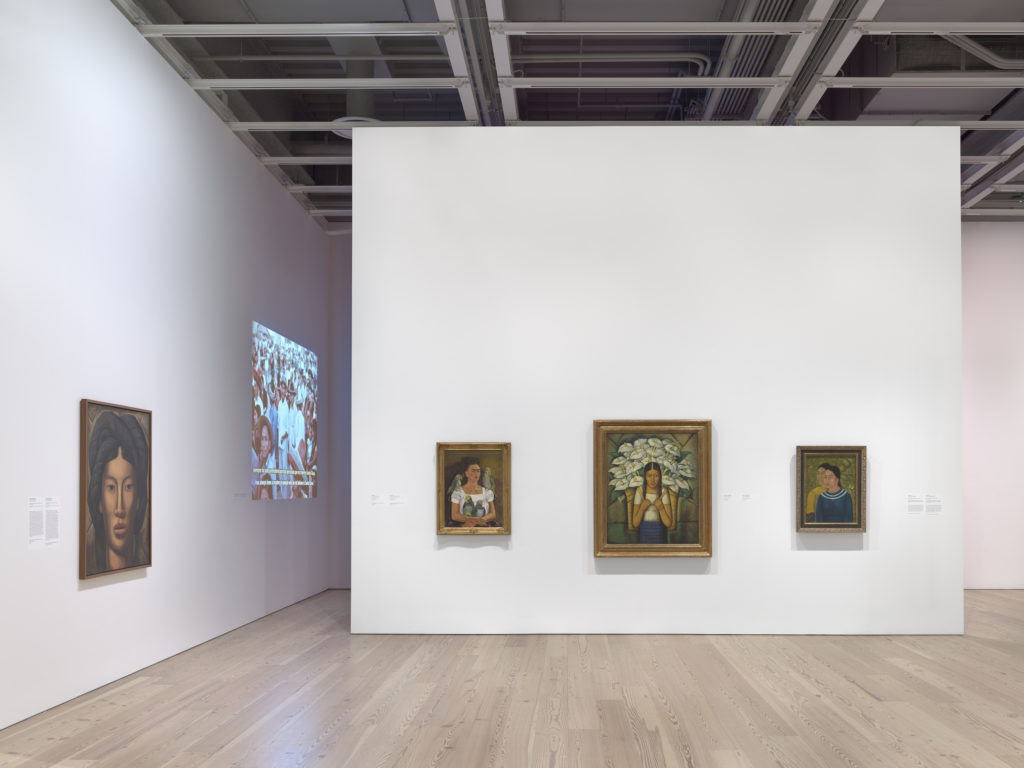
Installation view of “Vida Americana:
Mexican Muralists Remake American Art, 1925-1945” at the Whitney
Museum of American Art, New York. Photo: Ron Amstutz.
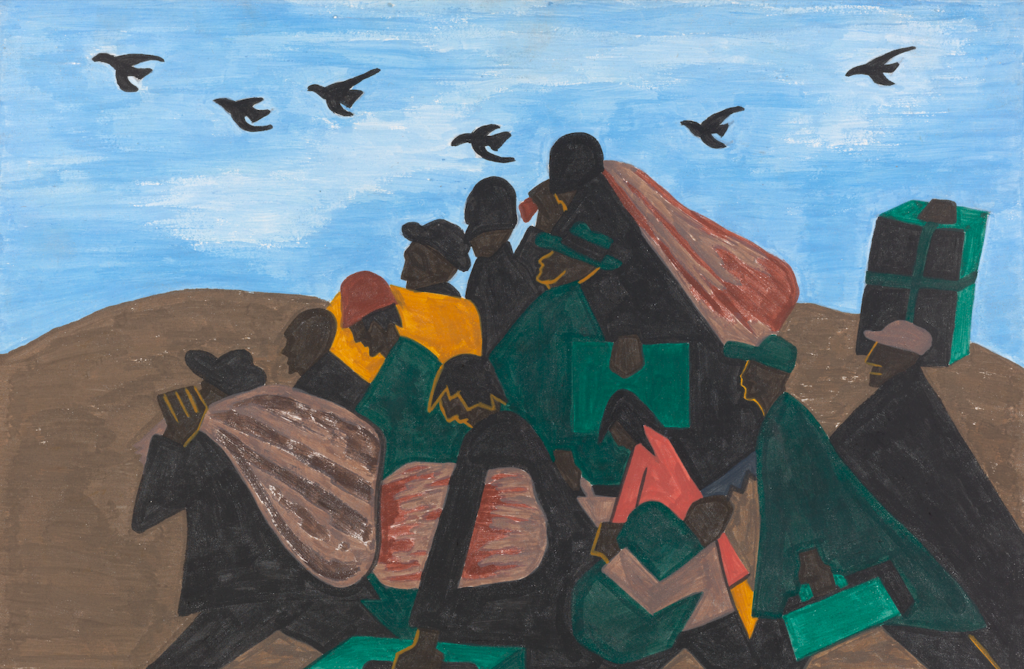
Jacob Lawrence, Panel 3 from The
Migration Series, From every Southern town migrants left by the
hundreds to travel north. (1940–41). The Phillips
Collection, Washington, DC. © 2019 The Jacob and Gwendolyn Knight
Lawrence Foundation, Seattle / Artists Rights Society (ARS), New
York.
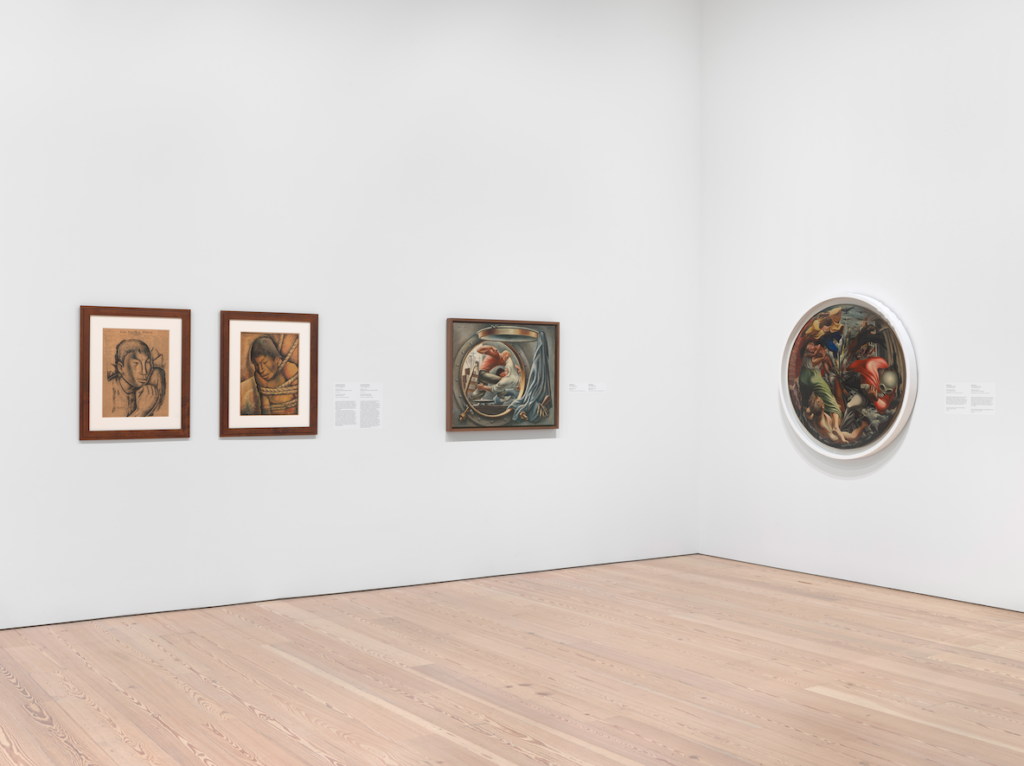
Installation view of “Vida Americana:
Mexican Muralists Remake American Art, 1925-1945” at the Whitney
Museum of American Art, New York. Photo: Ron Amstutz.
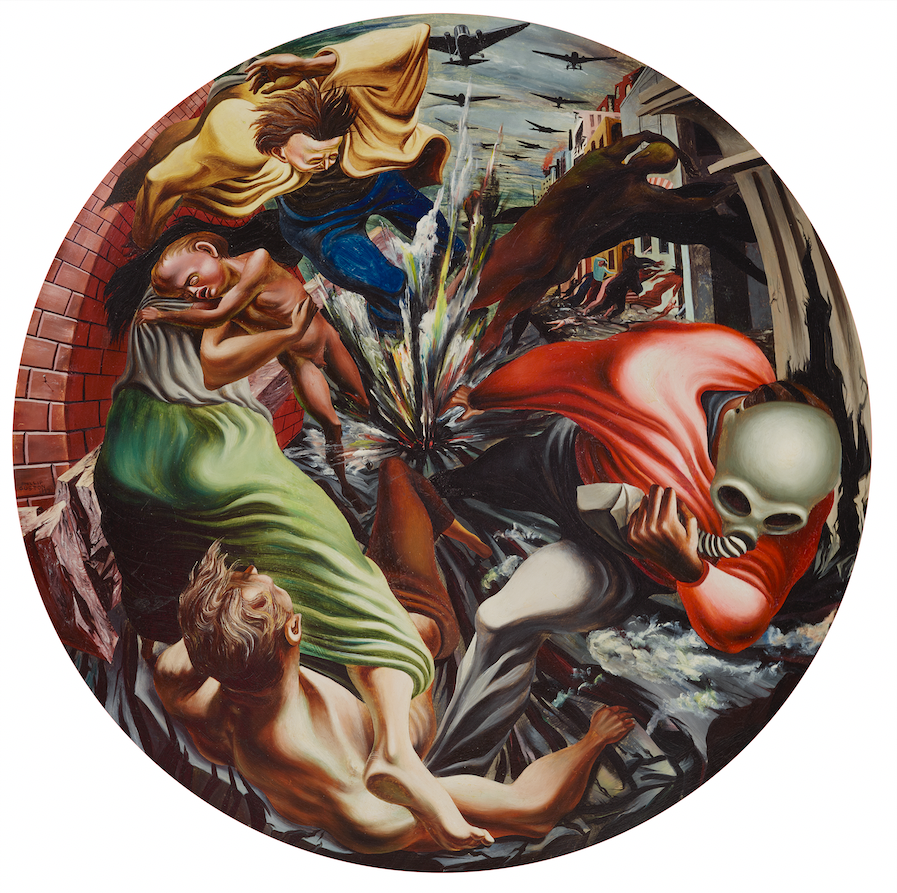
Philip Guston, Bombardment,
(1937). © The Estate of Philip Guston, courtesy McKee Gallery, New
York.
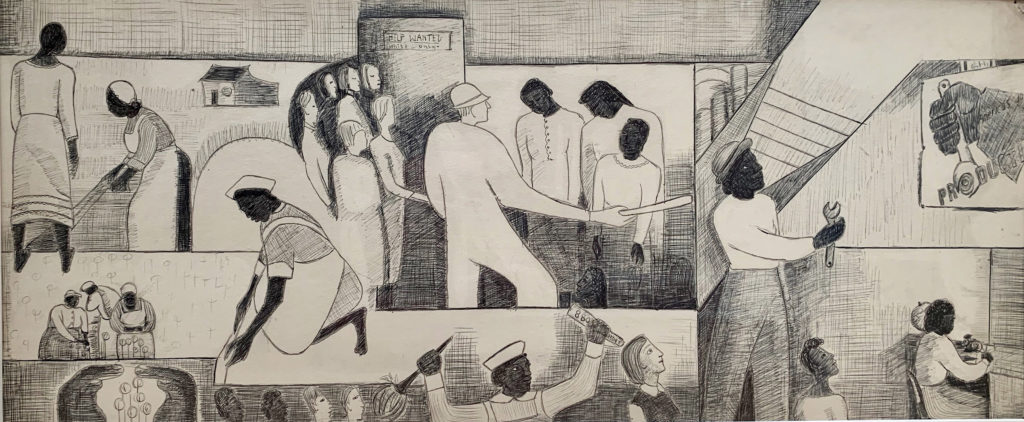
Thelma Johnson Streat, The Negro in
Professional Life—Mural Study Featuring Women in the
Workplace (1944.)
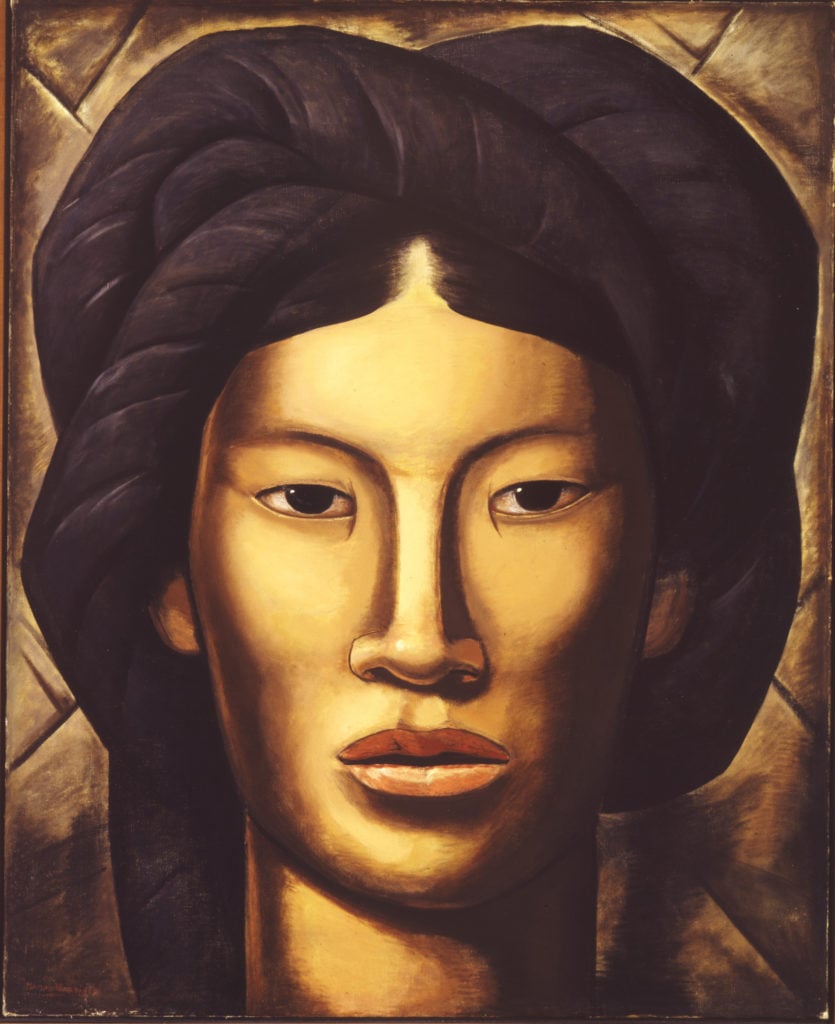
Alfredo Ramos Martinez, La Malinche
(Young Girl of Yalala, Oaxaca) (c. 1940). Collection of Phoenix
Art Museum.
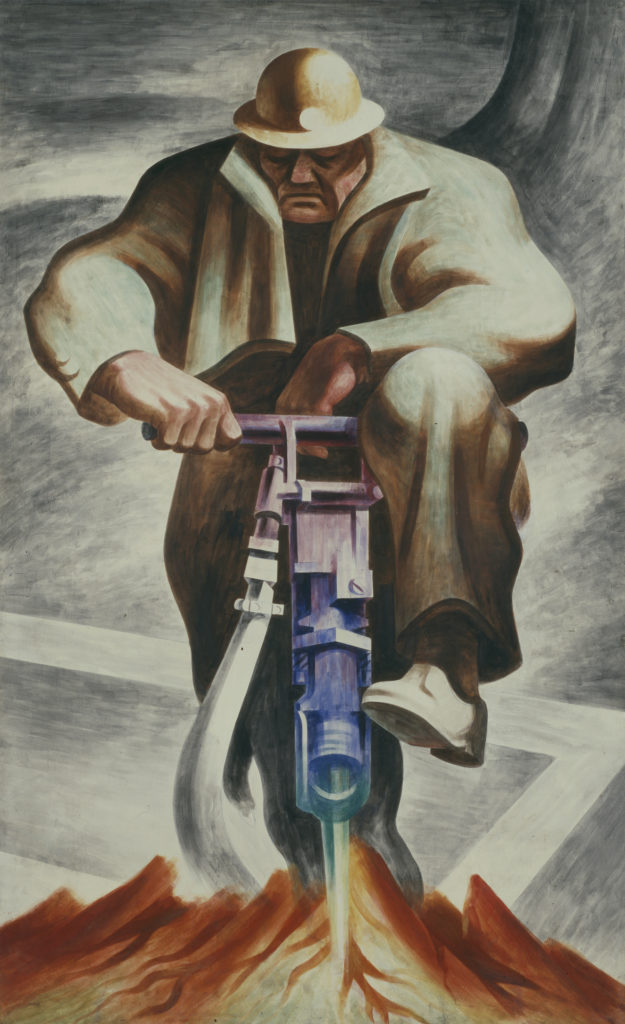
Harold Lehman, The Driller (mural,
Rikers Island, New York) (1937). © Estate of Harold
Lehman. Image: Smithsonian American Art Museum, Washington, DC /
Art Resource, NY.
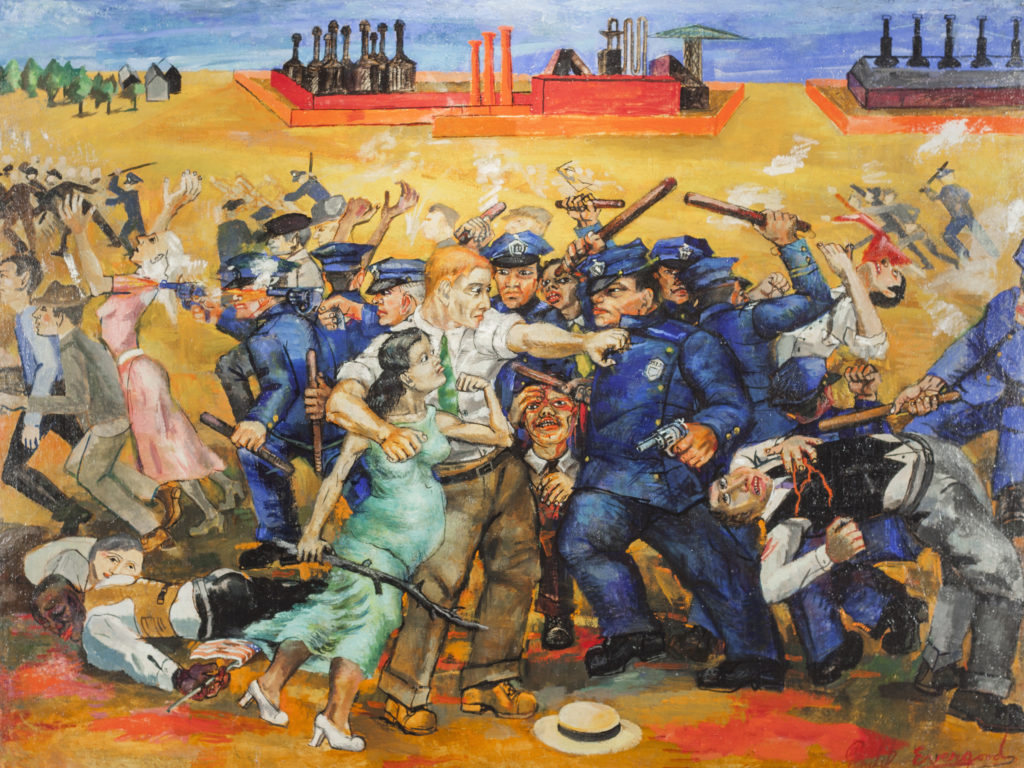
Philip Evergood, American
Tragedy (1937). Courtesy of Harvey and Harvey-Ann
Ross.
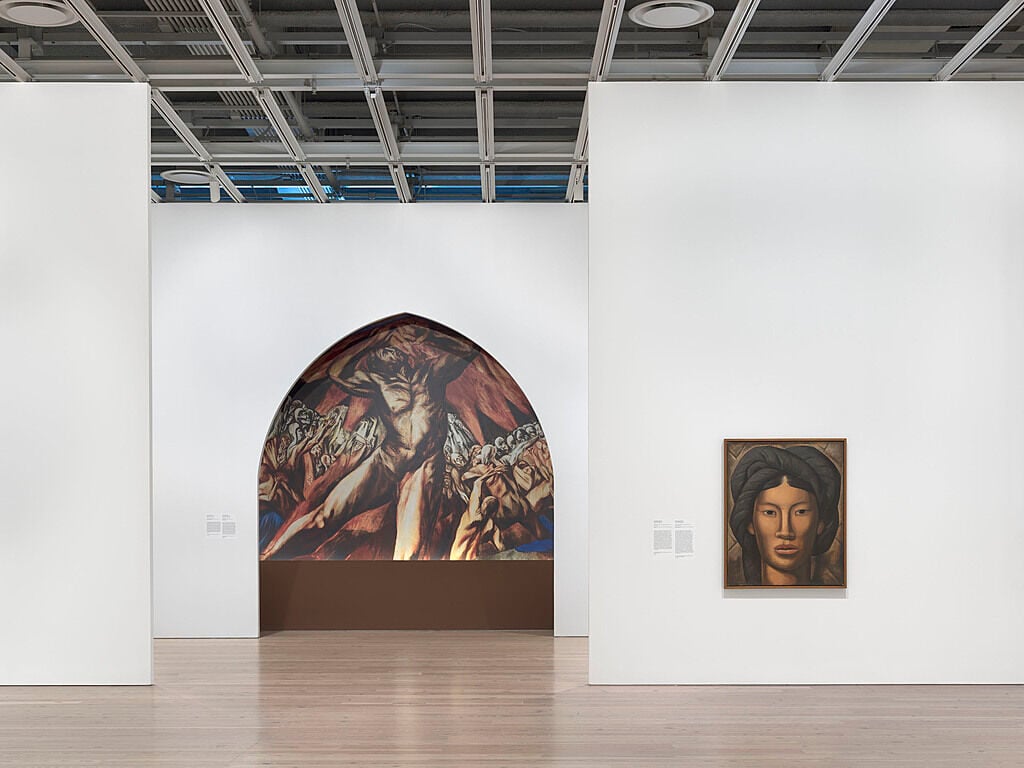
Installation view of “Vida Americana:
Mexican Muralists Remake American Art, 1925-1945” at the Whitney
Museum of American Art, New York. Photo: Ron Amstutz.
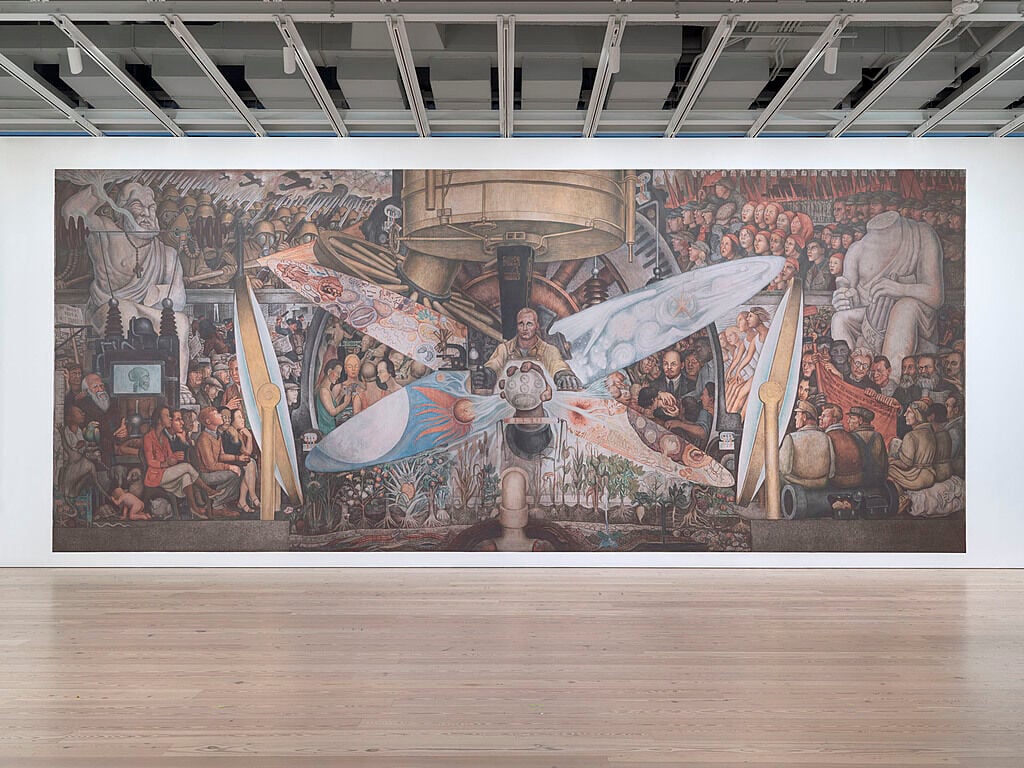
Installation view of “Vida Americana:
Mexican Muralists Remake American Art, 1925-1945” at the Whitney
Museum of American Art, New York. Photo: Ron Amstutz.
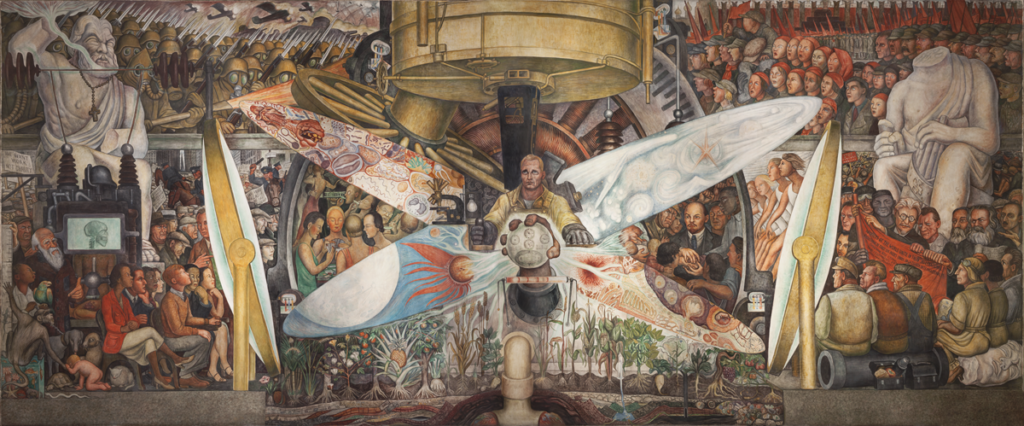
Diego Rivera, Man, Controller of the
Universe, (1934). Palacio de Bellas Artes, INBAL, Mexico City.
© 2020 Banco de México Diego Rivera Frida Kahlo Museums Trust,
Mexico, D.F. / Artists Rights Society (ARS), New York.
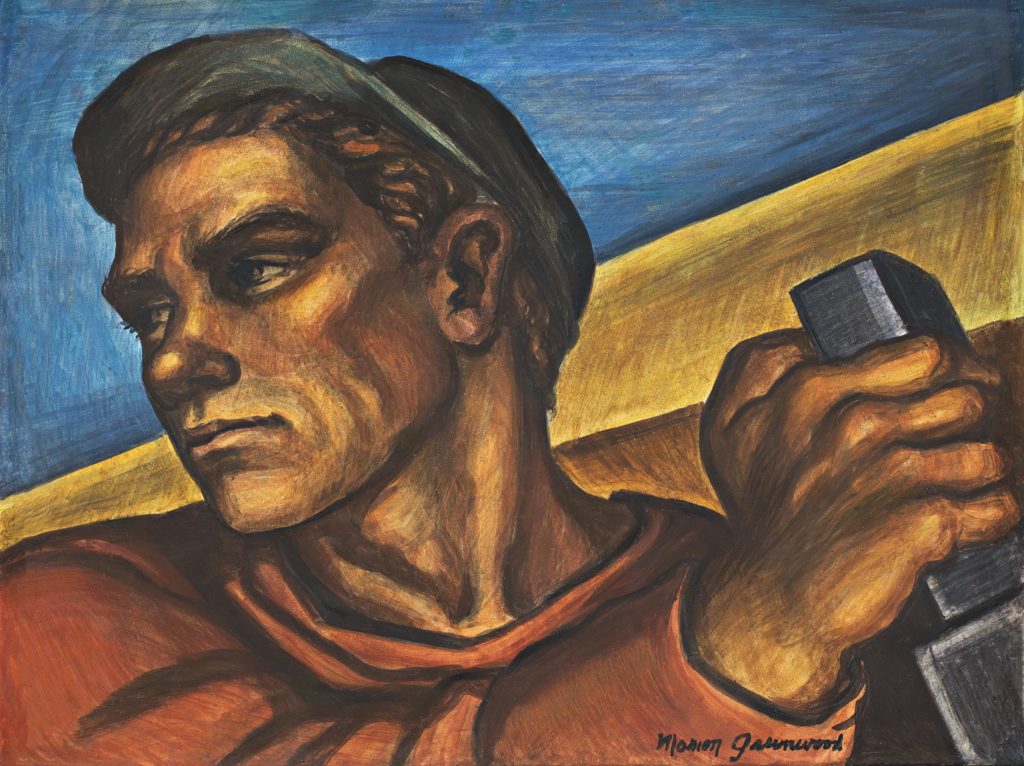
Marion Greenwood, Construction Worker
(study for Blueprint for Living, a Federal Art Project mural, Red
Hook Community Building, Brooklyn, New York), (1940). Frances
Lehman Loeb Art Center, Vassar College.
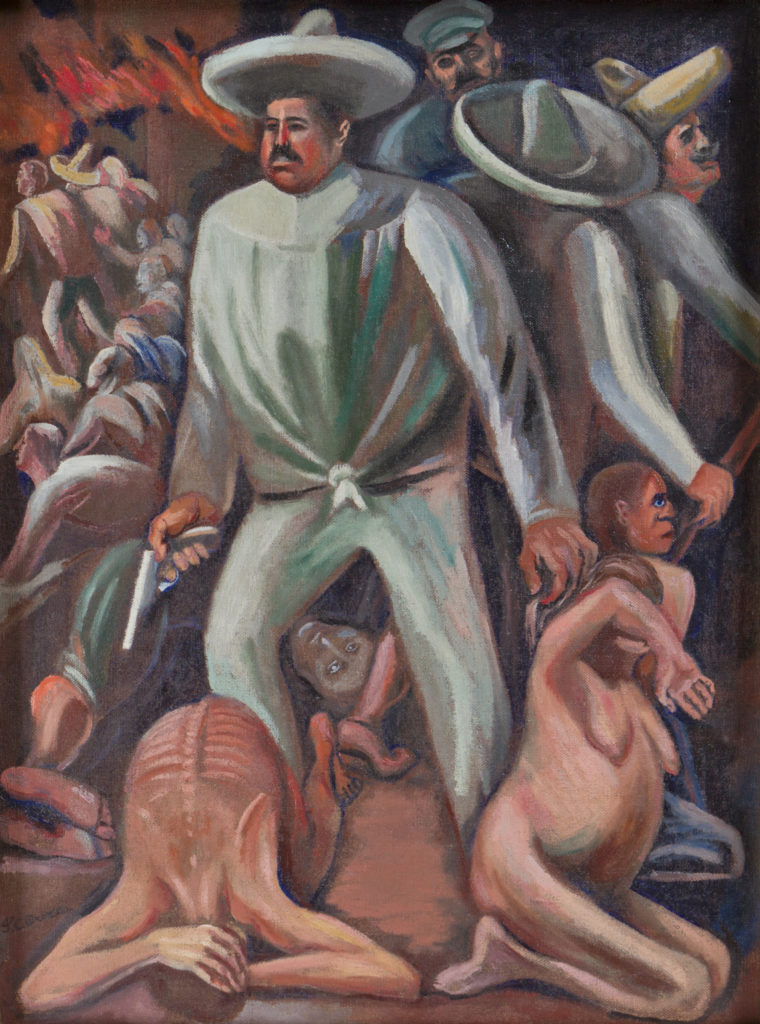
José Clemente Orozco, Pancho
Villa, (1931). Museo de Arte Carrillo Gil, INBAL, Mexico
City.
The post An Acclaimed Show at the Whitney Spotlights How
Mexican Muralists Shaped US Modernism—See Images Here appeared
first on artnet News.
Read more https://news.artnet.com/exhibitions/show-of-the-day-vida-americana-1843860
Further reading


Leave a comment