
The Clyfford Still Museum Uncovered a Trove of the Artist’s Tapes. Here Is What They Teach Us About One of History’s Most Private Painters
For years, the Miami-based
filmmaker and collector Dennis Scholl had wanted to make a
documentary about his favorite artist, Clyfford Still. But he
needed an excuse. Five years ago, the Clyfford Still Museum dropped
one in his lap.
“I got a call from the museum
one day and they said, ‘You’re not going to believe what we
found,’” Scholl recalls.
Research staff at the
Denver-based museum explained that they had recently discovered a
trove of super 8-millimeter film and 34 hours worth of audiotapes
made by Still himself. The material provides an unprecedented look
into an artist who intentionally withdrew from the public eye—whose
own story was as cryptic as the paintings he produced.
The material serves as the
backbone of Scholl’s new documentary, “Lifeline: Clyfford Still,”
which tells the story of the artist through both his own words and
the words of others, including his daughters, art historian David
Anfam, critic Jerry Saltz, and artists Mark Bradford and Julian
Schnabel. It premieres November 12 at the DOC NYC film
festival.
A Shocking Discovery
“The tapes were a complete
surprise,” Dean Sobel, the museum’s founding director, tells Artnet
News. Sobel explains that the materials—stored in shoeboxes—had
never been mentioned during the laborious legal process through
which Still’s archive was transferred to the museum from the estate
of the artist’s widow.
For him, the discovery helps
fill in a major gap in the story of the Still, a notoriously
guarded man who left virtually left the art world overnight in the
early ’60s. “Not that much was known about Still before the museum
opened,” he says. “I think a lot of myth had built up in the
absence of any archival or scholarly work.”
Still sold fewer than 180
paintings during his life—just enough to support his family—and
opted to keep most of what he made for himself. He also refused to
allow his work to be reproduced in photographs (even after his
death) and rejected a number of opportunities to show—all of which
helped push him further into obscurity than his peers.
“From the time he passed in 1980
until the opening of the museum, Still was systematically being
written out of the canon,” Scholl says. “If you allow the market to
decide who you are, then the market will ignore you if they don’t
have access. So the museum—and now, the tapes—give us the
opportunity to reevaluate him in the context of those other Ab Ex
giants.”
The market, for its part,
eventually caught up. The same month the museum opened in 2011, a
1949 Still canvas sold for $61 million at Sotheby’s, which remains
a record for the artist today. Since then, his paintings—the few
that are in circulation, anyway—have regularly fetched eight
figures at auction. Two days after the documentary
premieres, another Still
painting will hit the
block at Sotheby’s evening
sale in New York. It’s
expected to go for between $12 million and $18
million.
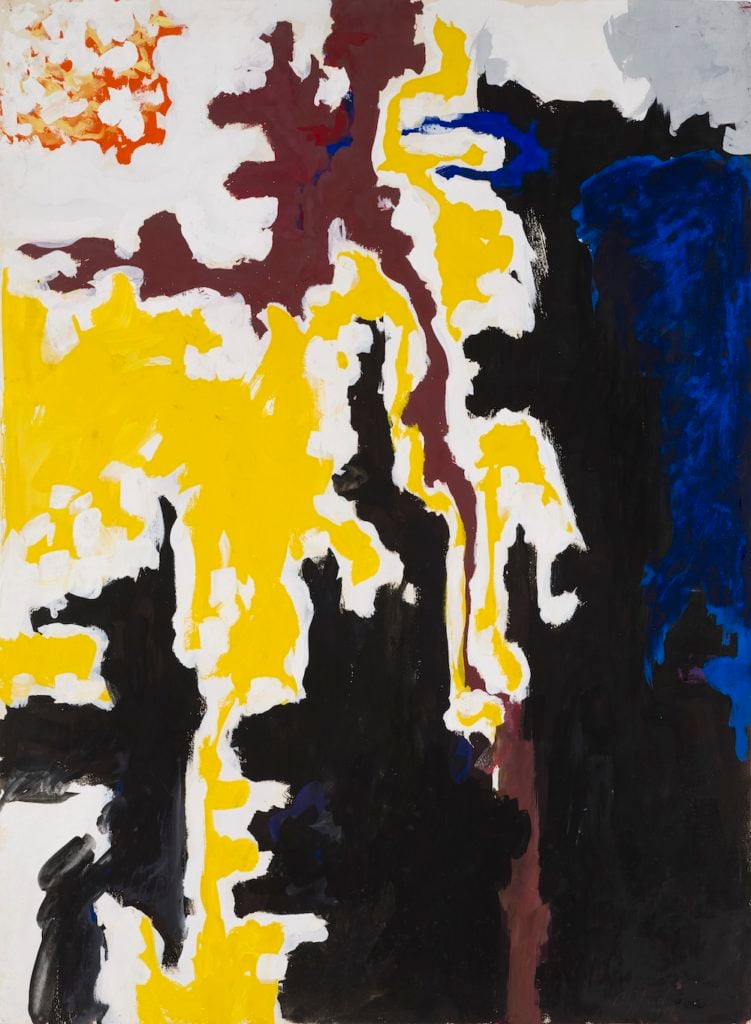
Clyfford Still, PH-455 (1949).
Courtesy of the Clyfford Still Museum.
A Lifeline for a Private Artist
The audiotapes, recorded by the
artist himself, provide an unprecedented look into who Still was a
person. “A lot of the times he’s simply sitting on the porch in
Maryland at the end of the day and pontificating,” says Scholl.
“Sometimes he’s going back and reading essays from some of the
shows he’s had. Other times he’s talking about his colleagues and
the level of respect he has or doesn’t have for them. And it’s open
and it’s honest and it’s raw.”
Some of the musings can verge on
the poetic. “When I hang a painting, I would have it say, ‘Here am
I,’” Still remarks in one instance. “This is my presence, my
feeling, my self…. If one does not like it, he should turn away
because I am looking at him.”
They also provide a glimpse into
just how much of a hothouse—to borrow a word from Scholl—the art
scene of the 1940s and ‘50s New York was. We learn how other
artists measured up to Still’s own fastidious standards. He
respected Jackson Pollock’s work, though not his lifestyle. He had
no time for Barnett Newman. He resented Rothko, whom Still once
considered a kindred spirit but later dismissed as a sellout who
stopped growing as an artist after he had a family. (When Still
learned of Rothko’s suicide in 1970, he allegedly said, “Evil falls
to those who live evil lives.”)
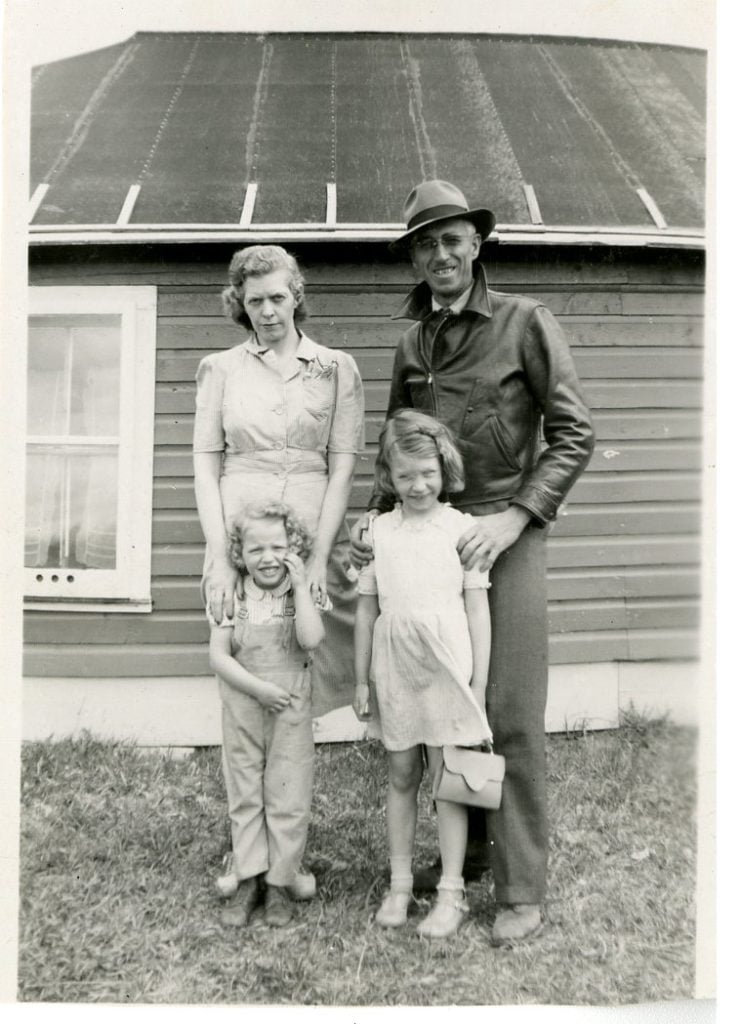
Clyfford Still with his family. Courtesy
of the Clyfford Still Museum.
Ultimately, Sobel notes, the
tapes shine a light on the biggest questions that have surrounded
Still since his death, and even before that: “Why did he brake away from the art world? Why
did he want a single monographic institution for his
work?”
For Sobel, the tapes show “just
how much he cared about what he was doing. He thought the act of
painting, and specifically what he was adding to that long and
messy history, was critically important. I think all the reasons he
did other things connect back to that.”
Indeed, Still was unabashed in
his belief that he was the greatest living painter of his time. He
didn’t pretend that painting wasn’t the most important thing in his
life, even around his family.
“The word that I would use is
‘uncompromising,’” Scholl says. “I think that he was uncompromising
in his position as to what it took to be a great artist, and he was
uncompromising in his unwillingness to let the machine that was the
art world do with him what it would.”
In a particularly poignant
moment in the film, Still’s younger daughter Sandra recalls
something her dad told her that she never forgot: “He made it very
clear—and he bragged about it once—when he said he leaned over my
crib and said, ‘I love you, babe, but you don’t come
first.’”
The post The Clyfford Still Museum Uncovered a Trove of the
Artist’s Tapes. Here Is What They Teach Us About One of History’s
Most Private Painters appeared first on artnet News.
Further reading


Leave a comment