
‘The Colonial Effect on Us Is Huge’: Why Congolese Collector Sindika Dokolo Sees Restitution as a Way to Remake African Identity
The question of whether Western museums should return works of
African art to their home countries is vexed and hotly
debated. But the mega-collector Sindika Dokolo thinks there’s a
simple question that should be driving restitution determinations
today: Was the object obtained legally?
The 47-year-old Congolese business magnate has used this
query as the basis for a worldwide campaign to compel Western
museums, art dealers, and auction houses to return Africa’s art in
cases where it was not legally acquired. Two years on, he and his
international team of art sleuths have tracked down and overseen
the return of 10 significant works of art.
Dokolo is himself an established collector of African art. He
began collecting at the age of 15 and, as part of his Sindika
Dokolo Foundation, has since amassed upwards of 3,000 works,
including those by some of the continent’s most important names:
Zanele Muholi, Yinka Shonibare, and William Kentridge. Dikolo is
happy to lend out works from his collection, but interested
institutions had better first read his manifesto and know that they
must agree to stage a show of similar content and value in
Africa.
We spoke to the collector and philanthropist as he was waiting
to board a plane to Brussels to meet the Congolese ambassador to
Belgium to officiate the return of another work. He weighed in on
the nuances of the African art market, the restitution debate, and
how he’s trying to stir the pot by playing by the rules.
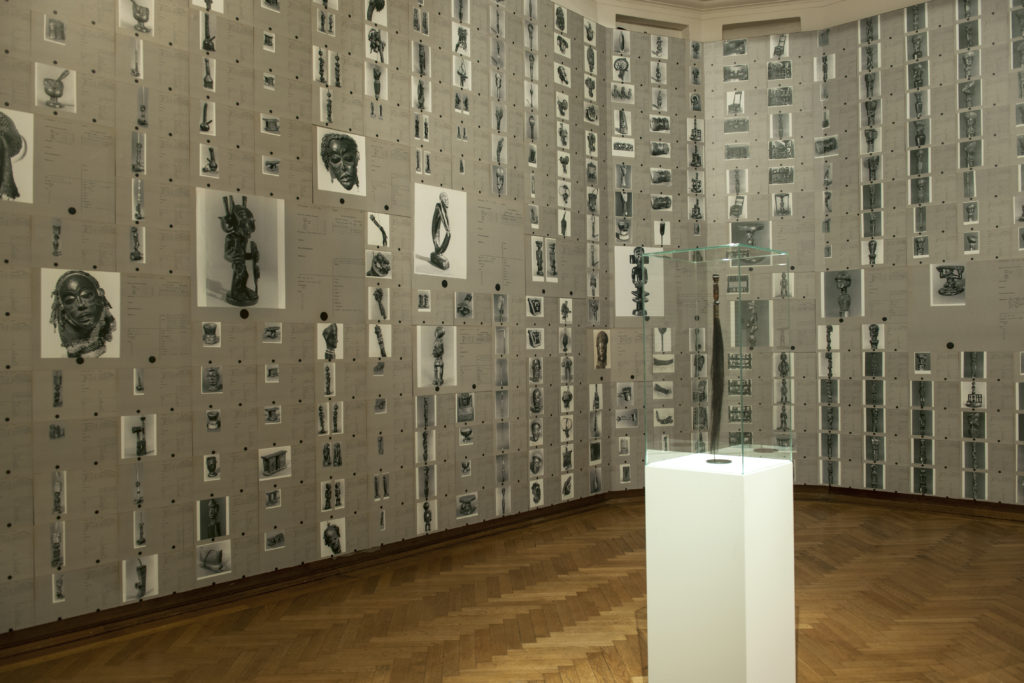
View of a gallery of “mugshots” of
missing African artworks. IncarNations. African Art as
Philosophy (2019). BOZAR Centre for Fine Arts.
At the exhibition of your collection that you co-curated at
BOZAR in Brussels, there is a room of “mugshots” of African masks
that you and your team are looking for. What happens if and when
you find a missing work?
We have a team in London and Brussels that have been working for
the past five years to identify original pictures with series
numbers from museum archives so that they can prove the piece
belonged to the museum. Then, we research pictures of the piece to
determine the last time it was seen somewhere on the market so that
we can try to follow the lead and find the pieces in
collections.
We confront the current owner
and we offer them two options: Either we go to court based on the
evidence that we have, which means reputational damage, or we pay
an indemnity, which is not the current market price but the price
they paid when they acquired it. I tend to presume that the
collector bought it in good faith.
We always try to hold a
repatriation ceremony This whole process is also a way for us to
raise awareness within the African public. I am very concerned with
the principle that you can never be stronger outside than you are
inside. What does the African public make of the repatriation
debate? Are we using this debate to better understand how crucial
it is for us to re-learn our own history and re-discover ourselves,
our values, and our artistic creation? It is important that we,
within Africa, look at this art in a dignified way so that we
understand how important our contribution is. Some young people
still think this art is a sign of witchcraft or
savagery.
So you find that young people have internalized colonial
ideas about their history and its objects?
I would guess that if you did a
survey today, at least in Angola, very few would consider these art
objects to be art or understand the value that it has. The colonial
effect on us is huge. We look at our own self, at our own history
with so much exoticism.
There is a lot of work that
needs to be done and it is not a question of aesthetics, it is much
deeper than that. It is political. We are not the owners of our own gaze. The
presence the other is still very strong. Being African today means
reading your own world through someone else’s eyes. So this whole
debate around restitution is a huge opportunity to address this
issue and to work on it in a constructive way. We want to take
away the veil that the colonial time has left on us.
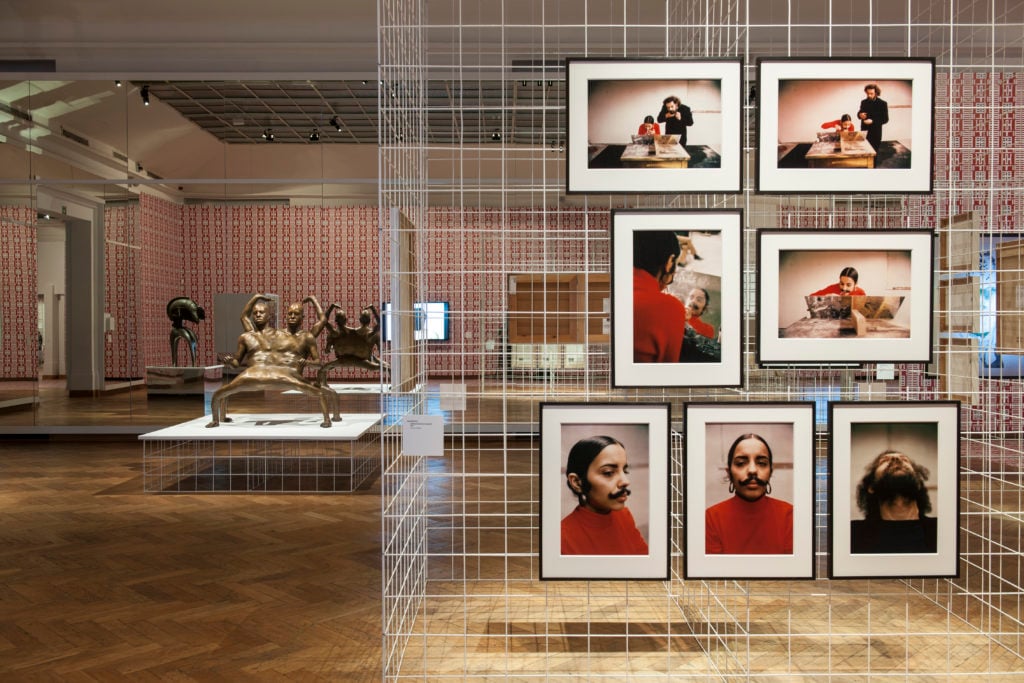
View of IncarNations. African Art as
Philosophy (2019). BOZAR Centre for Fine Arts.
Were you encouraged by the restitution report
published in France that advocated for the return of many
African objects currently held in European museums?
This initiative was completely
mind-blowing. Yet one year later the French have not done anything
substantial. Now, if you look at Germany and
the Netherlands, they did not make the same fuss or conduct all
this advertising, yet they began to take some concrete
steps.
And so while I thought the
report was interesting, I am more interested at this stage in the
African agenda by itself than in the evolution of the European
perspective. I try to develop as much as possible an Afrocentric
approach to what I am doing, especially in culture.
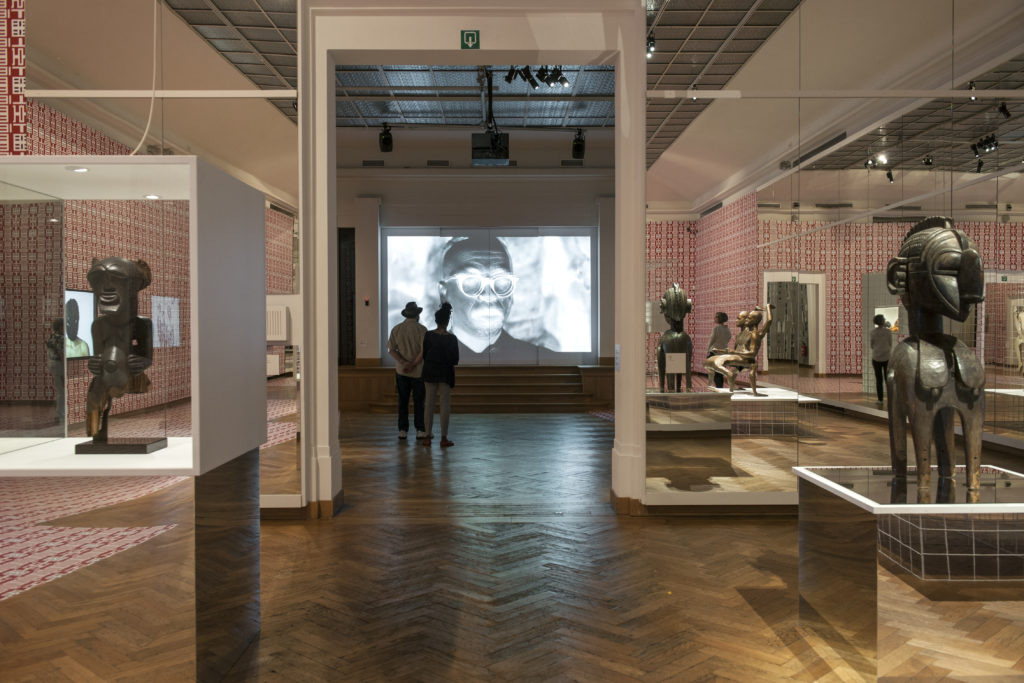
View of IncarNations. African Art as
Philosophy (2019). BOZAR Centre for Fine Arts.
Speaking of the Afrocentric perspective, there have been
several new museum projects on the continent, such as the Museum of
Black Civilizations in Dakar and a planned museum in
Kinshasa.
I know more about the museum in
Kinshasa because I just found an important Kuba mask that I will
return to that museum, which will be my first repatriation in the
country. I want to organize a proper ceremony in Kinshasa in the
presence of the Kuba king, who is very impressive. Do you know that
picture of Picasso dressed as an African king? There was an image
of it in an exhibition at the Quai Branly. It is actually a collage
done by one of Picasso’s friends, but actually this collage was of
the full attire of the Kuba king. It is spectacular.
What do you think about the funding of these museums? The
Kinshasa museum is being funded in part by South Korea, and the
museum in Senegal by Chinese investors.
When you are a bankrupt country
everything is funded from outside and this fact does not only
pertain to Africa. I am thinking about Portugal and Greece. These
countries were bankrupt a few years ago and were funded by other
countries, and that was no problem. Why is it a problem for
Africa?
My country lives in a state of
virtual bankruptcy. We cannot secure the integrity of the
territories, educate children, or build roads. So the problem is
not where the money is coming from at this point, the question is
how to make the best of the little crumbs that we manage to get
here and there. In terms of South Korea helping the Democratic
Republic of Congo with a museum, I don’t see a polemic
there.
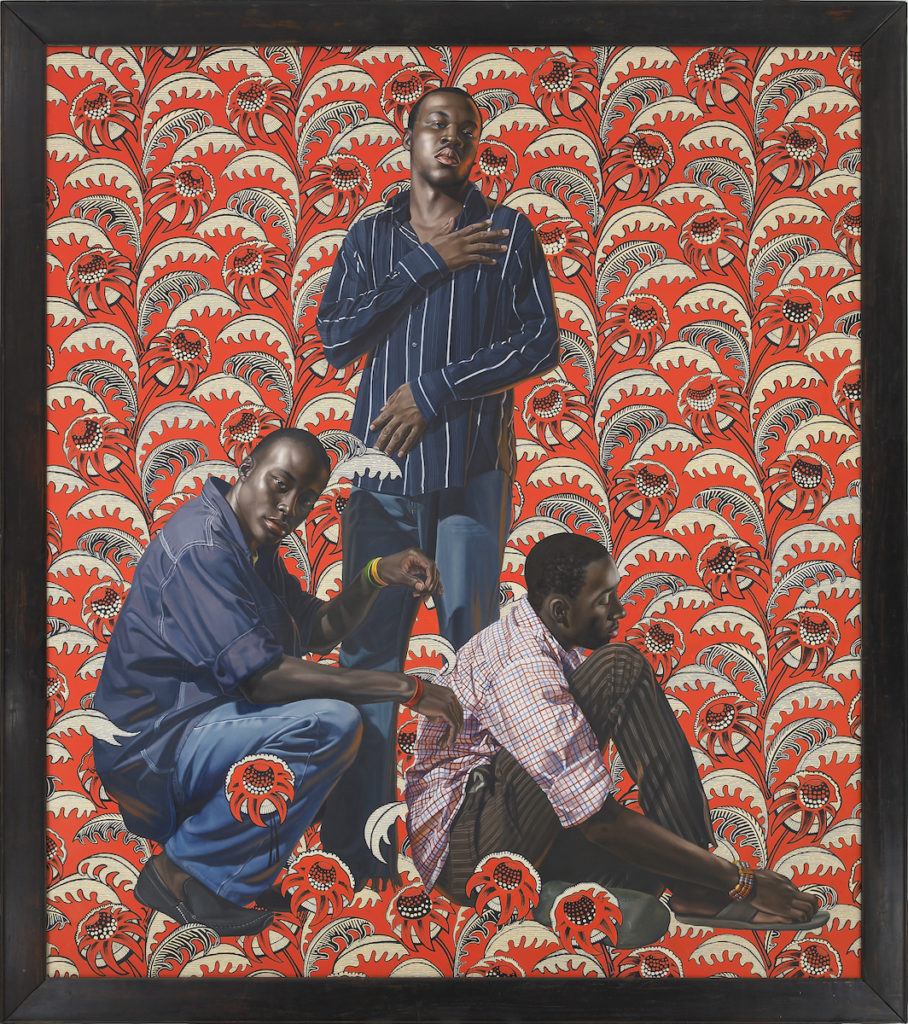
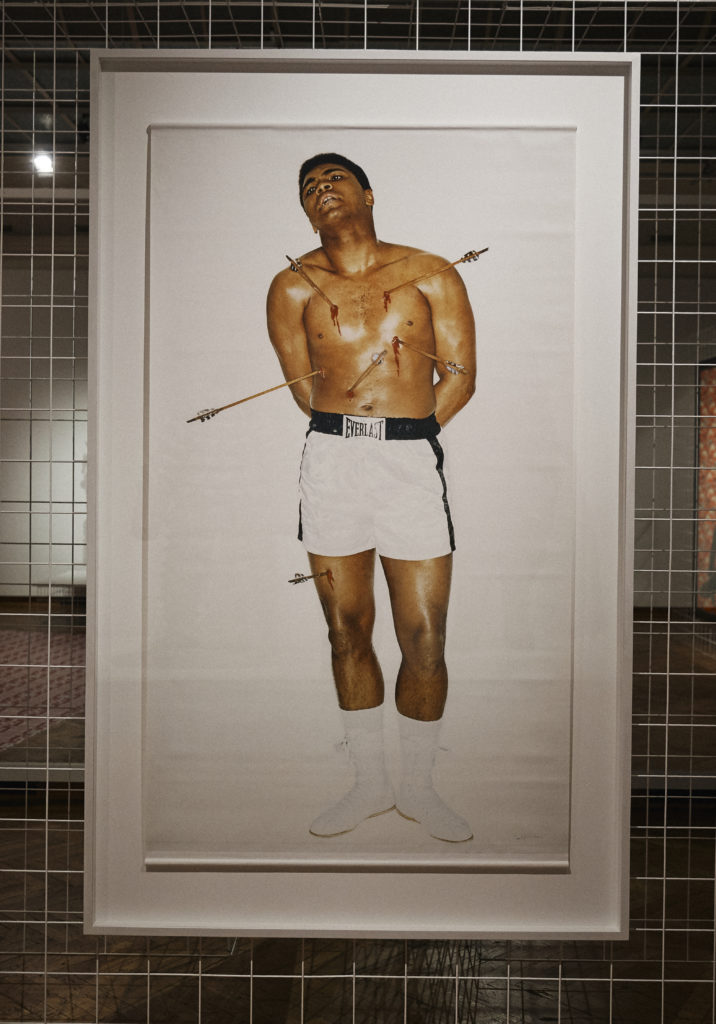
Kehinde Wiley, Hunger
(2008). © Kehinde Wiley. Courtesy of Deitch Projects.
But once the museum is open, how can it thrive? There are
numerous instances where impressive museum projects fail due to
poor long-term planning.
Yes, the question will be how
we, as Congolese, will organize ourselves, because we did not
really manage to yet understand what a museum is. It is not just a
building. It is a cultural operator. You need to have curators and
professionals who are linked to museology. This is where we got it
wrong so far: We understood it first as a show-off building and
then we saw it as a state company where we could thank people by
naming them there. I am not criticizing it because I am not aware
of all the details, but I am aware that it has been a problem in
the Congo before and it is a problem in Africa that we do not
always promote the right people. A lot of people do not yet
understand that a museum is as complex as a nuclear facility—it
requires people who are trained.
All that is not the problem of
the South Koreans, that is more a problem for us as an African
country. It is exactly the same issue as with the question of
repatriation. What do us Africans do about the possibility that
maybe some of the most important treasures in the world might come
back to us and come under our responsibility? Do we take the
necessary measures? Are we training the right people? Are we
getting prepared? I think we are missing sometimes the dimension of
how critical this is. We still consider that as aesthetics or a
tourist opportunity. We do not fully understand the strategic and
political dimension of art and culture. So this is a bit of the
work we are trying to do as well, to raise this
awareness.
As an avid collector, what do you make of the big boom in the
contemporary market for African art?
As much as I criticize the
contemporary art market in general right now, which I think is full
of second- and third-degree concepts and aesthetics, not to mention
a lot of emptiness and absence of ambition, I see that in other
parts of the world it is the other way around. In bankrupt African
countries, which are at a crucially strategic time in their
existence, there is so much important cultural production there to
expose to the public.
I always give the example of
South Africa. Within my contemporary collection, which includes Sue
Williamson, William Kentridge, and Kendell Geers, I am very
interested in the Rainbow Nation era that marked the end of
apartheid. At this very crucial time in the history of that
country, if it hadn’t been for the artists who managed to dream
this utopia of a rainbow nation, it would have been impossible to
realize. There is an important role of art and culture and artists
that goes way beyond the question of aesthetics.
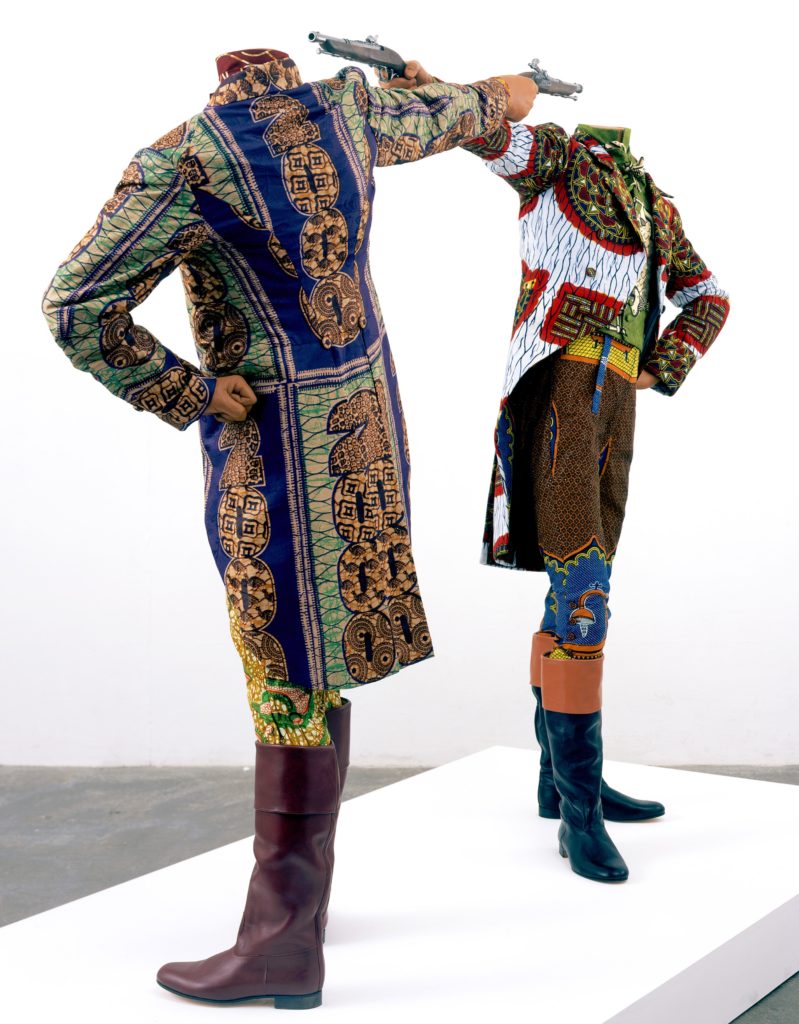
Kudzanai Chiurai, State of the
Nation, Bronze (2011). © Kudzanai Chiurai
What do you think the next steps will be for the African art
scene?
The next challenge for African
art will be to develop an internal market. We are one of the places on earth with the
biggest growth; we have everything we need to develop an art
market. We have an exploding middle class, a class of
industrialists and others who could become patrons. What we have
not been successful at is getting African collectors interested in
Africa. The artists that I am in contact with are not as eagerly
collected within Africa as from the outside. Take Yinka Shonibare,
for instance—I think I am one of the only African collectors that
collect him. This is a real challenge. However, all this debate
about historic art and how strategic, political, and beautiful it
is, will contribute in time to generate a new collector
scene.
Even Chinese art and Russian
art, it began as a trend because it is first of all collected by
Chinese and Russian collectors. The next big challenge will be to see how many
collectors we can generate and I am not very happy with the way
this is going.
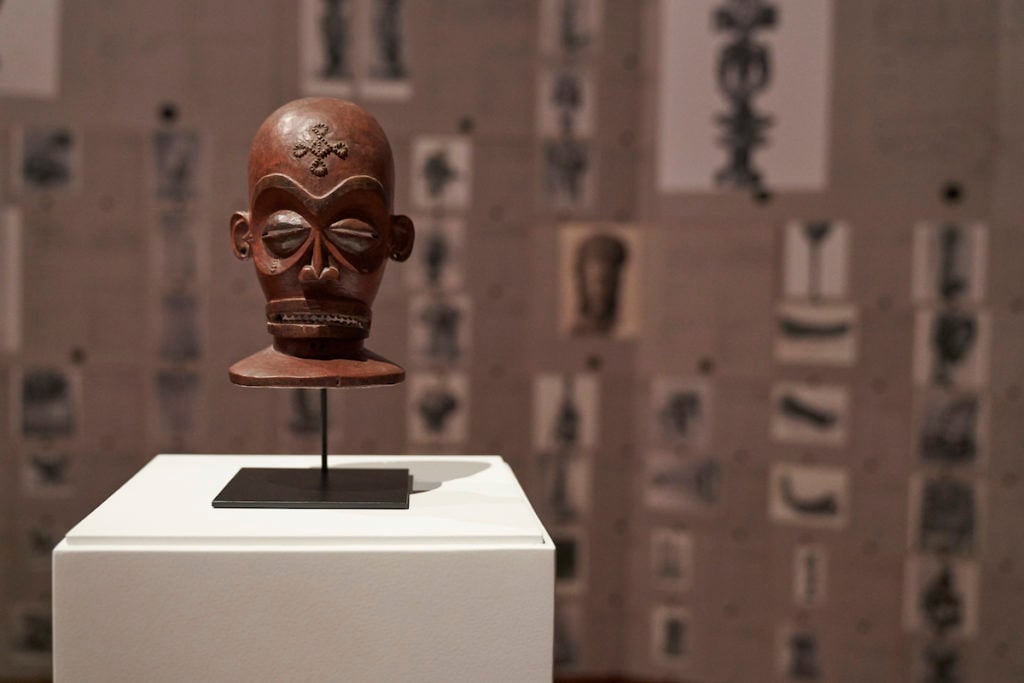
Chokwe Mask that went missing from the
Dundo Regional Museum in Angola during the civil war (1975-2002).
The mask will be returned to the Angolan authorities after the
exhibition at BOZAR – Centre for Fine Arts.
There has been a surge in new art fairs focused on African
art. Could fairs be part of the solution?
Art fairs could be a critical
player, but dealers will only come back if they sell. That is
always the problem. How do you trigger the interest to start with?
It is taking a long time. Fairs like 1:54 are such amazing
initiatives, there is a lot of quality and dynamism. But it is a
lot of foreign people. I am not feeling the African art market yet. I
have a lot of friends who are prominent business people in Africa,
but somehow I have not yet managed to convince them to
buy.
Are you concerned that a similar situation could recur, where
African art is again owned by foreigners and held abroad?
There is a clear parallel
between the two, but contemporary artists need to be exhibited, and
they need to be bought, and they need to live, so it is different.
The problem of ownership is not the main issue, the main issue is
access. There are a few artists who have managed to be active on
the market and do well in big institutions and the art market, but
who also make sure that their work is present and visible on the
continent. Ownership by African collectors is great, but it’s more
important that it is being seen by the public.
View of IncarNations. African Art as
Philosophy (2019). BOZAR Centre for Fine Arts.
African art has been a major inspiration to many modern
artists, including Picasso. What can traditional African art teach
contemporary artists today?
African civilizations were so
much more advanced than we are today in terms of the role of the
artist and the artistic proposal. Take performance art, for example. We are reaching
now the limits of what the art market can do. You cannot
essentially own performance and yet it has value, and we are
encountering this question in a major way right now. Selling it is
ridiculous, so we need to perhaps rediscover the way this medium of
art intervened in pre-contact societies to understand how it can
really revolutionize the contemporary art market.
You stipulate in loan agreements that part of working with
your collection means that foreign institutions need to establish a
parallel exhibition on the African continent. Some have not yet
panned out, but you have IOUs from several institutions or curators
in Europe.
Anybody who is interested in
artworks or in exhibitions of the collection, I am very happy to do
it, but I have a few conditions. The first condition is that I do not accept any
money because I know
that the hand that gives is always on top of the hand that
receives. It is also important that whoever I work with understands
that my collection is contemporary art. I will loan the works for
free, but you have to do everything in your power to organize the
same exhibition somewhere in Africa, whether it is in a museum in
Johannesburg or on a baseball field in Mogadishu. You cannot just
show African art, you have to get involved. It has not always been
successful, but we are trying in this way to have more activity on
the continent than abroad.
We need to start looking at
Africa as something other than mass defeat. The access to art and
creativity is what makes us human and garners respect, and if I can
read respect in your eyes, that is a way that I can elevate myself
and a way that I can take care of myself. This is what lies behind
the collection.
The post ‘The Colonial Effect on Us Is Huge’: Why Congolese
Collector Sindika Dokolo Sees Restitution as a Way to Remake
African Identity appeared first on artnet News.
Read more https://news.artnet.com/art-world/sindika-dokolo-restitution-africa-1660801
Further reading


Leave a comment